
Türkiye's defence industry targets $20 billion in new contracts as global reach expands

Akbar Novruz
Read moreTürkiye's defence and aerospace industry has secured $15 billion in new contracts in 2026 and expects the figure to reach $20 billion by the end of the year, reflecting the continued expansion of the country's domestic defence manufacturing and international partnerships.
Haluk Görgün, head of Türkiye's Presidency of Defence Industries (SSB), disclosed the figures during the Defence and Aerospace Sector Subcontracting and Supply Management Workshop in Bursa on October 18.
According to Görgün, major Turkish defence contractors, including ASELSAN, ROKETSAN, Turkish Aerospace Industries (TUSAŞ), HAVELSAN and STM, have worked with more than 16,000 domestic companies over the past three years, placing orders worth over $20 billion.
Outstanding domestic orders currently exceed $13.4 billion, highlighting the scale of the industry's procurement commitments.
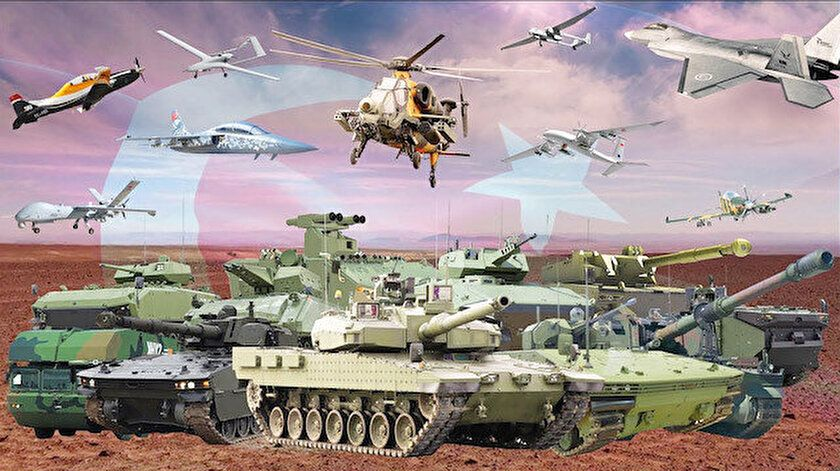
The latest contract figures come as Türkiye continues to expand its presence in international defence markets, particularly through exports of unmanned aerial vehicles, aircraft, missiles, armoured vehicles, naval platforms and electronic systems.
Defence exports continue to grow
Türkiye's defence and aerospace exports increased by 15.6% year-on-year to $6.93 billion during January–September 2026, according to figures from the Türkiye Exporters' Assembly.
The sector accounted for 3.28% of the country's total exports during the nine-month period.
In September alone, defence and aerospace exports reached $634.1 million, representing annual growth of 10.7%.
Over the preceding 12 months, the sector's exports totalled $10.94 billion, an increase of 29.9% compared with the corresponding period a year earlier.
The figures demonstrate the distinction between the value of newly signed contracts and actual export deliveries, as major defence agreements are frequently implemented over several years.
Türkiye's position in the international arms market has also strengthened.
According to the Stockholm International Peace Research Institute (SIPRI), Türkiye ranked as the world's 11th-largest exporter of major arms during 2021–2025, accounting for 1.8% of global arms transfers.
This compares with a 0.9% share during 2016–2020, with the volume of Turkish arms exports increasing by 122% between the two periods.
Pakistan, the United Arab Emirates and Ukraine were Türkiye's three largest recipients of major arms during 2021–2025, accounting for 16%, 12% and 8.4% of its exports, respectively.
Five Turkish manufacturers enter global top 100
The expansion of Türkiye's defence industry is also reflected in the latest Defense News ranking of the world's 100 largest defence companies.
Five Turkish manufacturers appeared in the 2026 ranking, based on defence-related revenue generated in 2025.
ASELSAN ranked 40th globally, with defence revenue of approximately $4.46 billion, representing an increase of 26% compared with the previous year.
Turkish Aerospace Industries placed 48th, reporting revenue of $3.65 billion, while ARCA Defence entered the ranking at 53rd after increasing its defence revenue to approximately $3 billion.
ROKETSAN ranked 64th, with revenue of $2.37 billion, and Machinery and Chemical Industry Corporation (MKE) placed 81st, reporting approximately $1.42 billion.
Together, the five companies generated around $14.9 billion in defence-related revenue in 2025.
Their activities cover a broad range of military technologies.
ASELSAN specialises in defence electronics, communications, radar and electronic warfare systems, while Turkish Aerospace develops aircraft, helicopters and unmanned aerial platforms.
ROKETSAN manufactures missiles and rocket systems, ARCA Defence focuses on ammunition production, and MKE produces weapons, artillery equipment and ammunition.
Other prominent Turkish defence companies include Baykar, STM, ASFAT, Otokar and Nurol Makina, which operate in unmanned systems, naval engineering and armoured vehicle manufacturing.
Major contracts with Indonesia and Pakistan
One of Türkiye's most significant recent defence export agreements involves the sale of 48 KAAN fighter aircraft to Indonesia.
The initial agreement was announced in June 2025, followed by a definitive sales contract signed during the International Defence Industry Fair in Istanbul in July.
Turkish Aerospace confirmed that the arrangement includes the delivery of 48 aircraft alongside cooperation in industrial development, local manufacturing and training.
The agreement has been estimated at approximately $10 billion, although its final financial terms have not been publicly disclosed.
Naval shipbuilding represents another important component of Türkiye's defence exports.
In July 2018, Pakistan signed an agreement with Turkish state-owned defence contractor ASFAT for four MILGEM-class corvettes.
Under the contract, two vessels were to be constructed in Türkiye and two in Pakistan, with technology transfer forming part of the arrangement.
STM has participated in the programme through engineering and propulsion-system integration activities.
These agreements illustrate the increasing importance of large, multiyear defence programmes in Türkiye's export portfolio.
Türkiye's defence industry has developed commercial relationships across Europe, Asia, the Middle East and Africa.
The country's growing international presence reflects demand for Turkish-manufactured unmanned systems, naval vessels, precision-guided weapons, electronic warfare equipment and military vehicles.
The South Caucasus also remains an important market for Turkish defence manufacturers, with Azerbaijan maintaining extensive military-technical cooperation with Türkiye.
The industry's development has been supported by domestic manufacturing programmes and partnerships involving major contractors and smaller suppliers.
As 2026 approaches its final months, the anticipated increase in newly signed contracts to $20 billion would represent another significant expansion of Türkiye's defence order book.
However, the actual contribution of these agreements to future export revenues will depend on production schedules, delivery milestones and the implementation of individual contracts.
Sources: Hurriyyet, Anadolu Agency, Trend News Agency and Daily Sabah
Here we are to serve you with news right now. It does not cost much, but worth your attention.
Choose to support open, independent, quality journalism and subscribe on a monthly basis.
By subscribing to our online newspaper, you can have full digital access to all news, analysis, and much more.
You can also follow AzerNEWS on Twitter @AzerNewsAz or Facebook @AzerNewsNewspaper
Thank you!