
Paris on Tuesday, Antalya on Wednesday - Armenian PM's diplomatic coincidence
Akbar Novruz
Read moreFirst Paris, then Antalya, and, almost on cue, President Ilham Aliyev in Türkiye. Meanwhile, Moscow was left without Armenia’s prime minister. For a politician trying to steer Armenia through a changing South Caucasus, Nikol Pashinyan could scarcely have chosen a more suggestive travel itinerary.
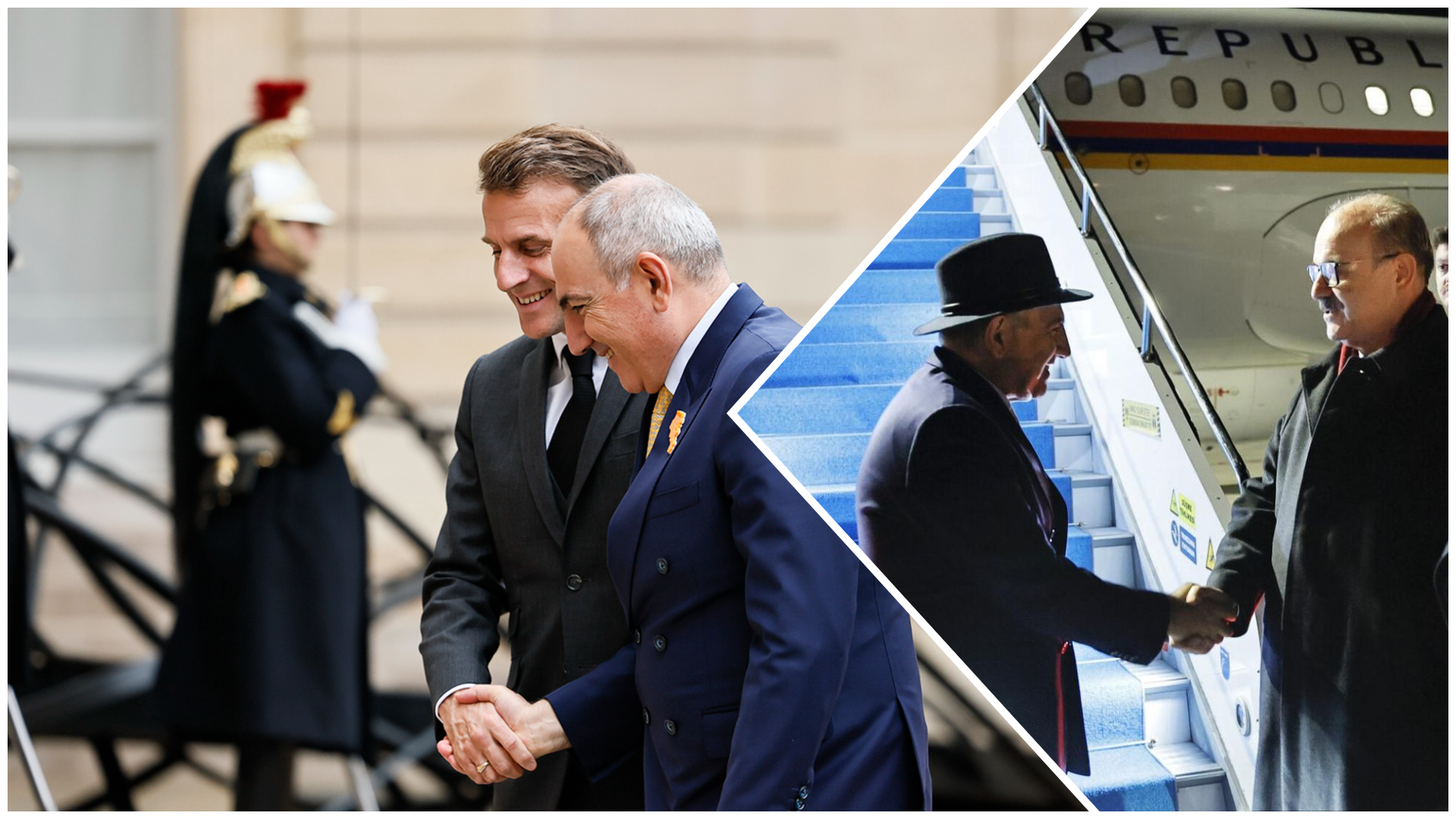
Pashinyan met with Emmanuel Macron at the Élysée Palace on November 10 to discuss strategic relations, European integration, and regional affairs. Ilham Aliyev was invited by Recep Tayyip Erdoğan to visit Türkiye on that same day. On November 11, Pashinyan travelled to Antalya for the COP31 leadership conference. Also on November 11, Vladimir Putin was due to chair the Collective Security Treaty Organisation (CSTO) summit in Moscow, without him. Perhaps it would be unprofessional to make any speculations or conspiracies about Pashinyan's visit, but three journeys, three diplomatic gatherings, are one rather intriguing coincidence.
The key word here is “coincidence.” There is no reason to believe that the schedule of the Paris Peace Forum and the UN climate conference was intentionally coordinated in order to arrange a Caucasus meeting. There is no confirmation of any bilateral meeting between Pashinyan and Ilham Aliyev, or between Pashinyan and Erdogan either, even though it is a high possibility. However, it is clear that politics needs proximity. The point here is not the existence of any arranged secret meeting; it is about the implications of such a coincidence.
Paris offers options. Moscow offers a reminder. Antalya poses reality.
In Paris, Pashinyan met Emmanuel Macron, one of Armenia's most important European partners, for discussions spanning infrastructure projects, EU-supported reforms, visa liberalisation and the future of bilateral strategic cooperation. The official account also mentioned an exchange of views on “regional developments”, a familiar diplomatic euphemism that takes on particular significance at a time when the South Caucasus is undergoing a profound geopolitical realignment.
France provides political support to Yerevan along with a means to integrate further into Europe. Yet the issue of geography persists. Armenia cannot gain access to the international market through friendly gestures alone. The Turkish border is shut off to any transit. The possibility of opening up transit routes will come through local decisions.
Moscow, meanwhile, offers a rather uncomfortable reminder of the relationships Armenia is attempting to reconsider. Yerevan remains formally a member of the Russian-led Collective Security Treaty Organization (CSTO), despite freezing its participation in February 2024. The estrangement has deepened considerably, with Pashinyan declaring on November 5 that his government's interest in the organisation had effectively run its course.
Perhaps these consequences may soon go beyond just symbolism. Over the past two years, Armenia has failed to pay its membership dues, and this has led Russian officials to threaten that the organization might deprive the former Soviet republic of its right to vote and to appoint delegates to certain offices. The topic was set to be discussed at a summit scheduled for November 11 in Moscow under Vladimir Putin’s chairmanship. However, there is little evidence of Russia wanting to oust Armenia.
There is a certain irony in an alliance contemplating the suspension of voting rights for a member that has largely stopped attending its meetings. Such a decision would formalise an estrangement already evident in practice. But Armenia has not formally withdrawn from the CSTO, and decades of security dependence cannot simply be erased by a diplomatic change of direction.
This is what makes the itinerary of Pashinyan especially interesting. Paris symbolizes the pursuit by Armenia of alternative strategic options. Moscow stands for the security system within which Yerevan has been slowly moving away from. Antalya, on the other hand, brings the Armenian prime minister directly into the realities of the region that cannot be handled independently by Europe or Russia.
While the Élysée is where the strategic horizons of Armenia can be discussed, the immediate concerns can be addressed in Türkiye. With the President of Azerbaijan also in attendance at the same conference, the issue now is not only which important capitals Yerevan wants to meet, but how it wants to deal with its neighbors, who will be key to its future.
The host, the ally and the guest
For Erdoğan, the invitation list represents a new diplomatic challenge. Türkiye is the closest strategic partner of Azerbaijan, which is linked to the former through military cooperation, pipelines, and a common commitment to east-west connections. However, Erdoğan himself has found room to engage with Armenia and invited Pashinyan to COP31 during his visit to New York in September.
There is no contradiction in these relationships. While developing relations with Baku, the country can at the same time try to normalize them with Yerevan. It could even become easier in case the relations between the two nations continue to develop positively. Nevertheless, the dance is important. To what extent can Türkiye get closer to Armenia without disturbing its ally? To what extent can Pashinyan benefit from Türkiye without deepening his relations with France?
However, there may be some indications of movement beyond the photo ops. Türkiye reportedly stated just before COP31 that it has already done all the necessary work to establish crossings for roads and rail lines into Armenia. But having ready-made crossings does not mean open borders, while hope does not equal planning. And there is still much to talk about for these leaders, no matter if they do so in Antalya.
The context is a peace process that has accomplished much and left some issues undecided. There has been a peace treaty initialled between Azerbaijan and Armenia in Washington in August 2025, although signing and implementing the treaty remains to be done. On 7th November of the current year, representatives from the two states and the U.S. have established planning groups for the Trump Route for International Peace and Prosperity (TRIPP), focusing first on transportation and electricity transmission.
This is not just an engineering issue. The construction of the passage through southern Armenia will provide Azerbaijan access to Nakhchivan and more opportunities for business ventures by Armenia and Türkiye. It will compel governments to decide on the not-so-glamorous aspects of the new regional order: jurisdiction, customs, security, finance, and accountability.
Pashinyan therefore faces a rather complicated situation coming into COP31. On the one hand, he must convince Armenian citizens that normalization will not mean any loss of sovereignty but, on the other hand, will ensure its preservation. In addition, he should prove to Azerbaijan that agreements can be fulfilled. For Türkiye, he must offer a way to build relations which have been formally frozen for years. For France, he must prove that a Western vector is compatible with the Caucasian one.
For Pashinyan, these are delicate calculations. France offers a wider diplomatic horizon; Türkiye offers a potential way out of regional isolation; Azerbaijan holds a central place in implementing the new connections. Russia, meanwhile, retains economic and security ties to Armenia even as the institutional relationship frays. Moving towards one relationship does not automatically erase the others.
Ilham Aliyev’s presence and Pashinyan’s arrival in the same country do not prove coordination. But the simultaneous Moscow meeting produces a striking visual contrast: Yerevan is investing its public diplomacy in a Turkish-hosted forum while its old military alliance debates how to discipline an absent member.
What happens when the cameras turn away?
It is natural for anyone to look for a hidden meaning in each arrival at an airport, each diplomatic handshake, each seating order. There may be something like that. More important events might happen during the informal talks away from the cameras than what we hear in the speeches. Or the most important event would be something that never happened because there was no talk. It is how the announcement of the Armenian government went.
There is a distinction between diversifying foreign relationships and escaping geopolitical realities. France can provide political reassurance, Russia can preserve the possibility of renewed security cooperation, and the United States can sponsor diplomatic breakthroughs. None can substitute for the practical relationship Armenia must eventually establish with its immediate neighbours.
Pashinyan's movements between Paris and Türkiye, set against his absence from the Russian-led CSTO summit in Moscow, offer a revealing snapshot of Armenia's changing diplomatic calculations. Three capitals, three different relationships and one increasingly complicated question: where does Yerevan see its future?
Here we are to serve you with news right now. It does not cost much, but worth your attention.
Choose to support open, independent, quality journalism and subscribe on a monthly basis.
By subscribing to our online newspaper, you can have full digital access to all news, analysis, and much more.
You can also follow AzerNEWS on Twitter @AzerNewsAz or Facebook @AzerNewsNewspaper
Thank you!