
Beyond drones: what really changed the 2020 Azerbaijan-Armenia War

Qabil Ashirov
Read more27 September should be marked not only in Azerbaijan, but across the South Caucasus, as a day associated with the beginning of a new phase in the region's search for stability and peace. Wars arise from a variety of ethnic, historical and geographical factors, but their consequences for human lives and economic development can be profoundly disastrous. Perhaps Armenia may, in time, or may not, view the eventual outcome of the conflict as an opportunity to reassess the consequences of its past policies. Nevertheless, the situation today remains more complex. The new economic opportunities emerging in the region, together with the South Caucasus's growing importance as a major transport and transit hub, have generated differing reactions among regional and international actors. Some of these reactions reflect continuing political disagreements and competing interpretations of the region's future.
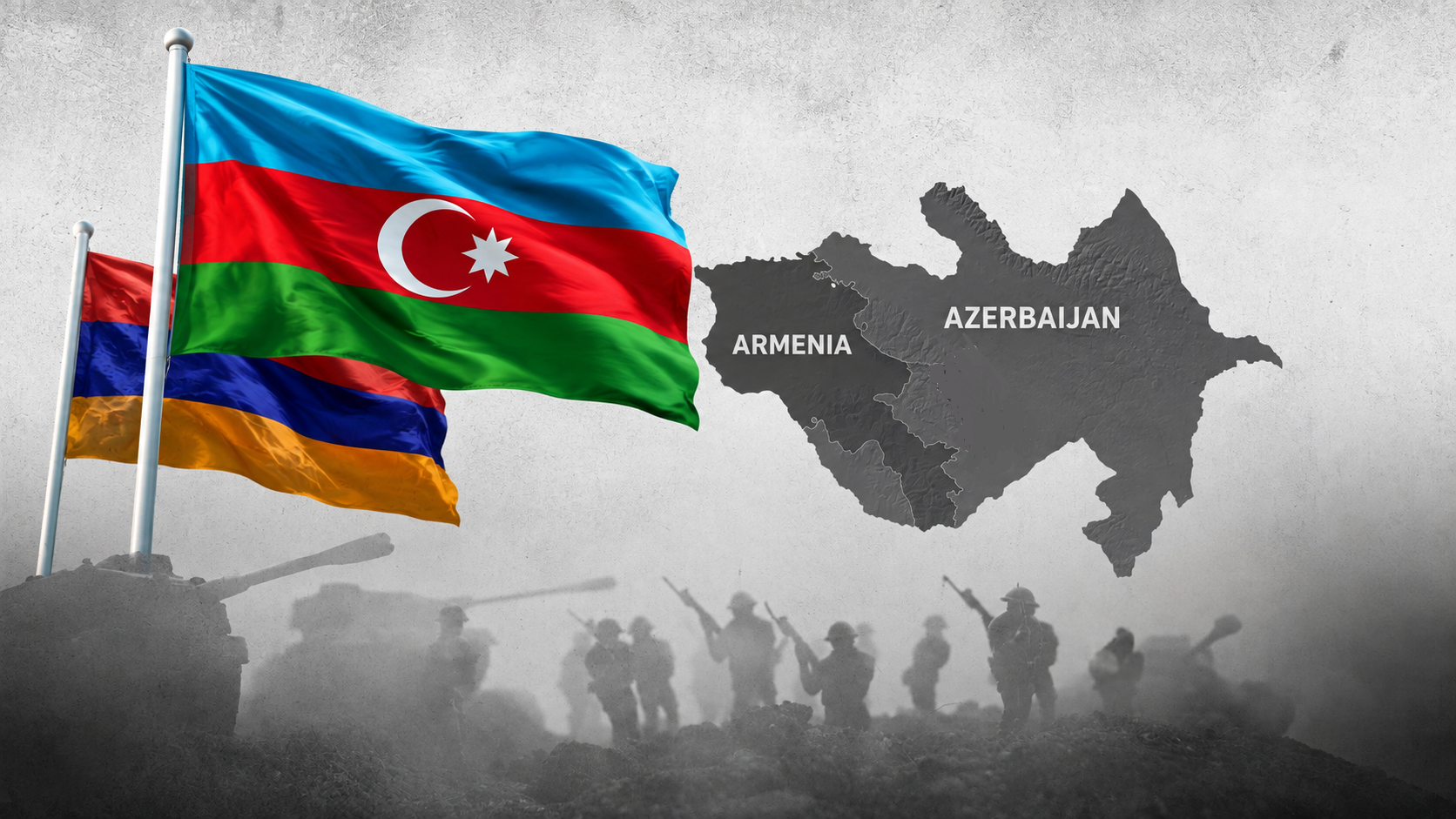
As is well known, the conflict had its roots in the dispute over Karabakh, including several regions that surround its territory. Azerbaijani territories remained under Armenian control for nearly 30 years before the 2020 war. In the context of renewed hostilities, Azerbaijan launched military operations, citing its right to self-defence and the implementation of relevant United Nations Security Council resolutions. Following the 44-day war, a trilateral statement was signed on 10 November 2020, bringing the active phase of the conflict to an end and establishing arrangements for the withdrawal of Armenian forces from the remaining occupied territories.
Consequently, while Azerbaijan commemorated the outcome of the war, Armenia marked 27 September as a day of national mourning. This is understandable given the significant loss of life suffered by Armenia during the conflict. At the same time, continued focus on the past can make it more difficult to address the new economic and political circumstances emerging in the region. Public debate and media coverage in Armenia on 27 September also included criticism of Türkiye, Israel and Azerbaijan, alongside competing narratives about the causes and outcome of the war. Social media featured discussions about Türkiye-Azerbaijan relations, as well as claims regarding the role of Israeli-made weapons and other military equipment in Azerbaijan's military campaign. These debates reflect the continuing differences in how the conflict is interpreted on both sides.
This raises a broader question: how did Armenia assess its own economic and military capabilities during the years preceding the 2020 war?
To shed further light on the issue, let us go back six years and examine the capabilities of the Azerbaijani armed forces at that time.
First of all, it is no secret that while Azerbaijan has significantly strengthened its domestic defense industry, it also procures military hardware from abroad. But let us look at reality: Israel possesses one of the most powerful and sophisticated defense industries in the world, supplying weapons not just to Azerbaijan, but to global superpowers like the United States, China, and India. How logical is it to claim that buying weapons from a country makes that country the winner of the war?
Consider this: in the early 2000s, the United States rapidly occupied Afghanistan and Iraq in a matter of weeks. By Armenian logic, those victories did not belong to the United States, but rather to the defense contractors and technology providers who equipped the American military. Similar arguments could be made regarding Turkiye. In fact, Azerbaijan procures military hardware from over a dozen countries, ranging from South Africa to Brazil. By this logic, did everyone except us win the war?
There is a wonderful Azerbaijani proverb: a defeated wrestler never gets tired of the arena. Azerbaijan won the 44-day war because it was righteous, fighting on the side of truth. Armenia had absolutely no just ground for initiating that war.
Furthermore, the probability of Armenia winning any military confrontation against Azerbaijan was virtually zero from the outset. The primary reason Armenia prevailed in the early 1990s was the devastating impact of the Soviet Union's collapse on Azerbaijan's economy, coupled with severe internal political turmoil in Baku. Had those unique geopolitical circumstances not existed, an Armenian victory would have been entirely out of the question.
Demographically, Armenia’s population is two to three times smaller than Azerbaijan's. Moreover, Armenia is bordered on all sides by regions heavily populated by Azerbaijanis or allied nations—whether it is the Igdir-Kars line in Turkiye, parts of the Iranian border, or regions in Georgia with compact Azerbaijani populations.
In terms of military budget and technical equipment, Armenia has lagged far behind Azerbaijan for years. Between 2010 and 2020, Azerbaijan’s defense budget alone frequently exceeded Armenia’s entire state budget. During that period, Azerbaijan was the only space-faring power in the region, possessing the capability to monitor all Armenian military movements from space.
Tank Fleet: Azerbaijan's armored strength heavily surpassed Armenia's, with a significant portion of its fleet consisting of third-generation or modern upgraded platforms. For comparison, neither Iran, Turkiye, nor Russia possessed tank fleets matching this level of modernization across the board at that time.
Artillery and Long-Range Systems: Azerbaijani artillery was capable of striking targets beyond 55 km (subsequently extended to 60–70 km with "NORA" and other self-propelled howitzers). Alongside fully automated, highly mobile systems like "DANA" operated by just a two-person crew, Azerbaijan possessed long-range rocket systems like "Polonez" and "LORA" with ranges of 300 to 430 km. To put this in perspective, Ukraine spent years trying to acquire analogous systems, gaining the upper hand on certain fronts only after securing weapons like ATACMS and Storm Shadow.
For comparison, while Ukraine hunted Russian armor using 1–5 km range NLAW and Javelins, Azerbaijan's arsenal featured South Korean-analogous systems, 25 km range Israeli Spike NLOS missiles, domestically produced ETR-M missiles capable of hitting targets at 60 km, and glide bombs deployed from aircraft, helos, and drones extending ranges up to 80 km.
Aviation and Helicopter Fleets: Azerbaijan's combat aviation—comprising MiG-29, Su-25, Su-24, and other aircraft—was further reinforced by the acquisition of JF-17 Block 3 jets. Armenia possessed neither the variety nor the quantity to compete. Meanwhile, medium and heavy multi-role combat helicopters like the Mi-8, Mi-17, Mi-24, and Mi-35M provided a level of vertical envelopment power absent even in the arsenals of neighboring Iran and Turkiye.
This list could go on. All available statistical and analytical data prove that in terms of military arsenal, logistical base, and strategic preparedness, Azerbaijan outmatched Armenia manifold. Under such conditions, Armenia's defeat was inevitable.
Today, Azerbaijan is compared in military strength not just with Armenia, but with leading regional powers. Armenia was never in the same weight class, and it is precisely this inescapable reality—the alignment of history, justice, and absolute strength—that sealed the outcome.
Here we are to serve you with news right now. It does not cost much, but worth your attention.
Choose to support open, independent, quality journalism and subscribe on a monthly basis.
By subscribing to our online newspaper, you can have full digital access to all news, analysis, and much more.
You can also follow AzerNEWS on Twitter @AzerNewsAz or Facebook @AzerNewsNewspaper
Thank you!