
Missing persons remain unfinished legacy of former Karabakh conflict

Ulviyya Poladova
Read moreOn June 30, Baku hosted an international conference on "Modern approaches to resolving the issue of missing persons and strengthening cooperation", has been held in cooperation with the International Commission on Missing Persons (ICMP).
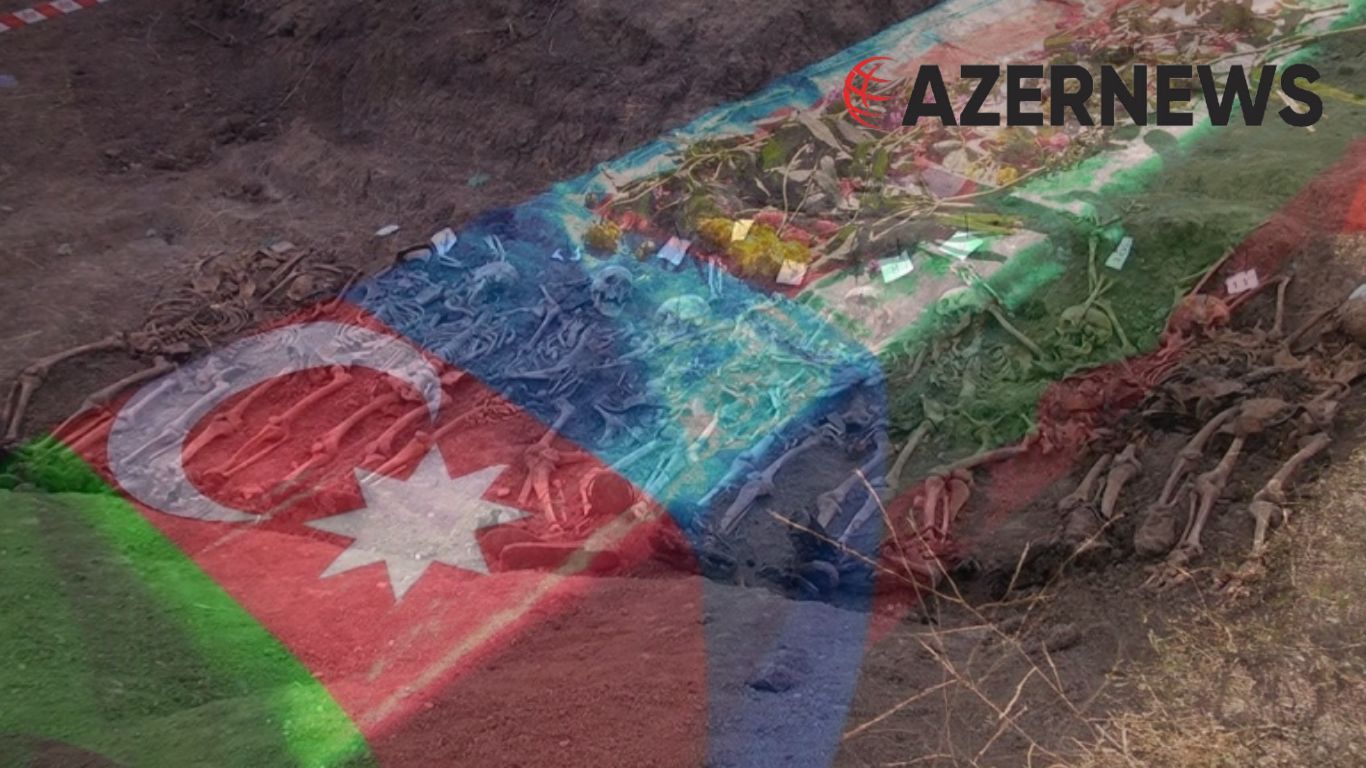
Azerbaijani officials presented updated figures showing 4,010 people registered as missing, 11,542 biological donor samples collected, remains believed to belong to 893 missing persons discovered, and 327 individuals identified through forensic examination as of June 30, 2026. The event was framed by Azerbaijani participants as both a humanitarian appeal and a political reminder that unresolved wartime disappearances remain one of the deepest wounds of the South Caucasus conflict.
Missing persons are not simply a statistical category produced by conflict. They represent fathers who never returned, daughters whose last moments remain unknown, soldiers buried without names, and families condemned to live between hope and mourning.
It should be noted that since 2002, at the UN General Assembly, resolutions on the issue of missing persons have been introduced every two years on the initiative of Azerbaijan and are adopted by consensus.
The figures presented at the conference are staggering. Azerbaijani authorities say 4,010 people remain registered as missing as a result of the conflict, with 4,004 missing from the First Karabakh War and 6 from the 2020 war. Of these, 3,228 are servicemen and 782 are civilians, including 71 minors, 288 women, and 319 elderly people.
Disappearance traps families in a psychological limbo. They cannot fully grieve because they do not know whether to hope. They cannot move on because absence remains unfinished. In post-conflict societies, that uncertainty becomes generational. Children grow up hearing the names of the missing as if they might still walk through the door. Parents die without learning what happened to their sons.
This is why the missing persons issue is not secondary to peace. It is part of peace itself.
In 2025, ICMP explicitly argued that accounting for the missing would help consolidate peace in the South Caucasus, which reflects a broader international understanding that humanitarian truth-finding is not separate from stability but essential to it.
The conference additionally reinforced Azerbaijan’s wider post-war narrative. Azerbaijani officials presented the prolonged lack of answers about the missing as a consequence of nearly three decades during which formerly occupied territories remained inaccessible for full-scale searches, excavation, and forensic recovery.
From Baku's perspective, this is not simply a forensic issue. It serves as evidence of a historical injustice and reflects the issue of former Armenian separatists, which the international community failed to resolve effectively when it had the opportunity.
For many Azerbaijanis, the missing are not just a chapter of war history. They are proof that the conflict's human cost has not yet been fully acknowledged.
One of the most significant aspects of the Baku conference was the emphasis on modern forensic and genetic methods. Since 2014, biological samples from relatives of missing Azerbaijani citizens have been collected under a framework agreement involving the State Commission and the International Committee of the Red Cross representation in Azerbaijan, while from 2023 the work has been carried out through the Genetic Research Center established under the Main Military Medical Department of the State Security Service. Azerbaijani officials said that as of June 30, 2026, 11,542 donor samples had been collected and systematized.
The identification of 327 missing persons, including the public release of information on 226 whose remains were returned and buried according to legal and religious traditions, is therefore not just a technical achievement.
Since February 2021, authorities have conducted extensive searches, excavations, exhumations, and identification efforts in the territories regained by Azerbaijan.
According to the latest figures, the remains of 893 missing persons have been discovered.
Deputy Foreign Minister Elnur Mammadov stated that Azerbaijan returned the remains of more than 2,000 Armenian soldiers found since November 2020, stressing that the move was carried out without seeking revenge. He noted that the 1949 Geneva Conventions and their Additional Protocols require parties to a conflict to determine the fate of missing persons, search for those who have died, identify human remains, and ensure they are treated with dignity.
Azerbaijan is right to insist that this issue not be forgotten. On this point, the argument is compelling. No durable regional peace can be built on sealed graves, silent archives, and unanswered family anguish. The problem of the missing is not a side issue to be handled after geopolitics is settled. It is one of the very places where justice either begins or fails.
The central message is clear: peace without truth is fragile.
Here we are to serve you with news right now. It does not cost much, but worth your attention.
Choose to support open, independent, quality journalism and subscribe on a monthly basis.
By subscribing to our online newspaper, you can have full digital access to all news, analysis, and much more.
You can also follow AzerNEWS on Twitter @AzerNewsAz or Facebook @AzerNewsNewspaper
Thank you!