
How Azerbaijan plans to digitise its livestock economy

Qabil Ashirov
Read moreThe sensory overload of a traditional livestock market is a familiar staple of rural life across many developing agrarian economies. For generations, these bustling, chaotic environments have served as the primary hubs for farmers looking to buy or sell cattle and sheep. However, behind the vibrant local color lies a stark reality characterized by deep structural inefficiencies, volatile visual-based pricing, and severe bio-security vulnerabilities. When the Food and Safety Agency of the Republic of Azerbaijan (AQTA) underscored the necessity of shifting away from these antiquated physical gathering spots toward modern, digital livestock commodity exchanges, it was not merely announcing a regulatory change. Instead, it signaled a fundamental paradigm shift in how agricultural commerce is conducted, representing a critical leap forward for economic transparency, public health, and modern supply chain management across the country.
To fully grasp the necessity of this transition, one must examine the profound systemic shortcomings inherent in the traditional livestock trading model. In a conventional physical market, transactions are frequently dictated by asymmetric information and subjective estimations. Livestock is rarely weighed on precise industrial scales; rather, prices are haggled over based on visual evaluations of an animal's size and condition. This dynamic inherently disadvantages smallholder farmers, who lack real-time access to broad market benchmarks and are left exposed to the arbitrary pressures of middleman speculators. Furthermore, the logistical necessity of physically transporting animals across regions to a centralized marketplace induces immense stress on the livestock, degrading meat quality and inflating transportation overhead costs for farmers who have no guarantee of a successful sale at the end of their journey.
The most pressing vulnerability of the legacy system, however, rests in the realm of veterinary surveillance and bio-security. Physical markets act as massive epidemiological mixing bowls. Bringing thousands of animals from diverse, undocumented rural holdings into a single dense enclosure creates an optimal vector for the rapid proliferation of transboundary animal diseases. When an outbreak occurs in such an environment, tracing the source of infection back to a specific farm of origin becomes an administrative impossibility. By addressing the structural inadequacy of these physical markets, regulatory bodies are directly tackling a critical vulnerability in the nationwide food safety net, shifting the agricultural sector away from reactive crisis management toward proactive risk mitigation.
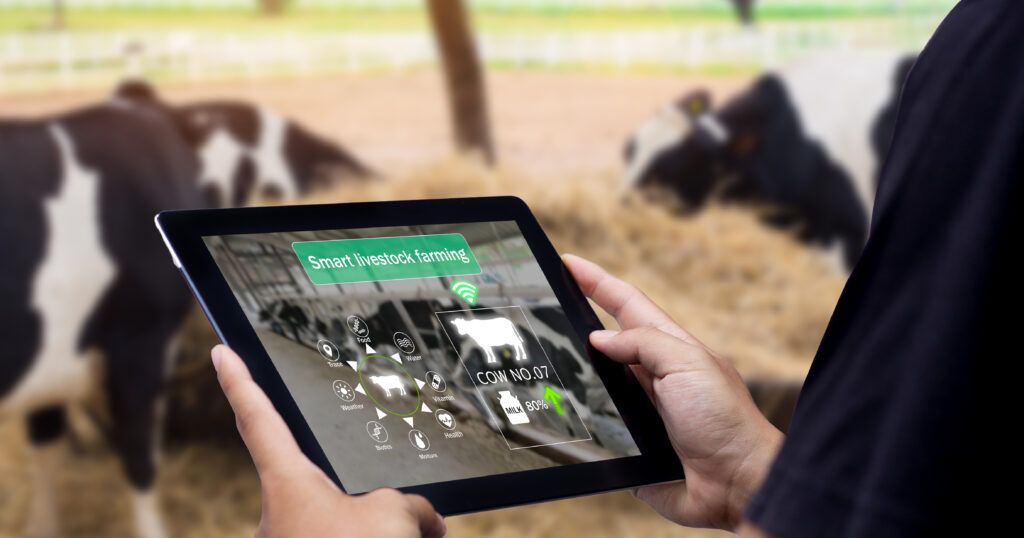
The proposed digital transformation framework relies heavily on a comprehensive animal identification and registration infrastructure. Under this modernized model, livestock assets are uniquely tagged, logged, and tracked within a centralized database long before entering the commercial pipeline. When trading transitions to an electronic commodity exchange platform, the physical animal remains isolated in a controlled, biosecure local environment. Prospective buyers no longer need to travel or rely on physical inspections; instead, they can review certified data metrics on the exchange platform, including validated live weight, breed classification, historical vaccination records, and verified geographical origin. This rids the sector of the necessity for hazardous physical gatherings while introducing an unprecedented layer of consumer transparency into the domestic meat supply chain.
From an economic standpoint, the institutionalization of an electronic livestock exchange democratizes the rural marketplace. By consolidating market supply and demand onto a single transparent digital platform, the system establishes a highly reliable mechanism for price discovery. Farmers gain immediate, unmediated visibility into prevailing market rates, enabling them to capture the true value of their agricultural output without sacrificing margins to intermediaries. Simultaneously, industrial meat processors and commercial distributors can secure consistent volumes of verified, high-quality livestock with significantly reduced transaction friction. This stabilization of livestock pricing and standardization of quality criteria are crucial prerequisites for integrating Azerbaijan's agricultural sector into broader, higher-value international trade networks.
Naturally, a institutional transformation of this magnitude will inevitably encounter cultural and operational friction during its implementation phase. For many traditional livestock owners, transitioning from deeply ingrained physical negotiation customs to a digital interface requires a significant cognitive adjustment, along with targeted educational outreach and accessible local digital infrastructure. Success will depend on the government’s capacity to deploy user-friendly platforms and build local confidence in digital scale measurements and electronic settlement protocols. Nevertheless, the long-term strategic dividends of this modernization effort far outweigh the transitional hurdles. Embracing digital livestock exchanges represents a profound evolution for Azerbaijan’s agrarian ecosystem, effectively demonstrating that the path toward a resilient, competitive, and biosecure agricultural future is paved with data, institutional transparency, and technological innovation.
Here we are to serve you with news right now. It does not cost much, but worth your attention.
Choose to support open, independent, quality journalism and subscribe on a monthly basis.
By subscribing to our online newspaper, you can have full digital access to all news, analysis, and much more.
You can also follow AzerNEWS on Twitter @AzerNewsAz or Facebook @AzerNewsNewspaper
Thank you!