
Ruins of Opel’s legendary test track still hidden in German forest
by Alimat Aliyeva
In the early 1920s, Opel constructed a remarkable 1.5-kilometre oval test circuit, unlike anything seen before in Europe at the time. It was designed as a high-speed proving ground and quickly gained attention, effectively becoming one of the fastest road-like tracks on the continent and a major attraction for motorists and engineers alike, AzerNEWS reports.
This account is based on a Reddit user’s visit to the remains of the once-famous facility, now hidden deep within forested ruins.
According to historical descriptions, the motivation behind building such an ambitious structure came partly from complaints by local residents about the constant noise of engine testing near residential areas. The solution was radical for its time: move the testing to a dedicated, purpose-built high-speed circuit.
During its peak years (roughly from the 1920s until the outbreak of World War II), the track reportedly hosted crowds of up to 50,000 spectators. For the era, cars reaching speeds of around 140 km/h were considered extraordinary, and the site became both a testing ground and a public spectacle. New Opel models were often demonstrated there, turning engineering trials into early automotive showmanship — something that foreshadowed modern motorsport marketing.
Interestingly, some historians note that this blending of testing and entertainment made the site one of the earliest examples of “performance branding” in the automotive world, where speed and spectacle were used to sell innovation.
However, the golden age did not last. World War II drastically changed the region’s fate. After the war, the area came under U.S. military control, and by 1946 the circuit was permanently abandoned.
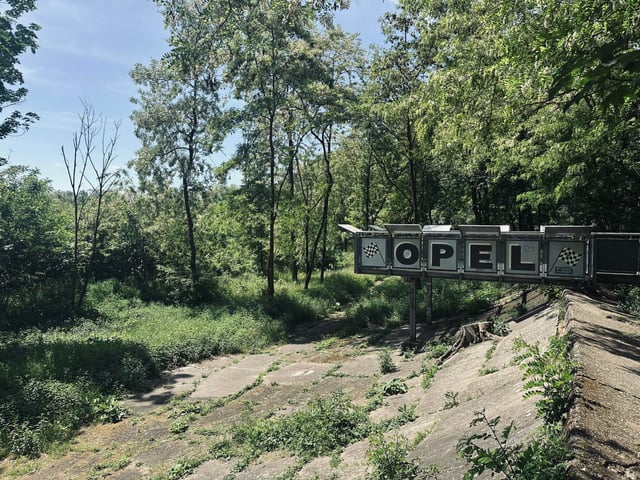
Over time, nature reclaimed the site. Trees and dense vegetation slowly swallowed the asphalt, grandstands, and infrastructure. Today, only fragments remain — most notably a steep concrete banking from one of the curves, still visible like a ghost of its former purpose.
Now, the location is visited mainly by urban explorers, automotive historians, and photographers interested in abandoned industrial heritage. It stands as a quiet reminder of how quickly cutting-edge technology can turn into forgotten ruins, and how even engineered speed eventually succumbs to the slow power of nature.
Here we are to serve you with news right now. It does not cost much, but worth your attention.
Choose to support open, independent, quality journalism and subscribe on a monthly basis.
By subscribing to our online newspaper, you can have full digital access to all news, analysis, and much more.
You can also follow AzerNEWS on Twitter @AzerNewsAz or Facebook @AzerNewsNewspaper
Thank you!