
Baku Forum highlights new era of Eurasian connectivity

Ulviyya Poladova
Read moreThe Second Caspian International Forum on "Transport, Transit and Logistics," held in Baku on June 3 as part of the TransLogistica Caspian exhibition, highlighted the growing strategic importance of transport corridors, digital logistics, and regional connectivity in an increasingly fragmented global economy.
Bringing together representatives of government institutions, international transport organizations, logistics companies, and industry associations from Azerbaijan, Türkiye, and other countries, the forum served as a platform to discuss the digitalization of transport and logistics chains, innovative technologies, the development of international transport corridors, and the strengthening of the region’s transit potential.
The discussions took place against the backdrop of profound changes in the global economy. Recent years have demonstrated the vulnerability of traditional logistics routes. The COVID-19 pandemic disrupted global supply chains, while the Russia-Ukraine war significantly altered Eurasia’s transportation landscape. As a result, governments and businesses have intensified efforts to identify alternative routes capable of ensuring the stable and secure movement of goods between Asia and Europe.
In this context, transport connectivity has evolved far beyond a purely economic issue. Logistics is increasingly becoming a tool of geopolitical influence. Countries that facilitate the movement of goods across continents gain not only economic benefits but also strategic leverage in international affairs.
This is where Azerbaijan's role becomes particularly significant. Situated at the crossroads of East-West and North-South trade routes, the country has emerged as a critical link in Eurasian connectivity. However, Azerbaijan’s current position is not solely the result of geography. It is the product of a long-term strategy aimed at transforming the country into one of the leading transport and logistics hubs of Eurasia.
Over the past two decades, Azerbaijan has invested billions of dollars in transport infrastructure, modernizing ports, railways, highways, logistics centers, and customs systems. These investments are now positioning the country at the center of emerging regional trade networks.
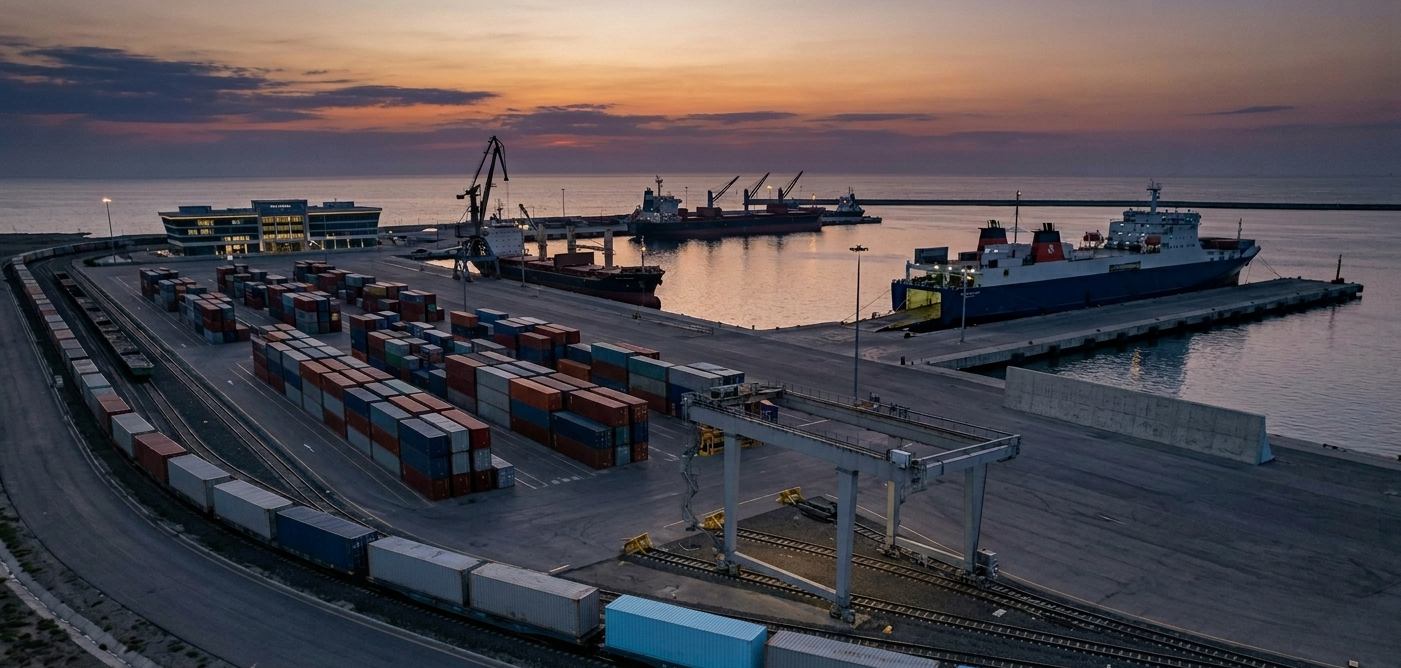
A key component of this strategy is the Middle Corridor, officially known as the Trans-Caspian International Transport Route. Connecting China, Central Asia, the Caspian region, the South Caucasus, and Europe, the corridor has become one of the most promising logistics projects in Eurasia. While previously viewed as an alternative route, recent geopolitical developments have significantly increased its importance.
For Azerbaijan, this creates unique opportunities. The country is no longer merely a transit territory but an essential component of a new Eurasian transport architecture. Goods, investments, and strategic interests increasingly converge on routes passing through Azerbaijan.
At the same time, modern logistics extends far beyond the construction of roads and railways. One of the central themes of the forum was the digitalization of logistics processes.
In the twenty-first century, the competitiveness of transport corridors depends not only on physical infrastructure but also on efficiency, transparency, automation, and real-time tracking capabilities. Smart customs systems, electronic documentation, artificial intelligence, and integrated digital logistics platforms are becoming critical elements of modern supply chains.
Another major trend discussed at the forum was the integration of different types of infrastructure. Transport corridors are increasingly developing alongside energy, telecommunications, and digital connectivity projects. Railways, highways, power transmission lines, and fiber-optic networks are gradually forming an interconnected system that enhances regional competitiveness.
Azerbaijan is already actively participating in such initiatives. Alongside transport infrastructure projects, the country is pursuing ambitious plans in the field of energy connectivity. Green energy corridors linking the Caspian region with European markets represent a clear example of this integrated approach.
The forum also addressed the renewed operation of the Baku–Tbilisi–Kars (BTK) railway, one of the flagship projects of regional connectivity.
In a comment to AzerNEWS, Alper Özel, Chairman of the Executive Board of the International Transporters’ Association of Türkiye (UND), described the BTK railway as one of the most successful joint infrastructure projects implemented by Türkiye, Azerbaijan, and Georgia.
According to Özel, the temporary suspension of the railway due to renovation works clearly demonstrated its strategic significance for regional trade and logistics.
"The line was closed for a period because of modernization works, and we immediately felt the impact. Even its temporary suspension showed how important the route is. The reduction in cargo traffic was noticeable. Now operations have resumed, and the railway will continue to grow and develop," he noted.
The UND chairman stressed that transport routes such as BTK should be viewed as complementary corridors that expand options for exporters rather than compete with existing logistics networks.
"These corridors always provide alternatives and support existing routes. They offer exporters additional opportunities to move their goods. When companies are planning shipments, they can choose from several options, including the Baku–Tbilisi–Kars railway. The more alternatives available, the more attractive the logistics environment becomes," Özel explained.
He emphasized that the future success of the Middle Corridor is directly linked to the level of cooperation between Ankara and Baku.
"The more closely Türkiye and Azerbaijan work together, and the more strategic our cooperation becomes, the more the Middle Corridor will develop. It is that simple. The success of the Middle Corridor largely rests on the partnership between Türkiye and Azerbaijan," he said.
Özel also highlighted the corridor's investment potential, noting that improvements in logistics infrastructure could attract significant investments in warehousing, transport fleets, and industrial production.
"As logistics capacity grows, investments follow. Warehouses are built, transport fleets expand, and logistics services improve. Eventually, manufacturing companies also begin to invest because they see that products can be delivered efficiently to international markets. When businesses know there is reliable logistics infrastructure, they become much more willing to establish production facilities in the region," he noted.
Özel added that strengthening transport connectivity along the Middle Corridor will not only facilitate trade between Asia and Europe but also contribute to broader economic development across participating countries.
The discussions at the Caspian Forum demonstrated that the Caspian region is increasingly moving from the periphery of global trade to the center of Eurasian connectivity. As global supply chains continue to diversify and new transport corridors emerge, countries capable of facilitating trade and logistics will gain greater economic and geopolitical relevance.
In this evolving environment, Azerbaijan is strengthening its position as one of the key architects of regional connectivity. Through sustained investments in infrastructure, digital transformation, and international cooperation, the country is becoming not only a transit hub but also a strategic player shaping the future of trade, transport, and economic integration across Eurasia.
Here we are to serve you with news right now. It does not cost much, but worth your attention.
Choose to support open, independent, quality journalism and subscribe on a monthly basis.
By subscribing to our online newspaper, you can have full digital access to all news, analysis, and much more.
You can also follow AzerNEWS on Twitter @AzerNewsAz or Facebook @AzerNewsNewspaper
Thank you!