
Russia's nuclear dilemma becomes more dangerous as its internal fault lines deepen
Elnur Enveroglu
Read moreThe war in Ukraine has entered another of those phases in which diplomacy and military pressure move in parallel, but neither is yet strong enough to break the deadlock. Kyiv and Moscow remain separated by fundamental disagreements over territory, security guarantees and the political future of Ukraine, while the battlefield continues to shape the terms of any eventual negotiation. The latest meeting between US Secretary of State Marco Rubio and Russian Foreign Minister Sergey Lavrov in Manila, focused on Ukraine and broader bilateral issues, is therefore significant less as evidence of an imminent peace deal than as proof that the channels between Washington and Moscow remain open. Lavrov reiterated Moscow's readiness for a political settlement while insisting that further Western arms supplies to Ukraine were unacceptable. In his turn, Rubio has said the war was the primary focus of the meeting.
That distinction matters because diplomacy can reduce the risk of miscalculation, but it cannot, by itself, resolve the underlying strategic dispute. Russia continues to seek terms that would constrain Ukraine's military and geopolitical choices, while Ukraine and its Western partners remain unwilling to accept a settlement that would reward territorial conquest or leave the country exposed to renewed aggression. NATO, meanwhile, has reinforced its deterrence posture and reaffirmed substantial military support for Kyiv. At its Ankara summit, the Alliance pledged at least €70bn in military equipment, assistance and training for Ukraine for both 2026 and 2027.
This creates the central danger of the current phase: the war may become harder to end precisely because neither side is yet prepared to accept the political price of ending it.
However, the risk of escalation is real. According to some experts, Russia could intensify missile and drone attacks, target Ukrainian decision-making centres or critical infrastructure, or increase pressure on NATO through cyberattacks, sabotage and other hybrid operations. But there is a crucial difference between Russia escalating against Ukraine and deliberately entering a direct war with NATO. So, the latter remains unlikely.
Moscow understands that a direct attack on a NATO member could trigger an entirely different military and political response. NATO's Article 5 commitment, combined with the Alliance's conventional and nuclear capabilities, is intended precisely to deter such a scenario. NATO describes Russia's war against Ukraine as the gravest threat to Euro-Atlantic security in decades and has been strengthening its deterrence and defence posture accordingly.
As regards claims that Russia is deliberately preparing a chemical or nuclear attack on Ukraine, or that Ukraine intends to drag NATO into the war through a provocative manoeuvre, these should therefore be treated with considerable caution. First of all, Kyiv's survival depends heavily on Western political and military support, and deliberately provoking a NATO-Russia war would jeopardise that support rather than strengthen it.
The same logic applies to Moscow's nuclear calculations. Russia has repeatedly used nuclear rhetoric as an instrument of coercion and deterrence. NATO itself has described Moscow's nuclear signalling as irresponsible and has stressed that its own nuclear posture exists to deter aggression and prevent coercion.
But rhetoric is not the same as intent.
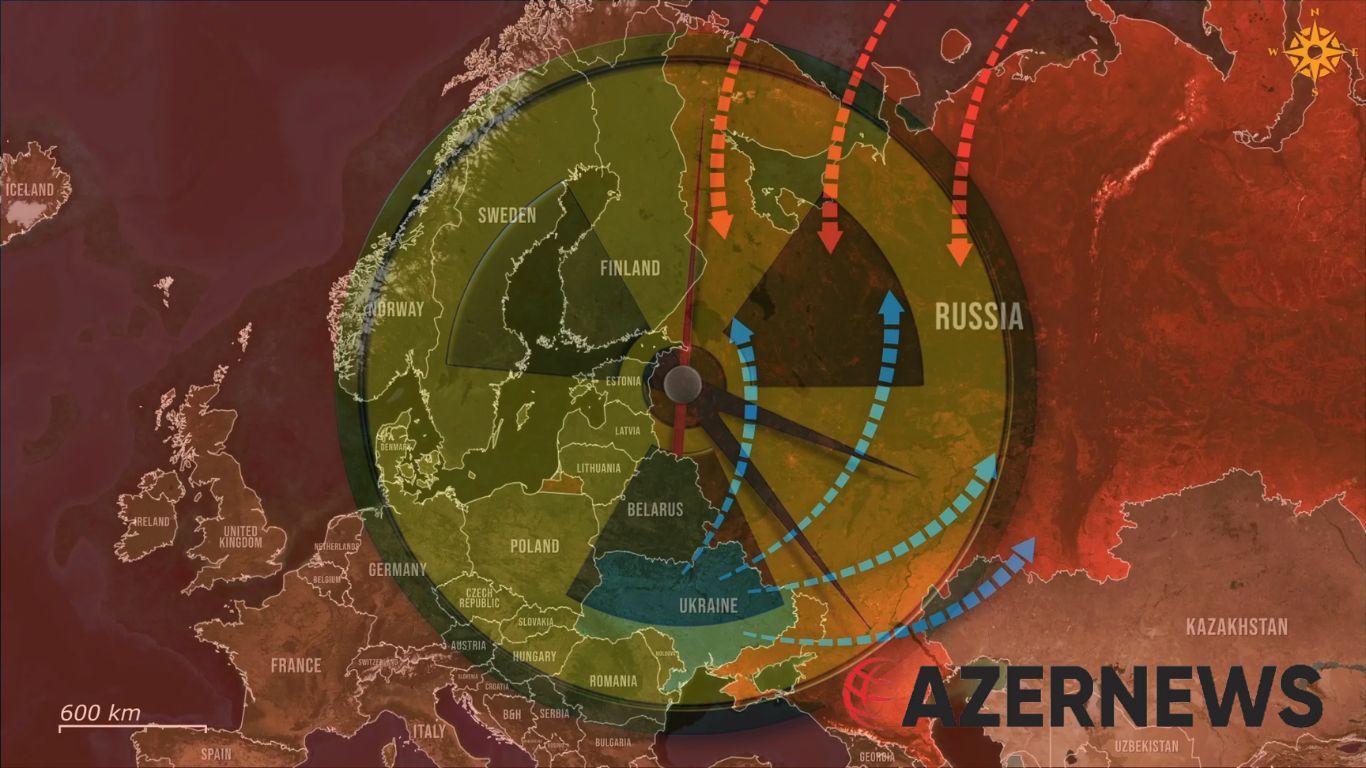
The likelihood of Russia actually using a nuclear weapon against Ukraine remains low, although it cannot be dismissed entirely. The most powerful argument against such a decision is not humanitarian restraint but strategic calculation. A nuclear strike would almost certainly destroy many of the assumptions underpinning Moscow's current strategy. It could provoke direct Western intervention, produce overwhelming international condemnation, accelerate military assistance to Ukraine and potentially fracture Russia's relationships with countries that have so far avoided openly confronting Moscow.
Besides, given the existence of significant factions within Russia, this could, in itself, fuel growing tensions between anti-government forces and the Kremlin, particularly over the country's increasingly confrontational foreign policy. In other words, there are forces that oppose Russia opening multiple fronts and becoming embroiled in conflicts on several fronts simultaneously. The recent cracks emerging between influential oligarchs and the current authorities, as well as the re-emergence of Roman Abramovich, the Jewish-born billionaire and former governor of the Chukotka Autonomous Okrug, on the political stage could represent a genuine risk for the Kremlin at such a sensitive juncture.
Moreover, there is also a geographic reality that complicates the nuclear scenario. Russia's nuclear energy infrastructure and civilian population centres are not isolated from the consequences of radioactive contamination or a wider nuclear escalation. Any nuclear use in Ukraine would carry unpredictable risks for Russia itself and neighbouring states. The idea that Moscow could use nuclear weapons in Ukraine without facing consequences is therefore difficult to reconcile with the geography of the conflict.
More importantly, a Russian nuclear strike would establish a precedent with consequences far beyond Ukraine. If a nuclear power successfully used nuclear weapons to achieve territorial or political objectives without suffering catastrophic strategic consequences, other states could conclude that acquiring nuclear weapons is the ultimate insurance policy. The result would be a dangerous acceleration of nuclear proliferation.
That is why the nuclear threshold remains so high.
The more immediate risk is therefore not a deliberate nuclear war but a prolonged conventional conflict accompanied by increasingly dangerous escalation around its edges. The longer the war continues, the greater the possibility of an accident, a miscalculation or an unintended confrontation involving the West.
This is where the Lavrov-Rubio meeting becomes important. It does not mean that Moscow and Washington are close to an agreement. But in a conflict involving nuclear powers, communication itself is a strategic asset. The fact that senior American and Russian officials can still meet and discuss Ukraine provides at least one mechanism for clarifying red lines and preventing misunderstandings. The talks are unlikely to produce an immediate breakthrough, but they may help prevent the worst outcome.
The war is therefore unlikely to end tomorrow, but neither is a nuclear catastrophe the most probable conclusion. The likeliest scenario remains a longer war followed by intermittent diplomatic efforts, temporary pauses and eventually a negotiated settlement shaped by exhaustion and battlefield realities.
The greatest danger is that the conflict becomes normalised as a permanent state of confrontation. Russia has shown that it is prepared to sustain enormous costs to pursue its objectives. Ukraine has shown that it is unwilling to surrender its sovereignty. And the EU has demonstrated that it will continue supporting Kyiv while trying to avoid direct war with Moscow.
The central question is consequently not whether the world is heading inevitably towards nuclear war. It is whether diplomacy can move faster than escalation.
At present, the answer is uncertain. But the existence of the Lavrov-Rubio channel, however fragile, is a reminder that the door to diplomacy remains open. Keeping that door open may be the most important task of all. Because the most realistic danger is not that either Russia or the North Atlantic Alliance consciously decides to start a world war. It is that a conflict designed to remain below that threshold gradually becomes too complex, too violent and too unpredictable for either side to control.
Here we are to serve you with news right now. It does not cost much, but worth your attention.
Choose to support open, independent, quality journalism and subscribe on a monthly basis.
By subscribing to our online newspaper, you can have full digital access to all news, analysis, and much more.
You can also follow AzerNEWS on Twitter @AzerNewsAz or Facebook @AzerNewsNewspaper
Thank you!