
Ancient city emerges beneath Kilsadag Temple Complex [PHOTOS]
![Ancient city emerges beneath Kilsadag Temple Complex [PHOTOS]](https://www.azernews.az/media/2026/07/23/ferfporef1.jpg)

Laman Ismayilova
Read moreArchaeologists from the Institute of Archaeology and Anthropology of the Azerbaijan National Academy of Sciences (ANAS) have completed the fifth consecutive season of excavations at the Kilsadag Temple Complex in Azerbaijan's Gabala district, AzerNEWS reports citing the Institute of Archaeology and Anthropology.
The latest fieldwork continues a long-term archaeological research project that has been underway at the site since 2022.
The expedition, titled Archaeological Research of the Material and Cultural Heritage of Caucasian Albania, was led by Associate Professor Natig Alishov, PhD in History, from the Institute's Department of Ancient Period and Albanian Archaeology.
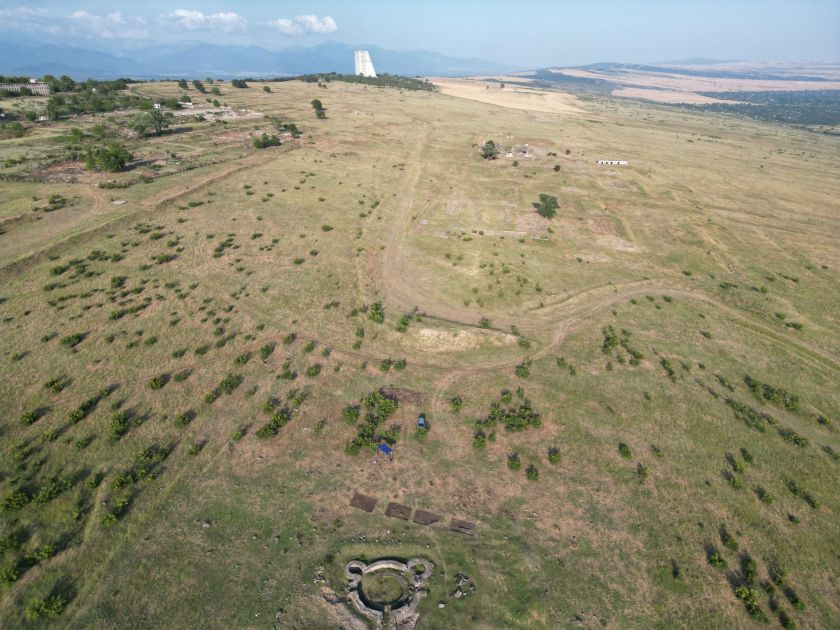
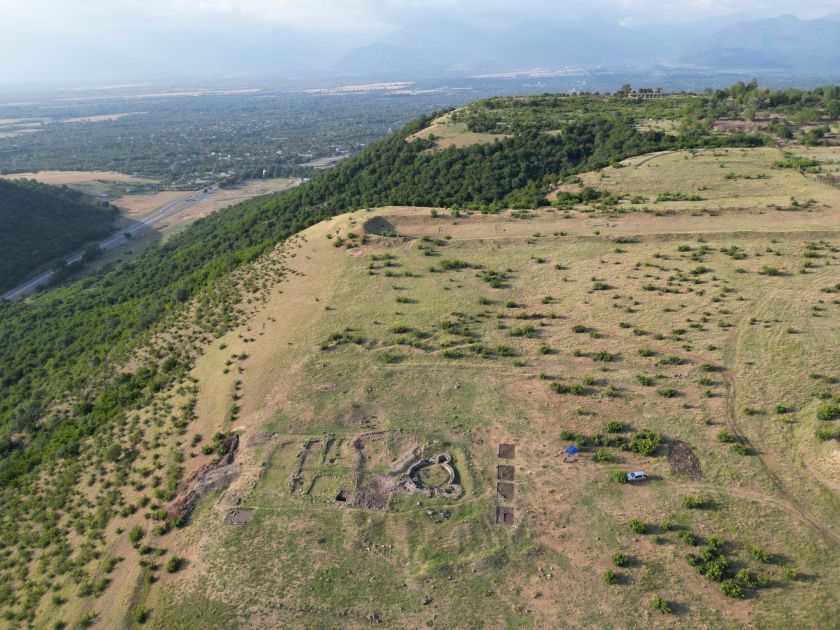
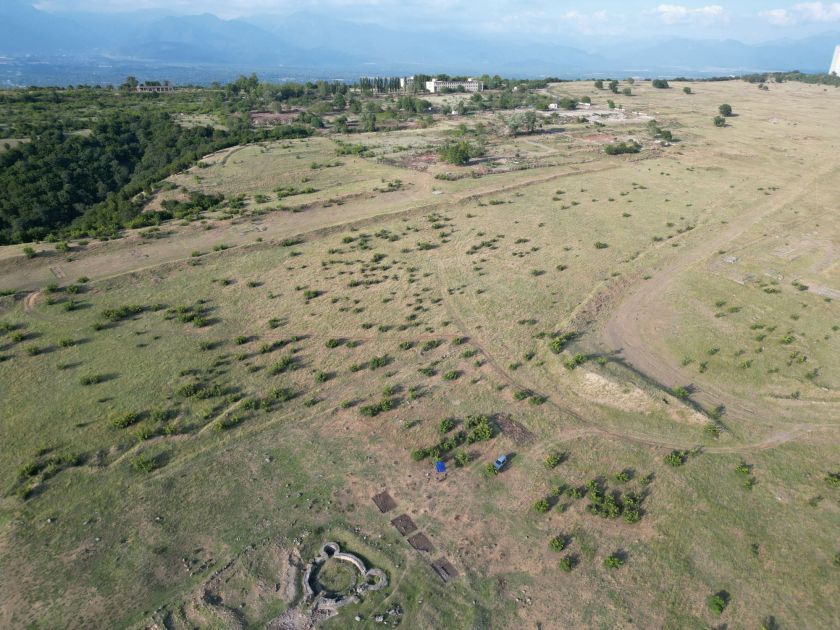
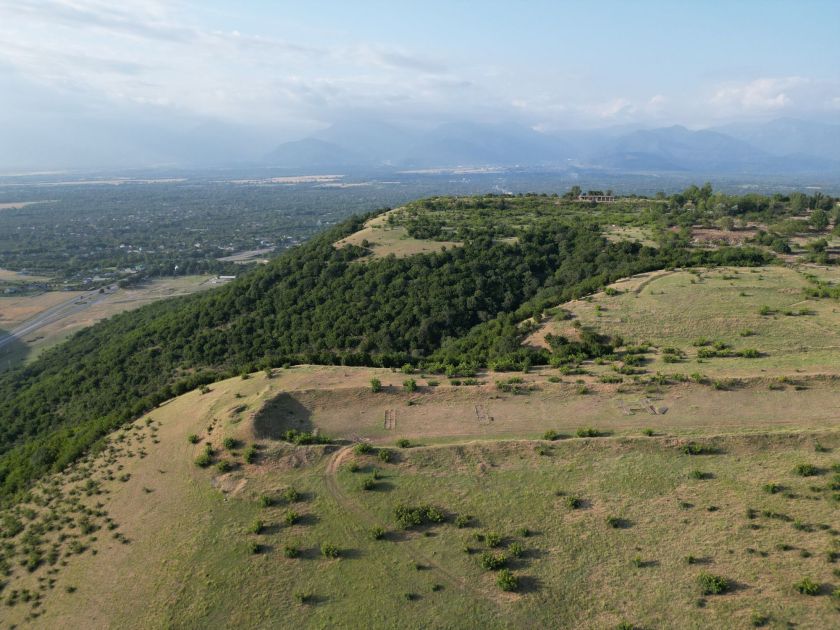
This year's fieldwork focused on uncovering the architectural features of the site's surviving structures and further investigating the fortified acropolis surrounding the temple complex. Each excavation season has expanded researchers' understanding of what is emerging as one of the country's most significant archaeological sites linked to ancient Caucasian Albania.
Previous excavations in 2025 revealed sections of defensive walls and the foundations of two strategically positioned towers protecting the acropolis. Building on those discoveries, archaeologists widened the excavation area this year to examine the site's fortification system in greater detail.
The results exceeded expectations. Survey excavations indicate that the complex was defended by more than ten towers, suggesting a much larger and more sophisticated defensive network than previously believed. In excavation squares identified as K and L, researchers uncovered additional sections of the fortress wall enclosing the eastern side of the circular temple, together with the remains of three towers constructed parallel to the defensive walls.
Excavations also continued inside Room No. 1, where a test trench had been opened during the 2025 season to better understand the site's cultural layers. Archaeologists uncovered a stone-box grave and two earth burials, discoveries that may prove crucial in reconstructing the chronology of the settlement.
One of the most significant findings is that these burials were located beneath the foundations of the religious and public buildings uncovered during excavations over the past four years. This indicates that the cemetery predates at least part of the monumental architecture, pointing to several distinct phases of occupation and development at the site.
Anthropological samples collected from the graves will undergo radiocarbon (C-14) analysis, which is expected to provide a more precise chronology for the burials as well as the construction of the fortress walls and defensive towers surrounding the temple complex.
The latest field investigations also suggest that the fortifications extended well beyond the circular temple itself. Archaeologists believe the defensive system once formed part of a much larger settlement.
Researchers note that a considerable portion of the archaeological site suffered extensive damage during the Soviet period, when the Gabala Radar Station (RLS) was built in the nearby Emilidag area. The military installation occupied hundreds of hectares, and its construction affected the northeastern section of the ancient settlement. Defensive trenches, air-defense positions, and other military structures significantly disturbed the archaeological landscape.
Despite these losses, substantial remains have survived beneath the ground. Archaeologists believe the ongoing excavations around the Kilsadag Temple Complex and its surrounding acropolis may ultimately reveal the remains of another major city of ancient Caucasian Albania.
Situated near Amili village in the Gabala district, the Kilsadag Temple Complex has yet to be identified in known written historical sources. Nevertheless, each excavation season brings new evidence that the site was not merely an isolated religious monument but part of a large, fortified urban center whose history is only beginning to emerge.
Here we are to serve you with news right now. It does not cost much, but worth your attention.
Choose to support open, independent, quality journalism and subscribe on a monthly basis.
By subscribing to our online newspaper, you can have full digital access to all news, analysis, and much more.
You can also follow AzerNEWS on Twitter @AzerNewsAz or Facebook @AzerNewsNewspaper
Thank you!