
Azerbaijan rises from energy partner to strategic player in Europe

Ulviyya Poladova
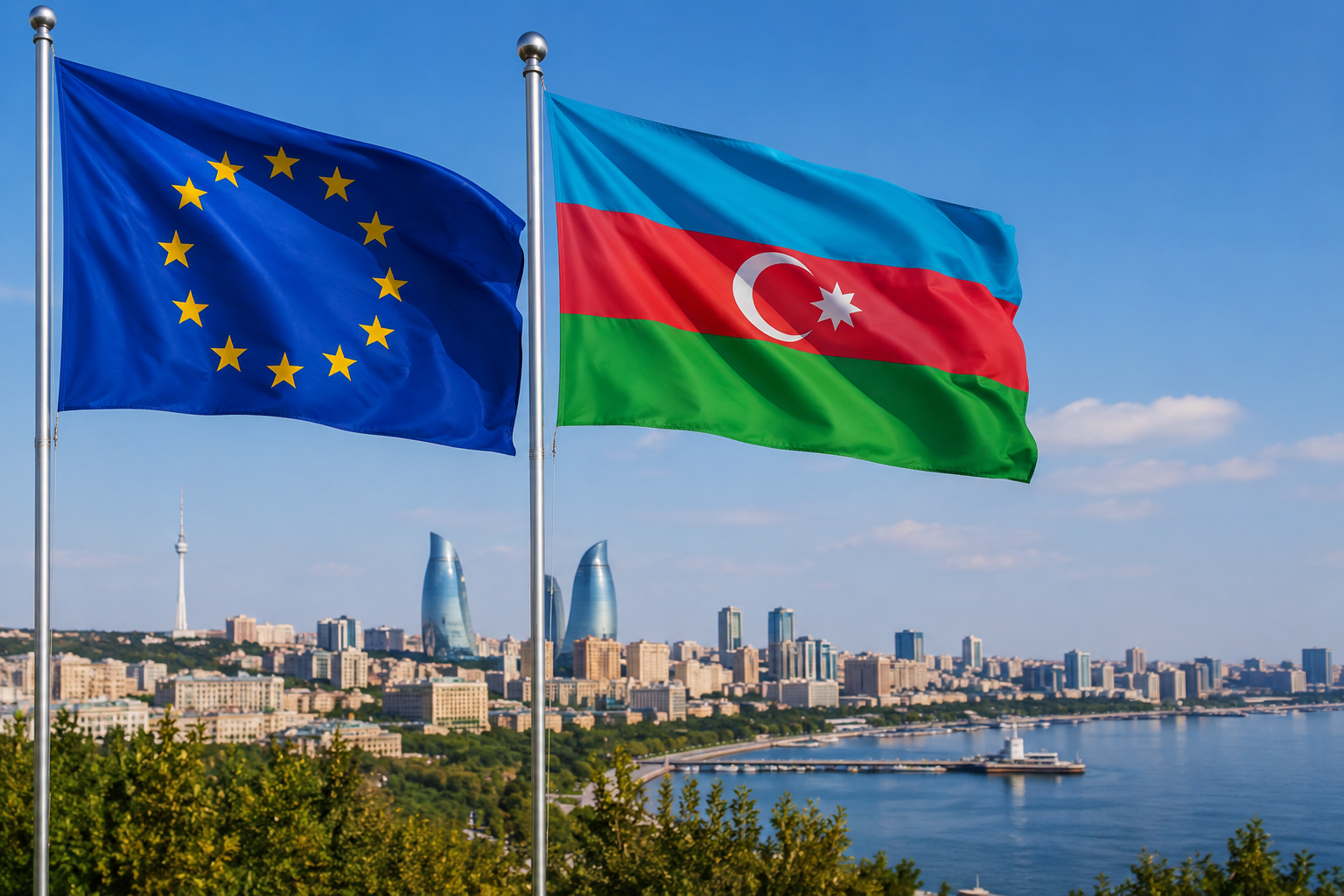
Read moreThe official visit of Azerbaijani President Ilham Aliyev to Germany, which began on July 21, 2026, marked a significant milestone in relations between Baku and Berlin and reflected a broader transformation in Azerbaijan’s position within the European political landscape.
The signing of the "Joint Declaration on a Strategic Agenda for the Bilateral Partnership" by President Ilham Aliyev and German Chancellor Friedrich Merz became one of the key outcomes of the visit. The document demonstrated a new level of political understanding between Azerbaijan and Germany and confirmed the growing importance of bilateral relations.
The symbolism is hard to miss. Germany is now the second major Western European country (after Italy) to formalize relations with Azerbaijan in a strategic partnership format. Read alongside Italy's earlier move, this sequence of diplomatic decisions suggests that Azerbaijan's political weight in Europe is steadily increasing, and that the major European Union member states increasingly view Baku as one of their most important partners across the Eurasian space.
During his visit to Berlin, President Aliyev also addressed the development of relations between Azerbaijan and the European Union, emphasizing the importance of recent high-level contacts.
"This year, we witnessed visits to Azerbaijan by both the President of the European Council, Mr. Costa, and the President of the European Commission, Ms. Ursula von der Leyen. These visits hold significant political importance. This will further strengthen relations between the European Union and Azerbaijan," President Ilham Aliyev said during a joint press conference with Chancellor Merz.
The Berlin visit came amid a period of unprecedented diplomatic activity between Azerbaijan and European institutions and capitals.
On March 11, 2026, European Council President António Costa paid an official visit to Baku - his first visit to Azerbaijan in this capacity. His discussions with President Ilham Aliyev covered strategic partnership, energy, transport, and security cooperation.
A few months later, on May 4, 2026, Italian Prime Minister Giorgia Meloni arrived in Baku for an official visit. Energy cooperation was one of the central topics of discussions. President Ilham Aliyev noted that Azerbaijan exported around 25 billion cubic meters of natural gas in the previous year, with 9.5 billion cubic meters delivered to Italy, and both sides discussed possibilities for increasing supplies.
Italy has long been one of Azerbaijan’s closest European partners, particularly in the energy sector. The expansion of strategic ties with Rome has also strengthened Azerbaijan’s role in Europe’s efforts to diversify energy sources.
On May 5, 2026, President Ilham Aliyev received a delegation led by Kaja Kallas, the European Union’s High Representative for Foreign Affairs and Security Policy and Vice-President of the European Commission. During the meeting, the head of state emphasized that the EU remains one of Azerbaijan’s main trade partners and highlighted Baku’s role as a reliable contributor to Europe’s energy security.
The Azerbaijani leader also pointed out that Azerbaijani gas had recently begun reaching additional EU member states, including Germany and Austria, further expanding the country’s energy footprint in Europe.
Barely four months after Costa's visit, European Commission President Ursula von der Leyen arrived in Baku on July 1. She offered striking praise for Azerbaijan's foreign policy trajectory, highlighting Baku's contribution to a peace agenda, its role in regional stability, and what she called a strategic vision for the future. Her remarks signaled that Brussels sees Azerbaijan as one of the principal guarantors of long-term stability in the South Caucasus.
Another significant European visit followed on July 13, 2026, when Slovak President Peter Pellegrini arrived in Azerbaijan. Discussions focused on bilateral relations, infrastructure and social projects, as well as Slovakia’s possible participation in reconstruction efforts in Azerbaijan’s liberated territories, including Karabakh and the Aghdam region.
The increasing frequency of high-level European visits reflects a broader shift in Azerbaijan’s international standing. As a result of its active foreign policy, strategic location, energy resources, and diplomatic initiatives, Azerbaijan is increasingly viewed as a middle power whose position is taken into account on regional and international issues.
Azerbaijan’s foreign policy strategy has focused on developing relations with different centers of power based on mutual respect, national interests, and equal cooperation. In its dialogue with the European Union, Baku has increasingly emphasized that political agreements should be supported by practical outcomes and concrete projects.
The country’s growing importance is particularly visible in the energy sector. Against the backdrop of Europe’s efforts to diversify energy supplies following the war in Ukraine, Azerbaijan has strengthened its reputation as a reliable alternative supplier. Today, Azerbaijani natural gas reaches 12 European countries, making energy cooperation one of the central pillars of relations with the EU.
Although energy remains a key element of Azerbaijan’s relationship with Europe, cooperation is expanding into transportation, connectivity, security, investment, technology, and regional stability.
At the same time, Azerbaijan considers the EU its leading economic partner and seeks to transform political dialogue into long-term economic and institutional cooperation.
Strategic partnerships with major EU states lend weight within Brussels. A strong relationship with Brussels, in turn, enhances Baku's standing with individual member states.
Germany's decision to formalize a strategic partnership with Azerbaijan is, in one sense, simply a recognition of realities that have been building for years. In another sense, it is a bet on Azerbaijan's continuing reliability as an energy supplier, on its durability as a regional actor, and on the proposition that a middle power with multi-vector diplomacy can become a structural partner for a union.
Here we are to serve you with news right now. It does not cost much, but worth your attention.
Choose to support open, independent, quality journalism and subscribe on a monthly basis.
By subscribing to our online newspaper, you can have full digital access to all news, analysis, and much more.
You can also follow AzerNEWS on Twitter @AzerNewsAz or Facebook @AzerNewsNewspaper
Thank you!