
Azerbaijan wins the corridor race, but geopolitics get uncomfortable
Akbar Novruz
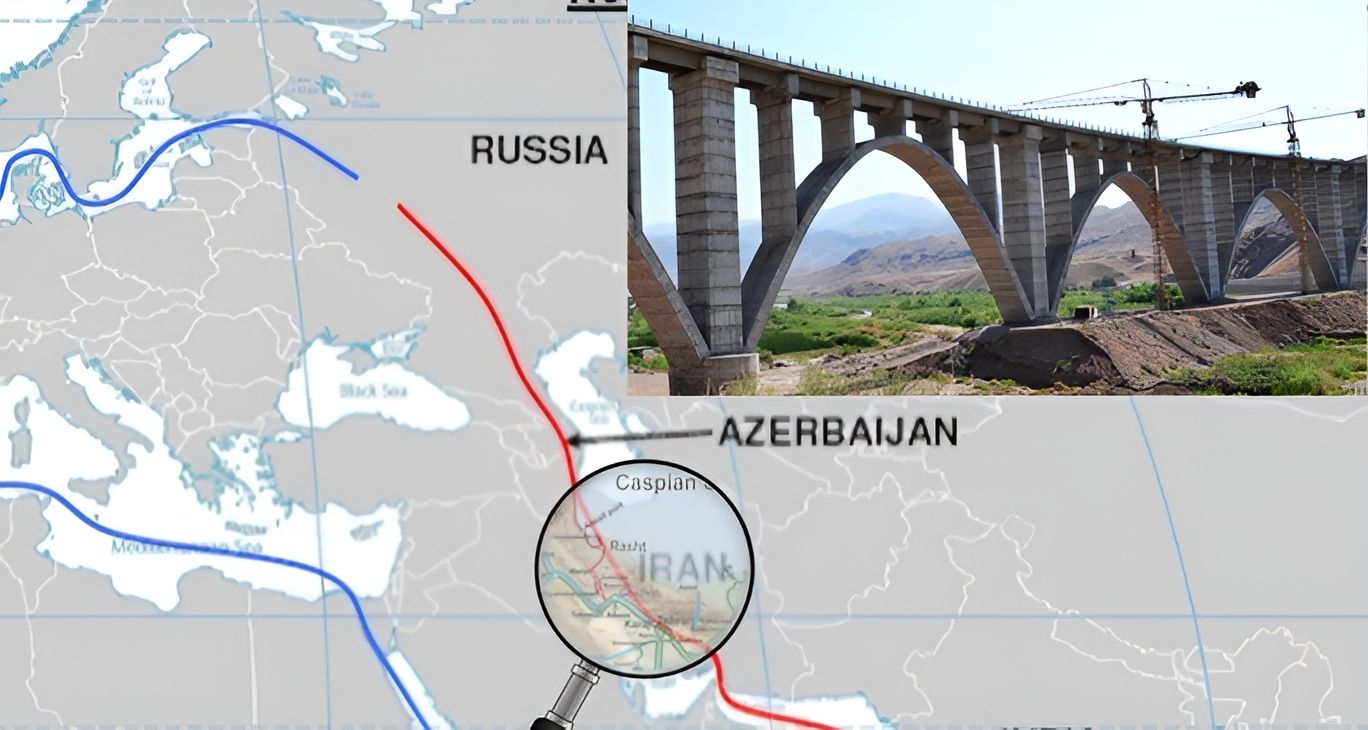
Read moreThis week, the Iranian Railways Administration officially confirmed that construction of the 162 km railway Rasht-Astara will start immediately after completion of land acquisition in its route area. This information has been delivered by Jabbar Ali Zakari, the head of the Iranian Railways Authority, and comes in a context that its creators, the Russian and Iranian governments, signing a €1.6 billion co-financing agreement in 2023, was certainly not expected. Russia is in the midst of military confrontation with Ukraine and subjected to comprehensive Western sanctions. Iran has recently been through its own confrontation with the US and Israel and its cease-fire is still precarious. April 1, 2026, executive contract on construction, planned for the transport forum in Moscow, has not been fulfilled because of the war. But the engineering survey has already resumed. The project is back. The question for Baku is not whether the railway is a good idea. It is what attitude a country in Azerbaijan's specific position should take toward a project being built by its two neighbours under circumstances that have changed dramatically since 2023.
Firstly, let us start with what is true about the Rasht-Astara railway on its own merits. There is an urgent need for the development of the International North-South Transport Corridor, the multimodal transport system linking Northern Europe with the Indian Ocean via Russia, the Caucasus and Iran. Container traffic by the Astara corridor was up 51 percent in the first nine months of 2025 compared to the same period of the previous year. In particular, the traffic of the eastern branch has doubled. The western branch is the shortest one, passing through Azerbaijan and Iran, and it lacked only one element throughout its history: a railway line between Rasht and Astara. Now that the section is built, the freight unit can be delivered from Indian Ocean ports via Iran, across the border of Azerbaijan through Astara by train, northwards through Azerbaijan up to Russia without separating the freight unit. It is a considerable step forward in the trade relations of all the parties, including Azerbaijan earning transit fees from each transported tonne.
Since the signing of the initial deal in 2023, the importance of INSTC as a component of international trade has become even greater. Disruption of the Red Sea, Hormuz blockade, as well as the general disintegration of the global trade architecture post-2022, have all contributed to the increase in the need for alternative overland transportation from those that traverse contested straits. In the current reality of both Hormuz and the Red Sea being disrupted – a state of affairs present since most of 2026 – the proposition by the INSTC of a land route from the Persian Gulf to Europe through the Caspian has never been more commercially appealing than it is now. Well, even before the Iran war, China-Europe rail freight surged 25% in January-February 2026. The Iran war and Hormuz closure subsequently "completely shook up the supply chain."
Now the problem, and the dilemma
The issue with the Rasht-Astara project lies not in the rail line itself. In terms of a 162-kilometer rail line that links up the pre-existing railway system of a major Middle Eastern nation with a transcontinental railway line, it is definitely an infrastructure project of unquestionable value. The problem is one of context, where the rail line is being developed by two nations, Russia and Iran, which are under international sanctions, have been involved in recent conflicts, and whose relations with Azerbaijan have soured at times. Any financial involvement with Russian state entities triggers secondary sanctions risk for Azerbaijani institutions with Western exposure. Transit cooperation is different from equity participation; Baku should maintain the distinction carefully in practice, not just in principle.
President Ilham Aliyev articulated the dilemma at the Shusha Global Media Forum last week with characteristic precision: Azerbaijan is indeed the country that has benefited most from the current geopolitical disruption Middle Corridor traffic surging, gas exports elevated by Iran-disrupted markets, strategic position valued by European and Asian partners simultaneously. But he also noted, and the observation is important, that this is not a comfortable position to be in.
Indeed, being the neutral island in a sea of disrupted corridors is profitable, but it is also precarious. Every paralysed route around Azerbaijan increases Baku's economic significance. It also increases the pressure on Azerbaijan to take sides, to facilitate corridors that implicate sanctioned partners, and to make choices that its current non-aligned posture is specifically designed to avoid.
It all comes down to the Rasht-Astara issue. Azerbaijan is not being asked to fund the project; this is the €1.6 billion business of Russia and Iran. It is not being asked to construct it; the Russian specialists and Iranian contractors will do this job on Iranian soil. What Azerbaijan can provide is the northern endpoint: the Astara border crossing, the Azerbaijani rail system, and the link to Georgian seaports and the Baku-Tbilisi-Kars railway, which makes the western branch of the INSTC valuable. In the absence of cooperation from Azerbaijan, the railway dead ends at the border without any practical use. In the presence of Azerbaijan's cooperation, the railway creates a corridor stretching from the Persian Gulf through two sanctioned countries to the Russian rail system. As of now, official Baku has stated its readiness in its own parts several times. The revenue from transit fees is very real. The risk of secondary sanctions for involvement in such a corridor built on the money of sanctioned Russia and sanctioned Iran is also real.
Araz Valley dimension and implications on future
Now, even as Rasht-Astara stalls, the Araz Corridor is moving forward. Following a trilateral meeting of railway heads from Azerbaijan, Russia, and Iran in Moscow, at which a trilateral protocol was signed, attention has turned to the Araz valley corridor as a complementary or alternative routing option. This is the dimension that foreign analysis of the INSTC frequently misses: Azerbaijan is not simply a passive transit state in this equation. It has its own southern corridor interests, connections to Nakhchivan, to Türkiye, and through Iran to the Persian Gulf, that make the INSTC's western branch relevant to Baku as a user. If the Zangezur corridor (TRIPP) opens and connects Nakhchivan to Türkiye, and if the INSTC western branch provides a southern connection to Persian Gulf ports through Iran, Azerbaijan potentially sits at the intersection of two complete transcontinental corridors simultaneously. That is an even stronger position than the one it currently occupies. But it requires both projects to actually function, and one of them is being built by two countries whose current political and military situations make reliable project delivery a genuine question.
Having said all that, this does not mean that Azerbaijan needs to go against Rasht-Astara, block it, or refrain from cooperating with it once it is operational. What this means is that the right approach for Azerbaijan to take is the approach that it has already taken with regard to the INSTC project as a whole – transit cooperation is offered; equity participation in sanctioned partner organizations is out of the question; and the pace at which the western section of the INSTC will move forward is Moscow’s and Tehran’s responsibility rather than Baku’s. For Baku, the key investment of political and commercial capital is in the Middle Corridor, with the World Bank, ADB, AIIB, EBRD, and the Czech Republic as investors, not two countries whose financial system is comprehensively sanctioned internationally. Readiness and eagerness are very different things. Baku can well be willing to see how the western section of the INSTC project develops without having to shoulder its political and regulatory costs in the process.
Here we are to serve you with news right now. It does not cost much, but worth your attention.
Choose to support open, independent, quality journalism and subscribe on a monthly basis.
By subscribing to our online newspaper, you can have full digital access to all news, analysis, and much more.
You can also follow AzerNEWS on Twitter @AzerNewsAz or Facebook @AzerNewsNewspaper
Thank you!