
Ukraine war remains central test of Russia’s power

Qabil Ashirov
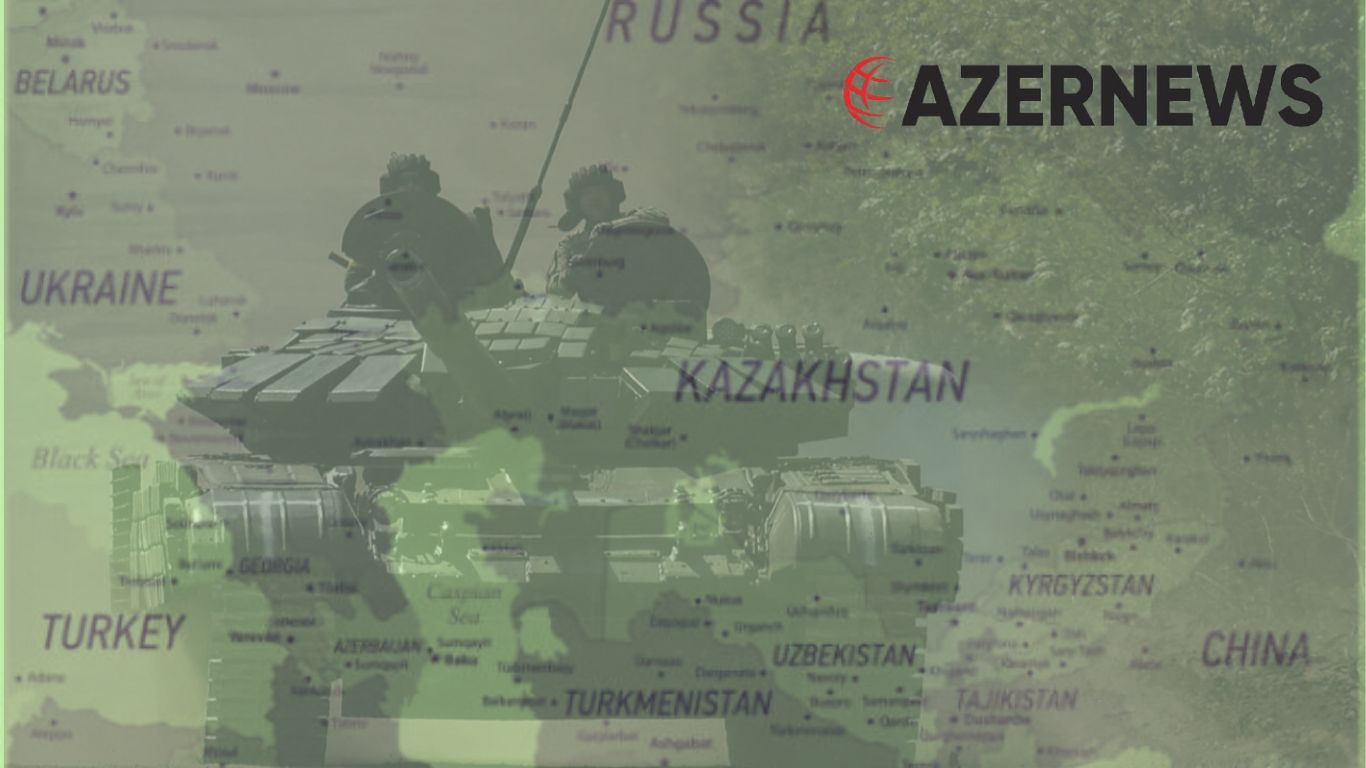
Read moreIn recent months, several state-aligned media outlets in Russia have once again turned their attention to the South Caucasus and Central Asia with a tone that feels unmistakably coercive. The rhetoric carries echoes of an older imperial reflex that many believed had long been subdued. Given the tightly managed nature of Russia’s media landscape, it would be naive to interpret these messages as the independent musings of individual commentators. More plausibly, they are the calibrated signals of a political center seeking to project influence beyond its borders.
Unsurprisingly, such language has not been well received across the targeted regions. For some, it provokes irritation; for others, anxiety or even fear. Yet the more pressing question is not the emotional reaction it generates, but why this rhetoric is resurfacing now.
One explanation lies in domestic political calculations beyond Russia’s borders, particularly in Armenia. As Yerevan approaches another electoral cycle, Moscow appears eager to remind Armenian society, and the wider region, of what it considers its enduring leverage. The government of Prime Minister Nikol Pashinyan has, at least rhetorically, sought to distance itself from Russia’s orbit. For the Kremlin, this drift is unacceptable. The messaging, therefore, seems designed to underscore what Moscow still views as its strongest card: raw power. Whether that power remains as formidable as advertised, however, is an open question.
At a deeper level, Russia’s posture reflects a broader historical impulse, which is more like the desire to reclaim its past status as a dominant force in European and Eurasian affairs. But great power status in the modern era requires more than military weight. It demands a compelling narrative and a competitive edge in technology and innovation. Here, Russia faces a profound deficit.
During the Soviet era, Moscow offered the world an ideological story centered on social equality and resistance to imperialism. That narrative, however flawed in practice, resonated across large parts of the globe. In the decades since the Soviet Union’s collapse, Russia has struggled to articulate a similarly compelling vision. It has not replaced ideology with innovation, nor has it developed a unifying global proposition capable of attracting partners.
Technologically, the gap has widened. Russia trails significantly behind the West. While the Soviet Union was a pioneer—launching the first satellite and inventing the Active Protection System (APS) for tanks—modern Russia has struggled to maintain that edge. Ironically, despite inventing the APS to protect armor during the Afghan War, Russian tanks lack this very protection today.
In the absence of a persuasive narrative or technological leadership, Moscow appears increasingly reliant on its remaining instrument of influence: the projection of military strength. Yet even here, the picture is more complicated than it first appears.
To tell the truth, Russia remains significantly stronger than any individual state in the South Caucasus or Central Asia—whether measured by military capacity, demographic scale, or strategic depth. But raw strength no longer guarantees freedom of action. The nature of conflict has evolved. Since the mid-20th century, wars have increasingly been shaped by external support, advanced logistics, and asymmetric technologies. Weaker states, backed by powerful allies, have repeatedly managed to resist or even defeat stronger adversaries.
The ongoing war in Ukraine illustrates this shift with stark clarity. In a different era, Russia’s initial advantages might have translated into a swift victory. Instead, Western military aid, combined with Ukraine’s adaptive use of relatively inexpensive technologies, such as modified commercial drones, has imposed high costs on Russian forces. High-value military assets have been neutralized by tools that are cheap, accessible, and effective.
At the same time, Russia finds itself trapped in a strategic impasse. It cannot easily end the war without appearing to concede defeat, yet it has also struggled to achieve its stated objectives. The result is a prolonged stalemate, one that drains resources, limits flexibility, and constrains broader geopolitical ambitions.
Economic factors provide only partial relief. Rising revenues from commodities such as oil and gold have offered some support, but they do not offset the structural pressures created by sanctions, battlefield losses, and long-term isolation. Meanwhile, sustained financial and military assistance to Ukraine from Western countries suggests that the conflict may endure for years. Even so, longevity alone does not guarantee victory for either side. A more plausible outcome is mutual exhaustion.
This reality carries important implications. Russia’s capacity to engage in new conflicts is severely limited. The losses incurred in Ukraine will take years to replenish, particularly under the weight of ongoing sanctions. Moreover, the territories Russia has annexed function less as strategic assets than as liabilities, requiring constant military presence and vigilance. They hang over Moscow like a modern-day Sword of Damocles, constraining its strategic choices.
In this context, the renewed threats directed at the South Caucasus and Central Asia ring increasingly hollow. Russia may still possess considerable power, but it lacks the freedom to wield it decisively in multiple theaters. Engaged in an active and costly war, it is in no position to open new fronts. Even a hypothetical ceasefire would not resolve this constraint, as the unresolved status of contested territories would continue to demand attention and resources.
Put simply, Russia’s most reliable instrument of influence, its ability to project overwhelming military force, is no longer as credible as it once was. The warnings issued by its media proxies, therefore, appear less like signals of imminent action and more like echoes of a fading paradigm. For audiences across the region, they are increasingly perceived not as threats to be feared, but as reminders of a power struggling to redefine itself in a changing world.
Here we are to serve you with news right now. It does not cost much, but worth your attention.
Choose to support open, independent, quality journalism and subscribe on a monthly basis.
By subscribing to our online newspaper, you can have full digital access to all news, analysis, and much more.
You can also follow AzerNEWS on Twitter @AzerNewsAz or Facebook @AzerNewsNewspaper
Thank you!