
June 15 marks day traditional diplomacy saved Middle East from open war

AzerNEWS Staff
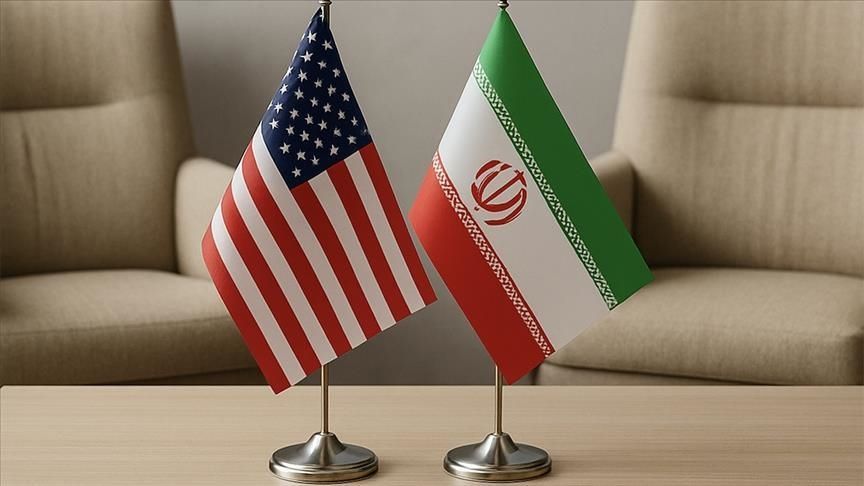
Read moreThe recent announcement of a memorandum of understanding between Tehran and Washington marks a staggering, if fragile, turning point in modern geopolitics. Signed on June 15, this preliminary diplomatic framework arrives at a moment when the international community has grown dangerously accustomed to permanent friction in the Middle East. For decades, the relationship between the United States and Iran has been defined by a cycle of economic warfare, covert operations, and regional proxy conflicts that repeatedly threatened to spill over into catastrophic open warfare. By establishing a formalized window for explicit negotiation, both nations have signaled a mutual recognition that the status quo of maximum pressure and asymmetric retaliation is no longer sustainable. It is an acknowledgment that the costs of perpetual hostility have finally eclipsed the political risks of compromise. While skepticism remains high, the global implications of this diplomatic breakthrough are immense, offering a rare glimmer of structural stability for an increasingly fractured world order.
At the core of this development is a profound opportunity for global economic stabilization, primarily driven by energy security. The systemic isolation of Iran, a nation possessing some of the world's largest proven oil and natural gas reserves, has long acted as an artificial constraint on global energy markets. Under the heavy weight of comprehensive primary and secondary sanctions, Iranian crude was largely restricted, driving up volatility and forcing global supply chains to adapt to inefficiencies. The systematic lifting of these energy sanctions and the physical reopening of the Strait of Hormuz—the vital maritime artery through which roughly a fifth of the world’s petroleum passes—will inject a massive dose of predictability into global commerce. As Iranian oil legitimately rejoins the international market, the immediate consequence will be a natural downward pressure on global Brent crude prices. For an international economy currently struggling against the lingering aftershocks of inflation and supply shocks, a stabilized, cheaper energy supply is exactly the catalyst needed to lower manufacturing costs, ease transportation burdens, and foster steady growth.
Beyond the immediate mathematics of oil barrels and shipping lanes, the agreement addresses the existential dread of nuclear proliferation. The steady advancement of Iran's enrichment capabilities had brought the region to the absolute precipice of a preventive military conflict, an outcome that would have drawn in global superpowers and devastated regional infrastructure. By reaffirming its commitment to the Nuclear Non-Proliferation Treaty under a strict monitoring framework, Tehran offers the international community a verifiable guarantee that its nuclear ambitions remain confined to civilian utility. In exchange, the systematic dismantling of United Nations Security Council resolutions and international sanctions provides Iran with the ultimate prize: a legitimate path back into the global financial architecture. This structural trade-off demonstrates that traditional diplomacy, backed by tangible economic incentives and realistic security assurances, remains the most effective tool for preventing the spread of weapons of mass destruction, far outperforming the blunt instrument of indefinite isolation.
Simultaneously, the geopolitical landscape of the Middle East stands to undergo its most significant realignment since the cold war era. The memorandum’s demand for an immediate, permanent cessation of hostilities across multiple active fronts, most notably including Lebanon, offers a historic chance to wind down the proxy conflicts that have bled the region for a generation. For too long, local populations have borne the devastating human and economic costs of a shadow war fought via non-state actors and strategic blockades. A structured de-escalation between Washington and Tehran deprives these various regional conflicts of their primary geopolitical oxygen. Without the constant flow of localized hostilities, the path opens for regional stabilization, humanitarian relief, and long-term reconstruction. Furthermore, a peaceful Middle East directly benefits adjacent regions, particularly Europe, by substantially mitigating the geopolitical instabilities that spark massive refugee crises and displacement.
Ultimately, this memorandum proves that even the most deeply entrenched geopolitical rivalries can be managed when the alternatives are too catastrophic to contemplate. The world stands to benefit from a more secure maritime commerce network, reduced inflationary pressures, and a measurable decrease in the likelihood of a major regional war. By prioritizing economic recovery and regional stability over ideological purity, both Washington and Tehran have chosen a difficult, deeply scrutinized path of diplomacy. If the next few months of intense negotiation succeed in turning this preliminary memorandum into a permanent, universally recognized treaty, June 15 will be remembered as the day the international community successfully averted a major historical tragedy and rewrote the script for modern global diplomacy.
Here we are to serve you with news right now. It does not cost much, but worth your attention.
Choose to support open, independent, quality journalism and subscribe on a monthly basis.
By subscribing to our online newspaper, you can have full digital access to all news, analysis, and much more.
You can also follow AzerNEWS on Twitter @AzerNewsAz or Facebook @AzerNewsNewspaper
Thank you!