
Azerbaijan’s new power grid links renewables to its gas export strategy

Qabil Ashirov
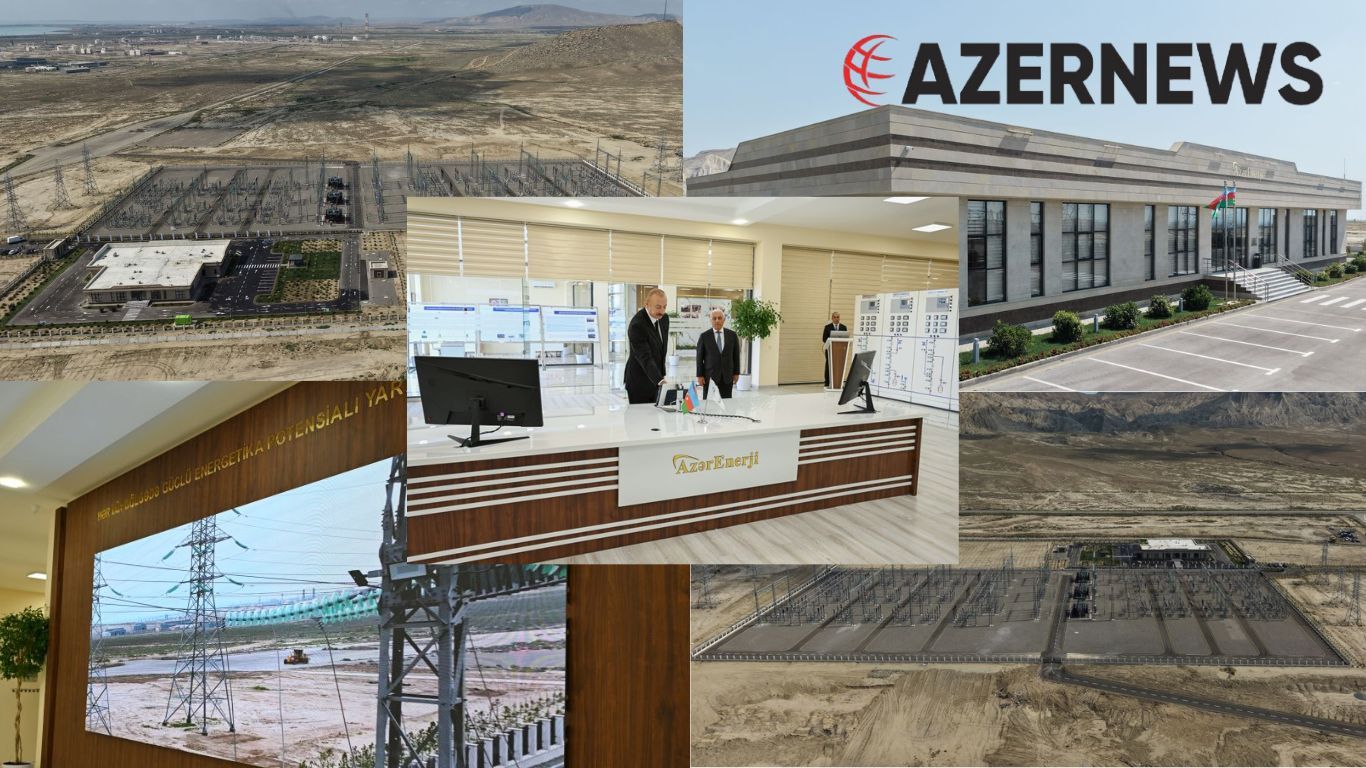
Read moreSome landmarks announce themselves with towering skylines or roaring machinery. Others stand almost unnoticed, hidden behind steel fences and high-voltage cables, quietly shaping the future long before their importance becomes obvious. When President Ilham Aliyev inaugurated the Yeni Sangachal Substation, the ceremony was about far more than switching on another piece of electrical infrastructure. It marked the unveiling of a strategic link between Azerbaijan's traditional energy industry and its emerging renewable power sector. This is a connection that could influence not only how the country consumes energy, but also how it exports it in the decades ahead.
At first glance, a substation appears to be an unremarkable investment. Unlike a power plant, it generates no electricity. Unlike an oil terminal, it exports no hydrocarbons. Yet substations perform one of the most essential functions in any modern energy system: they receive, regulate and distribute electricity across the transmission network. Without them, even the largest solar parks or offshore wind farms cannot reliably deliver power to industries, households or export corridors.
That is precisely why the Yeni Sangachal Substation deserves attention. Located next to one of the world's most important oil and gas terminals, the facility strengthens the reliability of electricity supplies to the Sangachal Terminal while simultaneously preparing it for a lower-carbon future. For decades, Sangachal has symbolized Azerbaijan's hydrocarbon wealth, serving as the gateway through which crude oil and natural gas reach international markets. Today, however, the same terminal is becoming part of a different energy story.
The transformation begins hundreds of kilometers away in the Jabrayil district, where the 240-megawatt Shafag Solar Power Plant is under development. Rather than constructing a dedicated transmission line exclusively linking the solar facility to Sangachal, Azerbaijan has chosen a far more efficient approach. Electricity generated by the solar plant will enter the national high-voltage grid, while an equivalent amount of electricity will be supplied to the Sangachal Terminal through the Yeni Sangachal Substation. The physical electrons reaching the terminal will not necessarily originate from Jabrayil, but from the perspective of the national electricity system, the balance remains the same. Renewable electricity produced in Karabakh effectively replaces electricity that would otherwise have been generated from fossil fuels.
This arrangement carries important environmental implications. Every unit of solar electricity delivered into the grid reduces the need for gas-fired power generation. In practical terms, this lowers carbon emissions associated with one of Azerbaijan's most strategically important industrial facilities. It also supports the broader decarbonization efforts of the Sangachal Terminal and its international partners, demonstrating that the country's energy transition is not about abandoning hydrocarbons overnight but about reducing the carbon footprint of the infrastructure that already exists.
The economic logic is equally compelling. When domestic electricity demand is increasingly met by renewable sources, less natural gas is burned in power plants. The gas that is no longer needed for electricity generation becomes available for export, allowing Azerbaijan to maximize the value of its existing hydrocarbon resources. Instead of viewing renewable energy as a competitor to natural gas, the country is using it as a tool to increase the efficiency of its entire energy economy. Green electricity and natural gas exports are becoming complementary rather than competing pillars of national energy policy.
However, the importance of the Yeni Sangachal Substation extends well beyond today's projects. Azerbaijan has set ambitious targets for expanding renewable electricity generation, with large-scale solar and wind projects planned across Karabakh, the Caspian Sea and other regions. As these facilities enter operation, the challenge will no longer be limited to generating clean electricity. It will be moving gigawatts of power safely and efficiently across the country. That requires a modern transmission network built around strategically located high-voltage substations capable of integrating new generation capacity while maintaining grid stability.
This is also where the project connects to Azerbaijan's longer-term ambitions in European energy markets. The country is increasingly positioning itself not only as a supplier of natural gas but also as a future exporter of renewable electricity. Initiatives such as the Black Sea submarine power cable and other regional electricity corridors depend on a transmission network capable of collecting renewable energy from multiple production centers and directing it toward export routes. While the Yeni Sangachal Substation alone will not send electricity to Europe, it forms part of the infrastructure that makes such ambitions technically achievable. Every additional high-voltage node strengthens the backbone of the national grid that future electricity exports will rely upon.
Infrastructure projects are often judged by what they immediately produce. By that measure, a substation may seem ordinary because it manufactures nothing and exports nothing directly. In reality, its value lies in enabling everything around it to function more effectively. The Yeni Sangachal Substation links renewable generation in Karabakh with one of Azerbaijan's most important industrial assets, supports the decarbonization of the country's energy sector, helps free additional natural gas for export and reinforces the transmission system that will underpin future electricity exports. It may never become the country's most visible energy project, but it could well become one of its most consequential.
Here we are to serve you with news right now. It does not cost much, but worth your attention.
Choose to support open, independent, quality journalism and subscribe on a monthly basis.
By subscribing to our online newspaper, you can have full digital access to all news, analysis, and much more.
You can also follow AzerNEWS on Twitter @AzerNewsAz or Facebook @AzerNewsNewspaper
Thank you!