
Armenia’s transport ambitions collide with Russia’s railway interests

Ulviyya Poladova
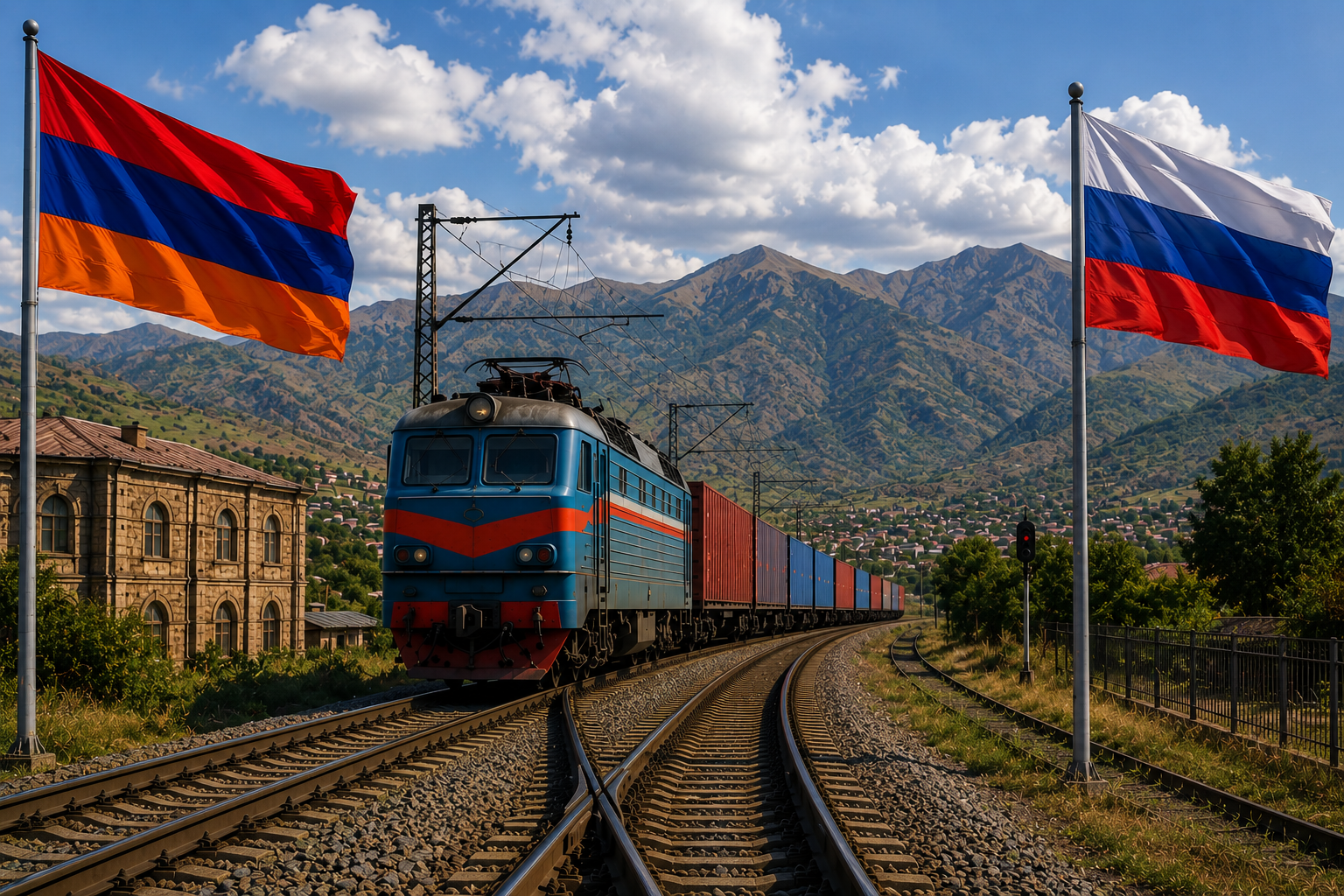
Read morePrime Minister Nikol Pashinyan's latest remarks on Armenia's railways were accute but entirely consistent with the line his government has been developing for months. Armenia, he said, must be able to use its own railway infrastructure as it sees fit, even if that infrastructure remains under a Russian-operated concession.
Pashinyan has made it clear that Yerevan wants to resolve the issue with Russia amicably. At the same time, he warned that if disagreements cannot be settled through negotiations, Armenia is prepared to take the matter to arbitration.
"There is now a lot of talk, mainly by the opposition, about the possibility of prices rising for certain things. But it may turn out that for something that was free in Armenia for 30 years, Armenia will start demanding $2 billion. I am not hinting at the railway; I am saying directly that this is the property of the Republic of Armenia, and there is no other option," Pashinyan noted.
His position reflects a growing conviction within the Armenian government that the existing Russian concession over the country’s railway network has become incompatible with Armenia’s plans to reopen regional transport routes and integrate itself into emerging East-West trade corridors.
The dispute dates back to February 13, 2008, when Armenia signed a concession agreement transferring the management of the state-owned Armenian Railway to South Caucasus Railway, a wholly owned subsidiary of Russian Railways. Under the arrangement, the Russian operator assumed control of Armenia’s railway infrastructure and operations.
The conflict of interests between Armenia and Russia over the railway network has emerged because the same infrastructure now serves two very different strategic visions. For Russia, the concession preserves long-standing influence over a critical artery in Armenia's economy and security architecture. For Armenia, especially under Pashinyan, the railway increasingly looks like a trapped asset.
For years, Armenia's railway question was relatively dormant because the country's borders with Türkiye and Azerbaijan remained closed, making large parts of the network commercially marginal. If transport links with Türkiye and Azerbaijan are reopened, Armenia could become part of new east-west and north-south transit chains. In that context, control over railway policy becomes central to state strategy.
This is why Pashinyan has repeatedly argued that Armenia cannot allow its railways to remain "scrap metal" and why he has linked the issue directly to the country's competitive position in a post-blockade regional order. His government appears to believe that if Armenia enters a new era of regional transport integration while key rail assets remain effectively tied to Russian priorities, the country will miss a rare historic opening.
The existing main east-west transit logic in the region favors the Baku-Tbilisi-Kars railway running through Azerbaijan and Georgia into Türkiye. Armenia is outside that corridor. Yet geographically, certain routes through Armenian territory could be shorter and, under the right political conditions, commercially attractive. The reopening of rail lines toward Türkiye and Azerbaijan could therefore alter the map of regional trade. But only if Armenia can move quickly enough to restore, modernize, and operationalize infrastructure that has long been neglected.
Moscow is unlikely to view the concession as merely a business contract. It is part of a broader architecture of presence in Armenia that has historically included security, energy, and transport dependencies. Relinquishing the railway concession would not just mean losing an economic foothold. It would symbolize a further erosion of Russian influence in a country that has already been drifting away from Moscow politically.
Is Pashinyan acting pragmatically or politically?
Critics argue that Pashinyan is acting more from political motives than from hard-headed economic pragmatism. But a railway line is never just a railway line when it touches borders or trade routes.
Pashinyan clearly has political reasons for raising the issue. Domestically, the demand for greater sovereignty over national assets resonates with a public increasingly skeptical of old dependency models. Internationally, it signals to Western, Turkish, and regional partners that Armenia wants to be treated as an autonomous participant in connectivity projects, not merely as an appendage to Russian-managed systems.
But the economic logic is also real. Armenia has long suffered from geographic and geopolitical isolation. If even part of the region's blocked communications are reopened, transport policy could become one of the few areas where Yerevan can materially improve its structural economic position.
At the end of 2025, Pashinyan warned that if Russia could not begin restoring railway infrastructure promptly, Armenia was prepared to remove the lines from the concession and finance their rehabilitation from the state budget. He has also referred to the possibility of railway connectivity with Azerbaijan and, eventually, Iran through Nakhchivan within the framework of the proposed TRIPP (Trump Route for International Peace and Prosperity) project.
Negotiations between Armenia and Russia over transport unblocking are effectively stuck because the two sides are working from incompatible premises. Thus, Armenia wants functional sovereignty, while Russia insist to preservation of the concession and, by extension, of its influence over how Armenian rail infrastructure develops.
The railway dispute cannot be separated from the wider transformation of Eurasian logistics since 2022. States across Central Asia and the South Caucasus have intensified efforts to develop routes that reduce reliance on Russian territory. The Trans-Caspian, or Middle Corridor, has gained geopolitical importance precisely because it links Asia and Europe while bypassing Russia. Armenia wants to avoid being left on the margins of that process.
If Armenia succeeds in regaining meaningful control over railway policy, it could strengthen its hand in the next phase of regional connectivity politics. If it fails, the country may remain geographically central yet logistically peripheral.
Here we are to serve you with news right now. It does not cost much, but worth your attention.
Choose to support open, independent, quality journalism and subscribe on a monthly basis.
By subscribing to our online newspaper, you can have full digital access to all news, analysis, and much more.
You can also follow AzerNEWS on Twitter @AzerNewsAz or Facebook @AzerNewsNewspaper
Thank you!