
Baku-Bishkek build stronger Turkic axis for changing Eurasia
Elnur Enveroglu
Read moreThe geopolitical map of Eurasia is evolving by shifting trade routes, changing security dynamics and the growing importance of regional partnerships. It is no coincidence that in this rapidly developing environment, Azerbaijan has gradually emerged as one of the region's most influential players. While it was internationally recognised by its role as an energy supplier linking the Caspian basin with European markets, Azerbaijan has expanded its strategic reach far beyond oil and gas. Today, the country serves as a vital bridge between Europe and Asia, leveraging its position along the Middle Corridor, modern transport infrastructure, active energy diplomacy and balanced foreign policy to strengthen ties across the wider region. Let's admit that Central Asia has lately gained greater geopolitical and economic significance, and this cannot remain out of the spotlight. Thus, Baku has become an increasingly valuable partner for the region's emerging economies, helping to foster connectivity, trade and regional cooperation.
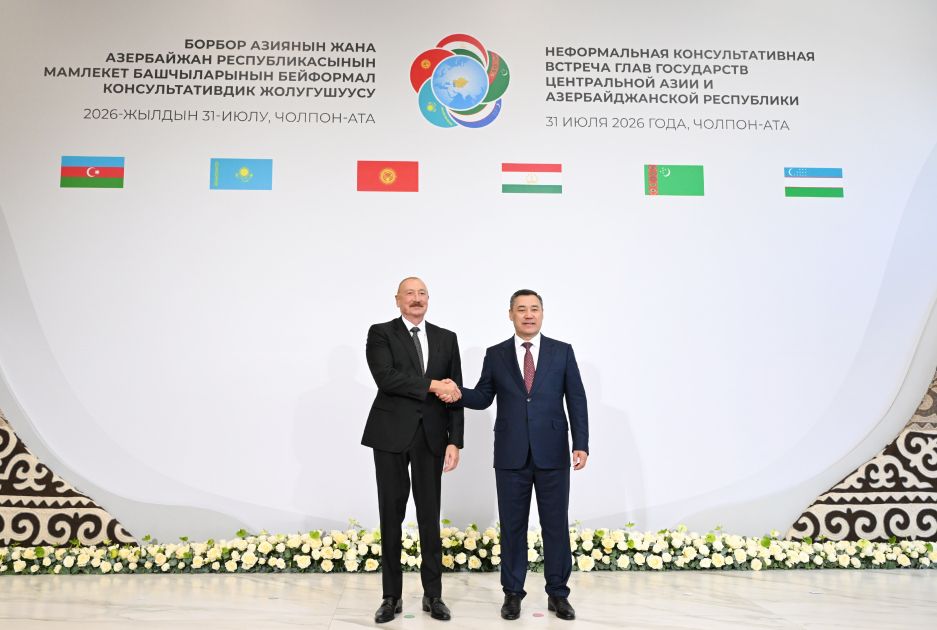
Among these partners, Kyrgyzstan occupies an increasingly important place, where the relationship between the two Turkic nations has developed well beyond traditional diplomatic exchanges into a multidimensional strategic partnership encompassing politics, trade, investment, transport, tourism, education and cultural cooperation. President Ilham Aliyev's state visit to Kyrgyzstan and the outcomes of the third meeting of the Interstate Council in Cholpon-Ata demonstrated that both countries now view each other as long-term strategic allies capable of contributing to regional stability and economic resilience.
This partnership is rooted in more than common historical ties dating back to the Soviet period. Today it reflects a shared vision of a more interconnected Turkic world that can collectively respond to global economic uncertainty, geopolitical tensions and supply chain disruptions. Stronger cooperation among Turkic states creates larger integrated markets capable of withstanding external economic shocks.
The importance of Azerbaijan for Kyrgyzstan has grown considerably over recent years. Baku offers Bishkek something increasingly valuable in today's geopolitical environment: access. Azerbaijan serves as Central Asia's western gateway to Europe through its ports, railways and international transport corridors. As cargo volumes along the Trans-Caspian International Transport Route continue to expand, Kyrgyzstan stands to benefit from Azerbaijan's well-developed logistics infrastructure, particularly the Port of Baku, the Baku-Tbilisi-Kars railway and the broader Middle Corridor connecting Asia with European markets.
Equally significant is Azerbaijan's growing diplomatic influence. Having established productive relations with the European Union, Türkiye, China, the Gulf states and Central Asian republics, Azerbaijan has become an effective bridge between different political and economic centres of power. For Kyrgyzstan, closer ties with such a partner enhance both economic opportunities and diplomatic flexibility.
The documents signed during President Aliyev's state visit mirror this strategic vision, in which the countries collectively form a roadmap for expanding bilateral cooperation across virtually every sector.
At the political level, the Decision of the Third Meeting of the Interstate Council reaffirmed both governments' commitment to institutionalising strategic dialogue. Such mechanisms provide continuity beyond individual administrations and ensure regular coordination on regional and international issues.
The wider package of agreements signed by ministers and senior officials further demonstrated the breadth of cooperation envisaged by both capitals. These included documents covering investment promotion, industrial cooperation, agriculture, transport, digital technologies, environmental protection, education, culture and judicial collaboration. Each agreement may appear sector-specific; however, together they establish the legal and institutional architecture necessary for sustained long-term cooperation.
Particularly notable is the growing emphasis on economic integration, which reflects a broader trend across the Turkic world, where practical cooperation increasingly complements cultural and linguistic affinity.
Moreover, President Ilham Aliyev's remarks during the third meeting of the Interstate Council captured this evolving philosophy. He emphasised that political relations between Azerbaijan and Kyrgyzstan have reached an exceptionally high level and that the next priority is translating this political trust into measurable economic outcomes.
This is an important distinction. While many international partnerships remain largely declaratory, Azerbaijan and Kyrgyzstan are increasingly focusing on implementation. President Aliyev highlighted the need to increase trade turnover, encourage private sector engagement and expand joint investment projects capable of generating long-term value for both economies.
His speech also underlined the significance of cooperation within the wider framework of Turkic integration. As global economic competition intensifies, closer coordination among Turkic states strengthens their collective bargaining power, facilitates regional connectivity and creates greater resilience against external market volatility.
Perhaps the most tangible example of this practical cooperation is the Kyrgyz-Azerbaijan Development Fund. Established to finance joint projects, the fund represents a shift from traditional diplomatic engagement towards direct economic partnership. Rather than relying solely on government-to-government cooperation, the fund actively supports business initiatives capable of generating employment, technology transfer and industrial development.
The scope of potential investments is considerable. Agriculture, food processing, manufacturing, logistics, renewable energy, construction materials, pharmaceuticals and information technologies all offer significant opportunities for joint ventures. Azerbaijani capital, combined with Kyrgyz production capacity and access to Central Asian markets, creates mutually beneficial conditions for business expansion.
The fund also sends an important signal to private investors. Government-backed financial mechanisms reduce investment risks while encouraging entrepreneurs from both countries to explore cross-border opportunities with greater confidence.
Tourism represents another sector with substantial untapped potential. Azerbaijan and Kyrgyzstan possess highly complementary tourism products. Azerbaijan combines Caspian coastal tourism, cultural heritage, modern urban attractions and mountain resorts, while Kyrgyzstan offers spectacular alpine landscapes, adventure tourism, Issyk-Kul Lake and nomadic cultural experiences.
Improved air connectivity, simplified travel procedures and coordinated tourism promotion could significantly increase visitor flows between the two countries. Joint tourism packages targeting international visitors interested in exploring multiple destinations across the Turkic world may become an attractive commercial opportunity. Such cooperation would not only diversify tourism revenues but also strengthen people-to-people contacts and cultural understanding.
Education and youth exchanges can reinforce these long-term objectives. Greater cooperation between universities, research institutions and vocational training centres would help prepare the skilled workforce required for deeper economic integration. Cultural exchanges similarly strengthen the societal foundations of bilateral relations, ensuring that political cooperation is matched by growing public engagement.
The broader regional implications should not be underestimated. As geopolitical competition increasingly focuses on Eurasian connectivity, Azerbaijan and Kyrgyzstan are positioning themselves as active participants rather than passive observers. Their cooperation supports wider efforts to strengthen east-west transport links, diversify regional trade routes and deepen economic integration among Turkic states.
For Azerbaijan, stronger engagement with Kyrgyzstan reinforces its strategic role as the principal bridge between Central Asia and Europe. For Kyrgyzstan, closer ties with Azerbaijan provide improved access to international markets, investment capital and advanced transport infrastructure.
The results of President Ilham Aliyev's state visit therefore extend far beyond bilateral diplomacy, illustrating a wider strategic trend in which political trust is increasingly translated into institutional cooperation, investment, infrastructure development and regional integration.
Looking ahead, the prospects loom as promising. If the agreements signed in Cholpon-Ata are implemented effectively, bilateral trade should continue to expand, joint investment projects are likely to multiply, tourism cooperation will deepen and business communities in both countries will benefit from improved financial support through the Kyrgyz-Azerbaijan Development Fund. Combined with expanding transport connectivity and stronger coordination within the Turkic world, these developments position Azerbaijan and Kyrgyzstan not simply as close partners, but as important contributors to a more integrated, resilient and economically dynamic Eurasia.
Here we are to serve you with news right now. It does not cost much, but worth your attention.
Choose to support open, independent, quality journalism and subscribe on a monthly basis.
By subscribing to our online newspaper, you can have full digital access to all news, analysis, and much more.
You can also follow AzerNEWS on Twitter @AzerNewsAz or Facebook @AzerNewsNewspaper
Thank you!