
Alat cargo airport signals Azerbaijan’s next economic transformation

Qabil Ashirov
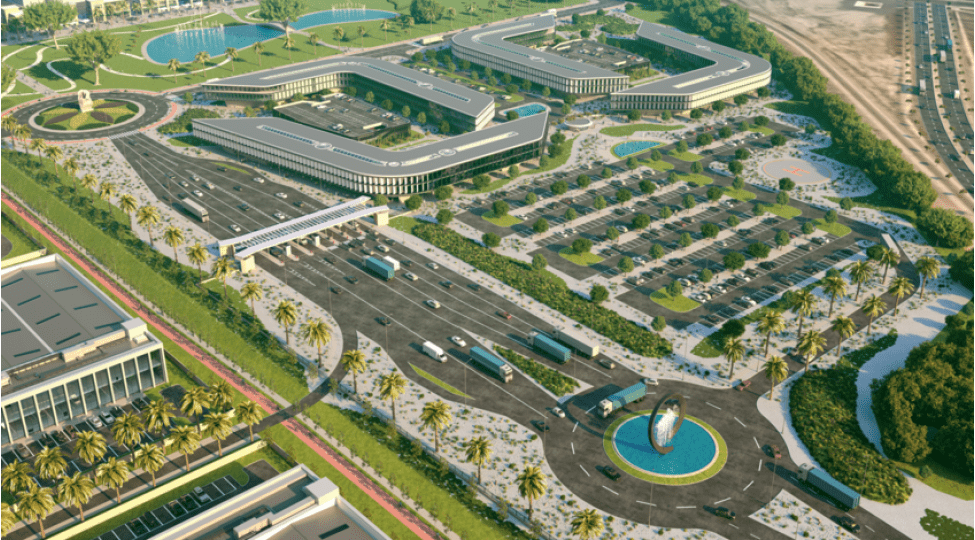
Read moreThe establishment of a dedicated cargo airport within the Alat Free Economic Zone (AFEZ), scheduled for operational launch next year, marks a watershed moment in Azerbaijan’s post-oil economic architecture. For decades, the conceptual framework of transforming the Caspian nation into a pivotal Eurasian logistics hub relied on incremental expansions of maritime and rail networks. However, the introduction of a specialized aviation node within a socio-economically insulated free zone shifts the narrative from traditional transit facilitation to high-velocity global supply chain integration. By engineering a multimodal nexus where sea, rail, highway, and air routes converge under a singular, investor-friendly jurisdiction, Baku is positioning itself not merely as a bridge between East and West, but as a critical production and distribution node capable of capturing high-value international trade.
The strategic rationale behind a specialized cargo airport, as outlined by AFEZ Chairman Valeh Alasgarov, addresses a fundamental shift in modern industrial logistics. While bulk commodities and heavy manufacturing goods continue to rely on maritime and overland rail corridors, the high-tech, pharmaceutical, and high-precision electronics sectors operate on temporal urgency. For these industries, capital efficiency is directly tied to the velocity of inventory turnover. A specialized cargo facility within a free economic zone removes the traditional friction of customs clearance, complex transit logistics, and dual-use bureaucratic oversight. When a high-tech manufacturing entity can receive raw components via an adjacent air cargo terminal, process them within a tax-exempt zone, and export the finished product within hours, the geographical distance between European consumer markets and Asian manufacturing bases effectively shrinks.
This development is particularly significant within the context of the Middle Corridor—the Trans-Caspian International Transport Route. While much of the recent discourse surrounding this corridor has focused on the capacity of rail links and the expansion of the Baku International Sea Trade Port, air cargo has remained the missing piece of the multimodal puzzle. By embedding an airport directly into the infrastructure of Alat, the zone achieves a level of connectivity that few regional competitors can replicate. The physical proximity of the seaport and the cargo airport creates a rare synergy where sea-to-air and air-to-sea freight configurations become seamless. This dual-capacity framework allows international logistics providers to optimize their shipping routes dynamically, shifting urgent components to air freight while utilizing maritime transport for bulk volumes, all within the same regulatory oasis.
Crucially, the philosophy governing the development of Alat reflects an sophisticated understanding of global foreign direct investment (FDI) dynamics. In an era where hundreds of special economic zones globally offer variations of corporate tax holidays, customs exemptions, and full capital repatriation, fiscal incentives alone have become commoditized. They represent the baseline entry requirement rather than a competitive differentiator. The real battleground for premium FDI lies in the quality of physical infrastructure and the elimination of operational friction. By prioritizing a comprehensive ecosystem that pairs generous fiscal terms with pre-constructed infrastructure, streamlined "single-window" administrative procedures, and immediate access to international runways, the zone removes the operational lag that typically deters institutional investors. It transforms the investment proposition from a promise of long-term savings to an immediate reality of operational readiness.
Furthermore, the focus on attracting high-technology firms signals an intentional departure from traditional resource-heavy economic models. High-tech companies do not merely bring capital; they catalyze the transfer of intellectual property, foster local technical expertise, and stimulate the growth of ancillary domestic service sectors. The cargo airport acts as the primary anchor for these enterprises, assuring them that their supply chains remain resilient against regional bottlenecks or broader geopolitical reconfigurations. As global corporations increasingly seek to diversify their manufacturing footprints through "near-shoring" and "friend-shoring," a highly accessible, legally secure, and physically integrated hub in the South Caucasus presents a compelling alternative for managing Eurasian distribution networks.
Ultimately, the completion of the Alat cargo airport represents the physical manifestation of a long-term macroeconomic vision. It transitions the region's economic engine from sub-surface natural resources to the perpetual motion of global trade flows. By creating an environment where high-value manufacturing can coexist with ultra-efficient transit infrastructure, the project establishes a robust foundation for sustainable, non-oil GDP growth. As operational testing approaches, the true value of the zone will be measured not just by the volume of cargo processed, but by its capacity to embed the local economy permanently into the sophisticated, high-velocity networks of global commerce.
Here we are to serve you with news right now. It does not cost much, but worth your attention.
Choose to support open, independent, quality journalism and subscribe on a monthly basis.
By subscribing to our online newspaper, you can have full digital access to all news, analysis, and much more.
You can also follow AzerNEWS on Twitter @AzerNewsAz or Facebook @AzerNewsNewspaper
Thank you!