
Could freezing Ukraine war contain Russia's regional ambitions
Elnur Enveroglu
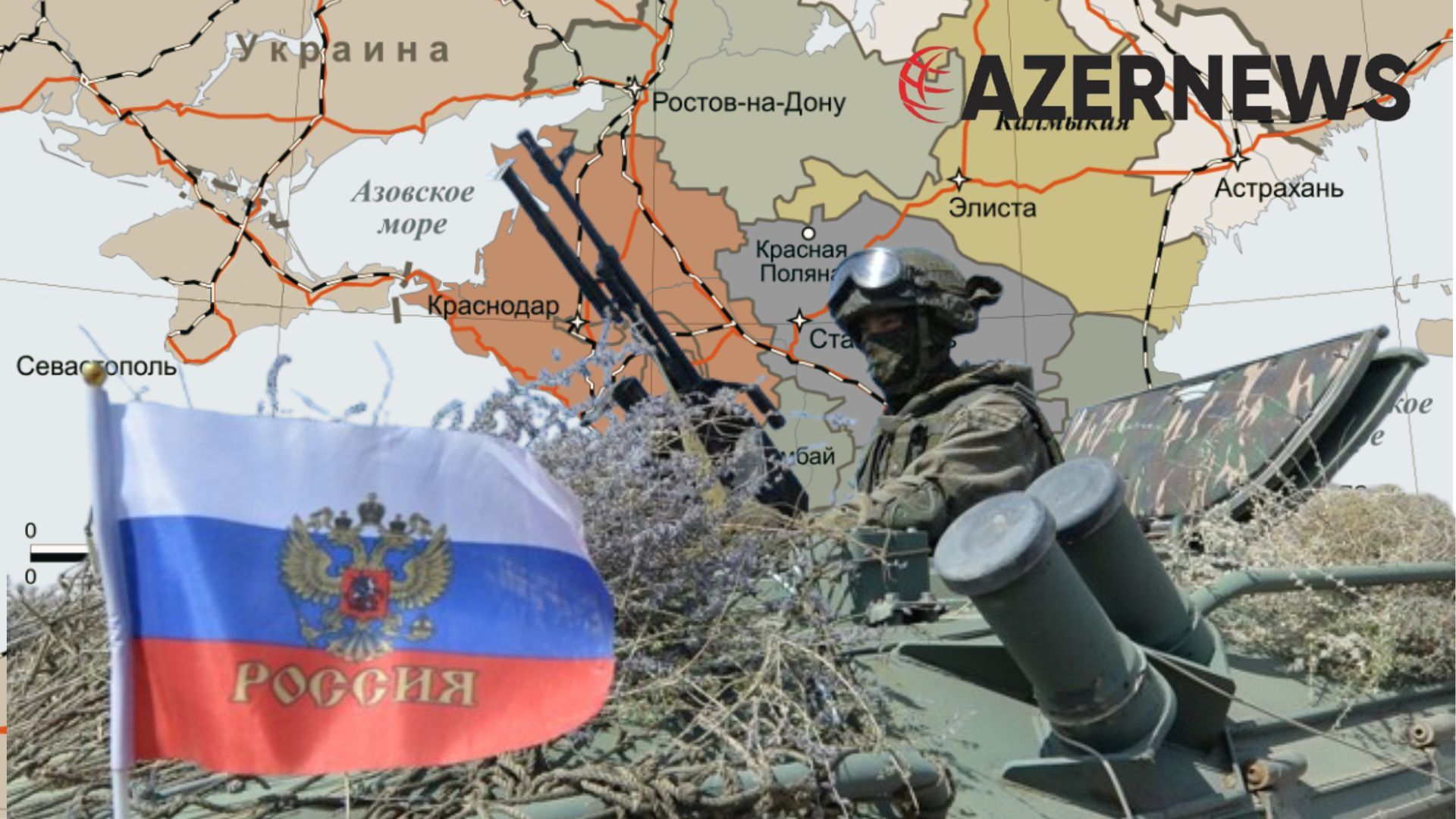
Read moreFor more than four years, the Russia-Ukraine war has been a geopolitical pressure cooker, with every new military escalation raising the temperature far beyond the battlefield. The question now is whether the lid can be put back on before the pressure spills into a wider regional crisis. A freeze would not amount to peace, nor would it resolve the territorial disputes at the heart of the conflict. However, it could create something that has become increasingly scarce: strategic breathing space.
The idea of freezing the war, raised by Kazakh President Kassym-Jomart Tokayev on 25 July, is diplomatically significant but, under current circumstances, only moderately feasible as an immediate political outcome. The Kazakh leader suggested that the conflict be frozen and negotiations resume based on an updated version of the 2022 Istanbul framework, backed by security guarantees from major powers, including Russia. The Kremlin, however, quickly rejected the idea, arguing that a freeze was impossible under Kyiv's current position and that Moscow remained committed to achieving its objectives.
Nevertheless, the difficulty of implementing a freeze should not obscure its potential geopolitical value. A ceasefire along roughly the existing front line would be considerably easier to negotiate than a comprehensive peace agreement. It could stop the immediate fighting without forcing either side to formally abandon its maximalist territorial claims. In this sense, a freeze may represent a more realistic first step towards peace than an attempt to settle every outstanding issue at once.
But it is not easy again...the central obstacle remains Russia. Moscow's stated position is fundamentally at odds with the concept of a simple pause. The Kremlin has linked any lasting settlement to major Ukrainian concessions, including territorial issues and Kyiv's future security orientation. A freeze, by contrast, would suspend the conflict without necessarily delivering those concessions. If Russia believes that continued military pressure can improve its negotiating position, it has little incentive to accept a ceasefire that could consolidate the current front line.
This is where the question of security guarantees becomes decisive. For Ukraine, the danger of a frozen conflict is obvious. A ceasefire without credible guarantees could simply provide both sides with time to rearm, leaving Kyiv vulnerable to another Russian offensive. Ukraine would therefore need more than diplomatic assurances. Any viable arrangement would require robust international monitoring, a mechanism for responding to violations and long-term security commitments capable of deterring renewed aggression.
The role of Russia itself in such a guarantee system would be particularly complicated. Moscow's participation could be important because a sustainable freeze ultimately requires Russian acceptance of the arrangement. Besides, the guarantee would have to be structured in a way that prevents Russia from using its status as a guarantor to exert political pressure over Ukraine or to veto the country's sovereign foreign policy choices. The credibility of any agreement would depend on Russia accepting that a frozen conflict means a genuine halt to military expansion, not simply a tactical pause.
This issue extends beyond Ukraine. A durable freeze could potentially reduce the perception of Russia as an unpredictable military force across the wider post-Soviet space. In recent years, Georgia, Armenia and Azerbaijan have all had to factor Russian unpredictability into their strategic calculations, albeit in very different ways. A conflict freeze that included meaningful international guarantees could send a broader signal that Russia's military ambitions would not automatically expand into neighbouring regions once the fighting in Ukraine subsides.
That would be particularly important for the South Caucasus. The region is undergoing a profound geopolitical transformation, with Azerbaijan strengthening its independent foreign policy, Armenia recalibrating its security relationships and Georgia navigating an increasingly complex relationship with both Russia and the West. A prolonged war in Ukraine has increased uncertainty across this space. A genuine freeze could, at least temporarily, lower the risk that instability in one theatre spills into another.
But this is also why the 2022 Istanbul framework cannot simply be revived as it was. The geopolitical landscape has changed dramatically. Any new settlement would have to address questions that remain unresolved or have acquired greater importance: Ukraine's security guarantees, the status of occupied territories, sanctions, military force levels, reconstruction and Kyiv's future relationship with NATO and the European Union. An "Istanbul 2.0" would therefore need to be a substantially revised framework rather than a return to an earlier negotiating template.
The biggest question is ultimately who benefits from freezing the war.
For Russia, a freeze could obviously consolidate territorial gains, reduce battlefield costs and provide economic relief. But Moscow may also calculate that time remains on its side and that continued pressure can secure better terms.
For Ukraine, a freeze would stop the destruction and provide an opportunity to rebuild, but only if the country could be confident that the pause would not become a temporary breathing space for another offensive.
For Europe and the United States, a freeze could reduce the risk of escalation and create room for diplomacy. However, Western governments would still face the difficult task of maintaining Ukraine's security without allowing the frozen conflict to become a permanent source of instability.
For countries such as Kazakhstan, the benefits would be even broader. A ceasefire could reduce economic and geopolitical spillovers, protect trade and energy routes and create a more predictable environment for regional connectivity. The war has already disrupted transport and energy networks extending far beyond the immediate conflict zone.
The military logic of a freeze may therefore be stronger than the political logic. Both sides may eventually recognise that continuing the war is more costly than pausing it, but that calculation has not yet fully aligned. The challenge is to design a freeze that does not merely postpone the next war.
This is why the concept deserves serious consideration despite its current political difficulties. A freeze should not be viewed as an alternative to peace, but as a possible bridge towards it. If supported by credible guarantees, international monitoring and a clear commitment to preventing renewed military expansion, it could do more than silence the guns in Ukraine. It could begin to reduce the wider geopolitical uncertainty that has spread across Europe's eastern frontier and the South Caucasus.
The real test, however, will be whether the major powers can turn a frozen battlefield into a stable security architecture. Without that, the ice will eventually crack. With it, a temporary pause could become the first stage of a broader regional reset.
Here we are to serve you with news right now. It does not cost much, but worth your attention.
Choose to support open, independent, quality journalism and subscribe on a monthly basis.
By subscribing to our online newspaper, you can have full digital access to all news, analysis, and much more.
You can also follow AzerNEWS on Twitter @AzerNewsAz or Facebook @AzerNewsNewspaper
Thank you!