
Azerbaijan refused to choose sides - Moscow's response shows result

Elnur Enveroglu
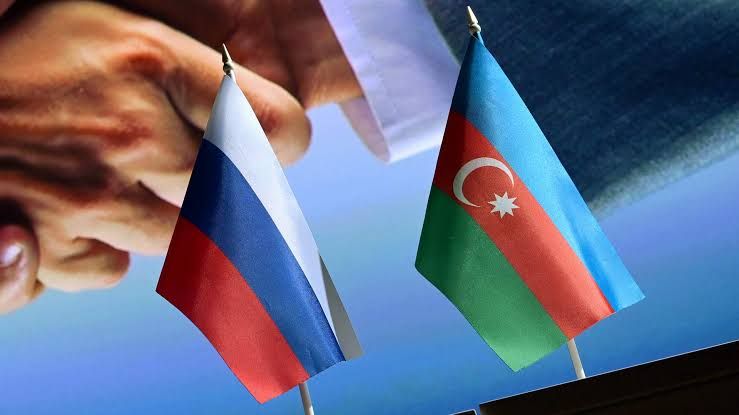
Read moreThere is often a temptation in geopolitics to interpret every telephone call between leaders as a dramatic signal of friendship or hostility. But Vladimir Putin’s latest call to Azerbaijani President Ilham Aliyev is interesting precisely because it points to something more durable than the diplomatic arena: Azerbaijan’s ability to maintain working relationships with competing powers without becoming politically subordinate to any of them.
On 28 July, the Russian president called his Azerbaijani counterpart to discuss bilateral and international issues. According to the Azerbaijani presidency, both sides described relations as constructive, noted active dialogue between governments and institutions, and confirmed a mutual interest in expanding co-operation.
The significance lies not just in the call itself, but in what it says about the direction of relations after a period of considerable friction.
At the Shusha Global Media Forum earlier this month, President Aliyev said that Azerbaijan-Russia relations had been fully normalised, despite the difficulties of the recent past. He pointed to continuing contacts between the two governments, foreign ministries and presidential administrations, while stressing the importance of the relationship for both bilateral co-operation and the wider region.
That is a distinctly Azerbaijani approach to diplomacy: disagreements may be serious, but they do not necessarily have to become permanent ruptures.
If viewed from a wider perspective, this is particularly important in the South Caucasus, where outside powers have long sought influence and where smaller states are often pressured to define themselves according to someone else's geopolitical map. Azerbaijan has generally resisted that logic. Its foreign policy has been based less on choosing a camp than on preserving room for manoeuvre.
That does not mean neutrality in the strict legal or ideological sense. Azerbaijan has its own strategic partnerships and alliances. It has deep ties with Türkiye, a strategic partnership with the European Union, close energy relations with European markets and extensive economic and political engagement with the United States. At the same time, it has maintained a strategic partnership and allied relationship with Russia and continued dialogue with Iran, despite periods of tension with both.
The point is not that Azerbaijan treats all relationships equally. It absolutely does not. The point is that it does not allow one relationship automatically to determine all the others.
That distinction is increasingly valuable in a region where geopolitical competition has intensified.
Azerbaijan's relations with Russia offer perhaps the clearest example. The two countries have experienced serious disagreements, and there have been moments when public rhetoric on both sides became noticeably sharper. Those tensions created opportunities for commentators, political actors and media figures seeking to portray the relationship as irreparably damaged. Nonetheless, Baku largely resisted the temptation to turn temporary disputes into a permanent foreign-policy realignment, and that restraint matters.
Diplomacy is rarely about responding to every provocation with an equal and opposite reaction. It is about understanding which disputes are temporary, which interests are permanent and which relationships remain strategically necessary after the immediate crisis has passed.
The Kremlin's latest engagement with Baku suggests that this calculation has not been lost on Moscow either.
The contrast with Armenia is instructive, although the two countries occupy very different geopolitical positions. Yerevan has increasingly sought closer ties with the European Union and the United States while simultaneously attempting to preserve important economic links with Russia. This is a difficult balancing act in its own right. Putin has publicly warned that Armenia cannot simultaneously belong to the EU and the Russia-led Eurasian Economic Union because of incompatible regulatory frameworks.
Armenia's turn towards Europe is understandable in the context of its security concerns and its political transformation. But it also demonstrates the limits of a foreign policy in which strategic realignment can become the central organising principle.
Azerbaijan's model is different. It is less ideological and more transactional, more focused on national interests and long-term strategic autonomy. It does not require Baku to become part of anyone's sphere of influence in order to maintain productive relations with that power.
This is also visible in its dealings with Iran. Relations with Tehran have periodically been strained by security concerns, political disagreements and competing regional interests. However, Azerbaijan has continued to engage Iran as a neighbour whose geography cannot be changed and whose interests must be managed. The same principle applies to Russia.
That may sound obvious, but it is not always how international politics works.
For Azerbaijan, neighbours are not temporary geopolitical partners who become irrelevant when a new alliance emerges. They are permanent facts of geography. Governments change, conflicts end, international blocs shift and global powers come and go. Borders remain.
This helps explain why Azerbaijan has been able to develop increasingly close relations with the West without turning those relations into an anti-Russian or anti-Iranian project. Its energy partnership with Europe has expanded dramatically, while Baku has simultaneously maintained channels with Moscow and Tehran. Azerbaijan has positioned itself as a major energy supplier to Europe and an increasingly important transport hub connecting Central Asia, the Caspian and European markets. That gives it strategic value to the West. But it has not treated that value as a licence to abandon its relationships with its neighbours.
So, there is a lesson here about reliability. In international affairs, reliability does not necessarily mean agreeing with everyone. Nor does it mean avoiding disagreements. It means that partners can reasonably expect a country to pursue its interests consistently, to honour its commitments and to keep communication channels open even when relations become difficult.
That is perhaps the most important message behind Vladimir Putin's call to President Aliyev.
For those in Russia who have sought to turn bilateral disagreements into a broader rupture, the renewed high-level contact is a reminder that relations between states cannot be reduced to the loudest television commentary, the most provocative social media post, or the most sensational political statement. Governments have interests that outlast the news cycle.
The same message applies to Azerbaijani critics of engagement with Moscow. Maintaining dialogue with Russia does not mean accepting Russian influence. Just as closer ties with Europe do not require Azerbaijan to become an extension of European foreign policy.
This is where Azerbaijan's regional policy has demonstrated a degree of strategic maturity. Baku has sought to avoid being trapped in the binary logic of geopolitical competition. It can work with the West on energy and transport, with Russia on trade and regional security, with Türkiye on strategic partnership and with Iran on issues arising from shared geography.
The strategy is not without risks. Balancing competing powers requires constant adjustment. It can be criticised by all sides and tested whenever regional tensions intensify. But the alternative, such as placing all strategic bets on one external centre of power, can be even more dangerous for a country situated at the crossroads of competing geopolitical interests.
Azerbaijan's experience suggests that strategic autonomy is not the same as isolation. A country can be deeply connected to multiple centres of power while remaining politically independent of each.
The South Caucasus has increasingly been shaped by competing alliances and shifting external pressures. Azerbaijan's most valuable asset in this region may therefore be neither its energy resources nor its geography alone. It may be the credibility of a foreign policy that refuses to confuse partnership with dependence.
Photo credit: Izvestya
Here we are to serve you with news right now. It does not cost much, but worth your attention.
Choose to support open, independent, quality journalism and subscribe on a monthly basis.
By subscribing to our online newspaper, you can have full digital access to all news, analysis, and much more.
You can also follow AzerNEWS on Twitter @AzerNewsAz or Facebook @AzerNewsNewspaper
Thank you!