
Azerbaijan’s new agricultural program signals shift toward food independence

Qabil Ashirov
Read moreThe newly unveiled State Program for the Development of Agricultural, Fisheries, and Aquaculture Production and Processing in the Republic of Azerbaijan for 2026–2030 represents a profound and structural shift in the nation’s approach to agrarian economic sovereignty. Domestically, the strategic necessity of transition from mineral wealth reliance toward self-sustaining, non-oil sectors has long been discussed, yet the specific operational blueprint articulated by Rashad Huseynov, the director of the Center for Agrarian Research, offers an exceptionally pragmatic map for economic independence. By shifting from traditional input-based support to direct output-driven and production-chain-focused incentives, the state is effectively treating food security not merely as a social safety net, but as an advanced industrial sector capable of driving significant gross domestic product growth.
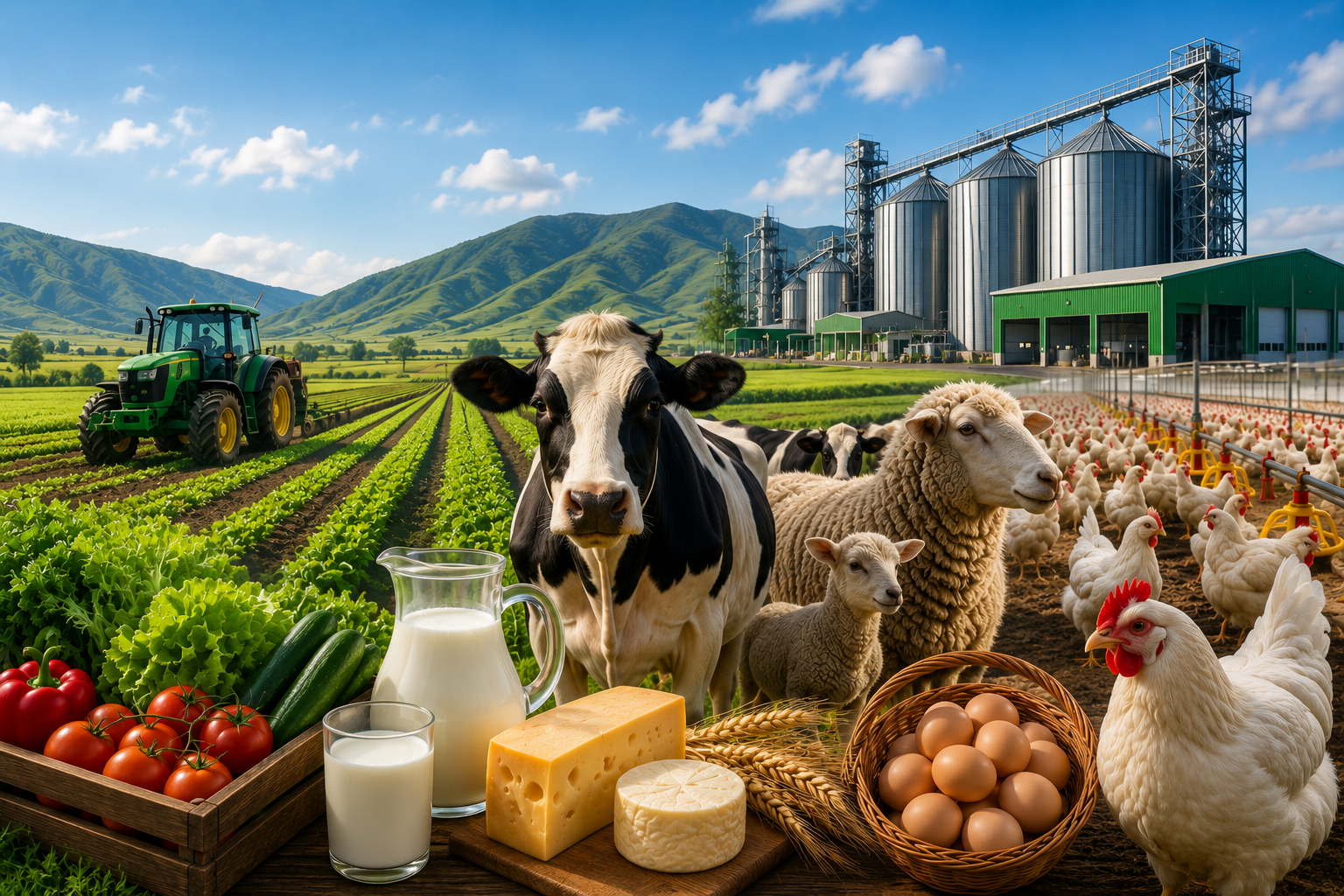
At the core of this ambitious legislative program is a comprehensive overhaul of the livestock sector, which has historically faced systemic structural constraints including fragmented smallholder production and dependency on foreign inputs. The introduction of target-oriented product subsidies, particularly for livestock processed within formal, regulated slaughterhouses and milk directed to industrial processing plants, creates an institutional framework that naturally incentivizes formalization and quality control. By tying financial windfalls directly to the volume of processed output rather than the head count of animals, the mechanism structurally encourages local farmers to optimize their yield efficiency and integrate into larger agricultural value chains. Furthermore, aligning these target subsidies with timed tax exemptions and customs relief ensures that domestic producers are insulated from initial capital pressures, providing them with the necessary fiscal breathing room to scale up capacity.
The strategic emphasis on transforming the genetic stock of the national dairy herd is perhaps the most critical component of the program's long-term sustainability calculus. Elevating the share of pedigree animals in total milk production from a modest two and a half percent to a targeted ten percent represents an exponential leap in productivity. Pedigree livestock possess significantly higher feed-to-milk conversion ratios, meaning that this transition will allow the agricultural sector to unlock unprecedented economies of scale without placing a proportional burden on the country's ecological footprint. The cascading effect of this genetic upgrade is clearly reflected in the macroeconomic targets set for 2030, which project domestic self-sufficiency in milk production rising from eighty-one percent to an impressive ninety-four percent, while beef self-sufficiency is slated to hit a definitive 100 percent. These figures demonstrate a calculated ambition to achieve total independence from volatile international meat markets.
Simultaneously, the program addresses the sheep farming sector with an equally innovative combination of traditional land management and modern corporate partnerships. Projecting a 9 percent volume growth to achieve total self-sufficiency in mutton is backed by real infrastructural commitments, including state-subsidized equipment procurement and robust logistical support for intensive sheep farming operations. More notably, the introduction of product subsidies for raw wool and leather introduces a holistic approach to the livestock value chain, transforming what were previously considered secondary waste products into viable revenue streams for rural communities. The planned restoration of nearly half a million hectares of pastures and meadows further guarantees that this expansion rests on a solid ecological foundation, ensuring sustainable grazing practices. This structural growth is uniquely complemented by cross-border investment cooperation, as evidenced by ongoing negotiations with a prominent company from the United Arab Emirates to establish a pioneering sheep farming agropark. This pilot project stands to introduce world-class agro-technological expertise and foreign direct investment into the local ecosystem.
The poultry sector receives an equally transformative package designed to completely eliminate import reliance by 2030, aiming to elevate poultry meat production by 30 percent and egg production by twenty-seven percent. To achieve the coveted one hundred percent self-sufficiency threshold, the government has devised an incredibly attractive investment matrix for both new entrepreneurs and existing facility modernizers. Offering direct state grants covering up to forty percent of advanced equipment costs, combined with the subsidization of nearly half of commercial loan interest rates, drastically lowers the entry barriers for large-scale agrarian investments. When coupled with state pledges to finance the integration of poultry facilities into national electricity and gas grids, as well as the resolution of historical land designation disputes, the policy framework creates a highly predictable and de-risked environment for corporate capital allocation. Ultimately, this comprehensive suite of forward-looking interventions positions Azerbaijan to build a highly resilient, modern, and entirely self-contained agricultural architecture over the next five years.
Here we are to serve you with news right now. It does not cost much, but worth your attention.
Choose to support open, independent, quality journalism and subscribe on a monthly basis.
By subscribing to our online newspaper, you can have full digital access to all news, analysis, and much more.
You can also follow AzerNEWS on Twitter @AzerNewsAz or Facebook @AzerNewsNewspaper
Thank you!