
Animals that built Azerbaijan's countryside are getting second chance
Akbar Novruz
Read moreAt a regional agricultural meeting in Goygol on June 12th, Deputy Agriculture Minister Zaur Aliyev announced a target that, on the surface, sounds modest: 300 new semi-intensive sheep farms, an increase in sheep meat production of at least 9% by 2030, and a 10% rise in animal numbers aimed at restoring self-sufficiency. "This means a transition from traditional sheep farming to a more productive and better managed model," he said. To understand why this target matters, and why it is being framed as a transition rather than simply an expansion, requires understanding something about Azerbaijani geography that the country's wheat and fruit statistics tend to obscure: much of Azerbaijan is, agriculturally speaking, a difficult place to raise cattle.
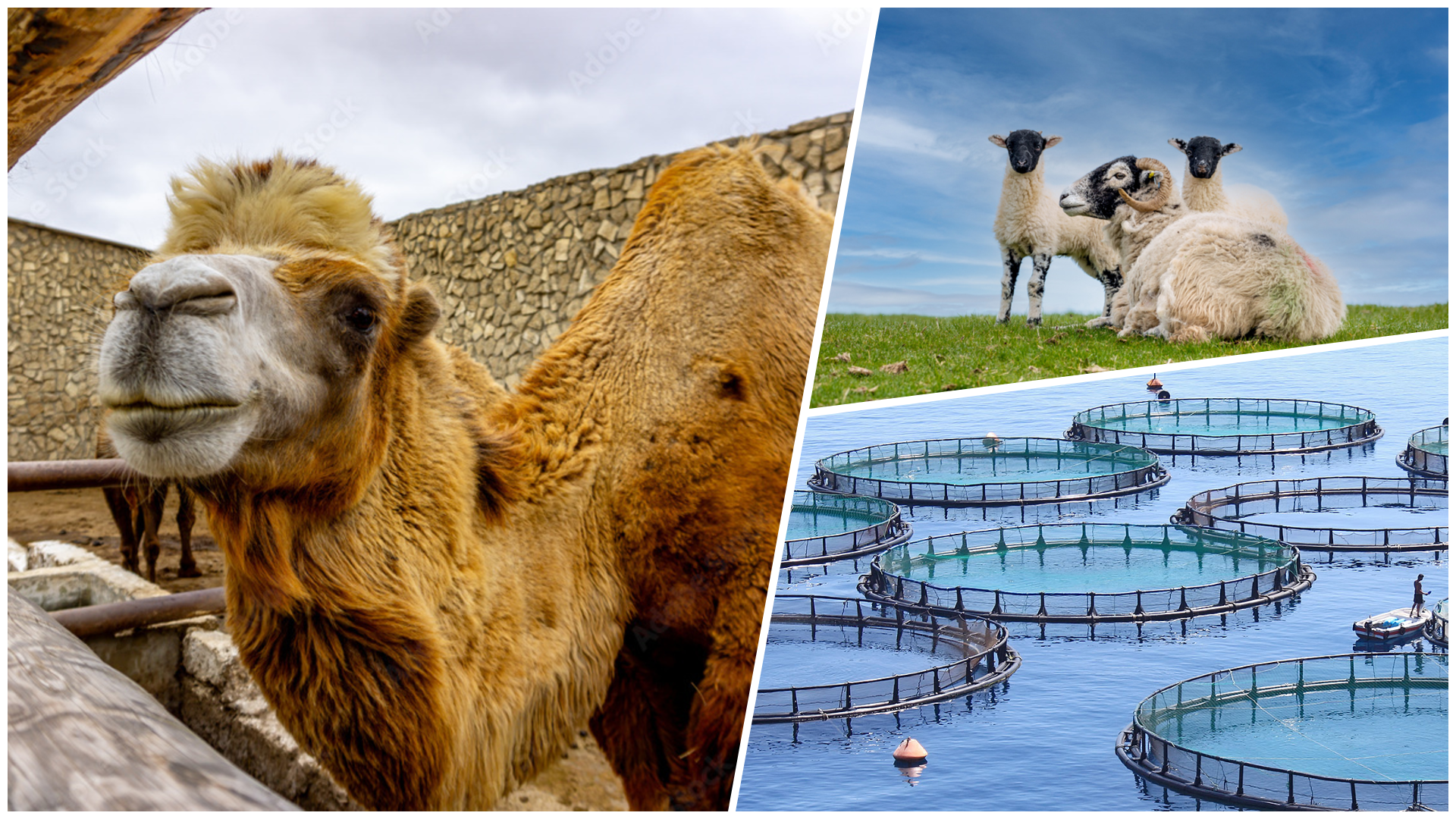
Approximately one-half [some would even say more than half] of Azerbaijan is covered by semi-desert and arid steppe, including the Shirvan plain, Gobustan lowland, Absheron Peninsula, and significant areas of the Kura-Aras lowland. These are regions characterized by little rain, little plant life, and marked seasonal contrasts, making cattle raising too expensive for most of the interior of the country. Traditionally, the people who lived in these regions did not organize their animal husbandry system based upon cattle. Instead, they used the species best adapted to semi-desert life, namely sheep and goats, whose ability to feed upon plants that are inedible to cattle and their need for less water than cattle to produce meat made them economically viable in these areas. In addition, there was the camel, an important component of the animal husbandry of the Absheron Peninsula and Gobustan region because it could adapt to the desert climate, as well as fish, caught and raised in riverine and marshy areas near the Caspian Sea.
Perhaps, according to statistics from the State Statistics Committee of Azerbaijan, the number of sheep and goats was 8.677 million in the country in 2016. But last year, this number had decreased to 6.896 million, indicating a drop of more than 20% within a decade for a country where geographical conditions suit this agricultural activity. The value of sheep and goats has almost doubled now compared to 10 years ago due to supply shortage and constant demand for lamb and mutton because of their importance in the Azerbaijani cuisine.
Underused "gems": alternatives to meat consumption
The uniqueness of the sheep sector’s decline is seen in the fact that this trend emerged in a nation that has multiple underused possibilities, all of which suit climatic conditions perfectly well and have formed an integral part of the agriculture sector before, without receiving enough state programme attention. Camels are practically extinct in the country; there are only a few hundred camels left in the whole country according to official statistics, whereas before camels were used as pack animals and milk sources on the Absheron and Gobustan semi-deserts by those who could not afford cattle due to water shortage. What has happened in the country is the extinction of a perfectly natural form of farming, while at the same time other desert nations, including the Persian Gulf and some regions of Central Asia, saw a considerable expansion of their camel-based agriculture sector in general and camel products markets in particular.
There is also fish farming with Azerbaijan Fish Farm running since 2017 on the Kura river estuary, with a goal of 9.2 tonnes of caviar and 170 tonnes of sturgeon meat per annum by 2026; low for Chinese production volumes (around 100 tonnes of caviar), but important globally due to the endangered species status of sturgeons. The depletion of fish stocks in the Caspian Sea is contributing to the changeover to artificial pond fishing. Currently, fish self-sufficiency is 81% with 23,000 tonnes of imports.
In addition, rabbits are much more efficient in converting feed into meat than cattle, and need very little water compared to other farm animals, which is one reason why rabbits would be suitable for use in drier areas in Azerbaijan. There is some practice in raising rabbits on a small scale, typically in household enterprises, but there is no system of subsidies similar to what has been used for sheep, cattle, and poultry.
Last but not least is pig farming. Although the country identifies primarily with secularism, most people avoid eating pork. However, pig farming exists in Azerbaijan at a modest scale, concentrated among non-Muslim communities and in certain regions, and has historically been one of the livestock categories most affected by the same pasture reallocation that hit sheep and goats. In any case, pork production is still part of the protein base of the desert environment. And with the consumption rates being increased over the few years, a little glimpse could potentially be turned into a reality.
Plausible but narrow scope
The semi-intensive model that Deputy Minister Aliyev spoke of, a move away from completely extensive pasturage and toward more managed farms where health is monitored and feeds are supplemented, without the high cost of irrigation and infrastructure involved with truly intensive cattle farms, is essentially a recognition of the geography highlighted at the beginning of this article. This focus on sheep raising is not in spite of the aridity of Azerbaijan, but rather due to it. The establishment of 300 farms would constitute an important institutional change, shifting the focus on sheep farming from the current household system, established in the wake of pasture losses in the 2010s, into one that is capable of taking advantage of the funding and other resources offered under the larger agricultural State Programme for 2026-2030.
However, one thing that seems to be missing from the program thus far, at least based on the information released about it so far, is the greater number of livestock breeds adapted to life in dry conditions for which Azerbaijan's terrain has always been suited, but has failed to exploit effectively. The absence of camel rearing is should not be limited with just a loss of culture. This is a livestock industry that requires almost no water infrastructure construction at all, compared to cattle and even sheep breeding. Rabbit farming has been omitted from the list of subsidies that would help the country become less dependent on imported food, while being an industry that demands significantly less capital per kilogram of meat produced compared to other forms of livestock. And aquaculture, which Azerbaijan has already succeeded in internationally with its sturgeons and caviar, could be expanded inland using man-made ponds, closing the 19% fish self-sufficiency gap.
Here we are to serve you with news right now. It does not cost much, but worth your attention.
Choose to support open, independent, quality journalism and subscribe on a monthly basis.
By subscribing to our online newspaper, you can have full digital access to all news, analysis, and much more.
You can also follow AzerNEWS on Twitter @AzerNewsAz or Facebook @AzerNewsNewspaper
Thank you!