
Baku Tbilisi Kars railway expansion positions Middle Corridor as key Eurasian route

Qabil Ashirov
Read moreFor decades, discussions surrounding international trade routes were dominated by a single, comfortable assumption: that globalization would always rely on the path of least resistance, largely defined by maritime choke points and established northern overland corridors. However, the geopolitics of the 2020s shattered this complacency. Between the protracted conflict in Ukraine that effectively paralyzed the Northern Corridor through Russia, and the chronic instability plaguing the Red Sea and the Strait of Hormuz, the global supply chain has faced a series of systemic cardiac arrests. In this fragmented landscape, the completion of the modernization of the Baku-Tbilisi-Kars (BTQ) railway line arrives not merely as a regional transport update, but as a profound geoeconomic shift. It signals a new era where the Middle Corridor is no longer viewed as a theoretical or seasonal alternative, but as the primary, sanction-free backbone of Eurasia.
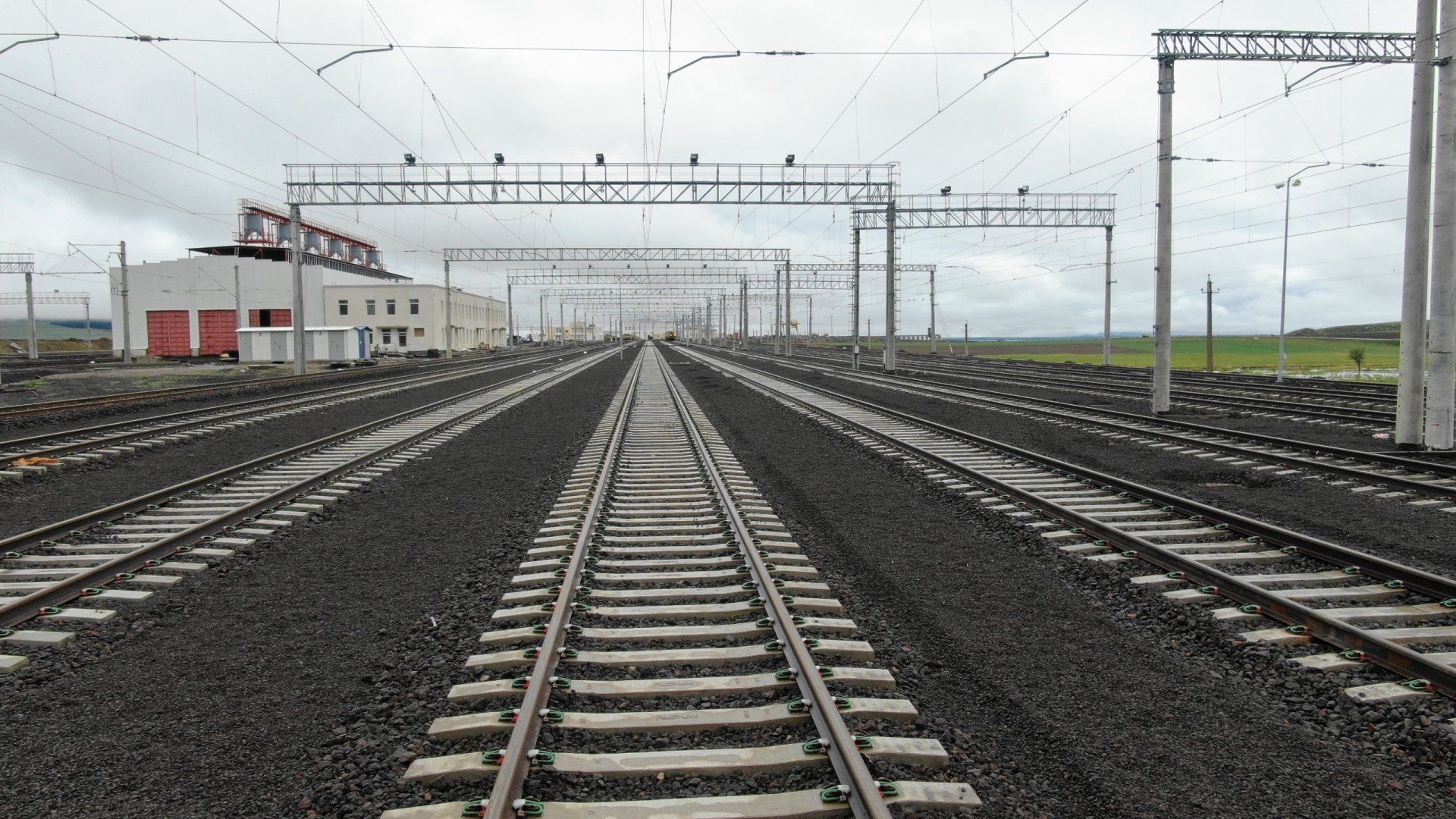
The most tangible metric of this transformation is the dramatic expansion of the line’s annual cargo capacity, leaping from one million tons to five million tons. To treat this fivefold increase as a mere statistical achievement is to miss the broader macroeconomic picture. In global logistics, volume dictates viability. Large international shipping corporations and state-backed manufacturing giants do not reroute multi-billion-dollar supply chains for marginal or unpredictable networks. By elevating the BTQ’s capacity to five million tons, Azerbaijan, Georgia, and Türkiye have institutionalized reliability. Furthermore, evaluating the engineering feat required to achieve this reveals the sheer political will behind the project; rebuilding 184 kilometers of track through the unforgiving, high-altitude terrain of the Lesser Caucasus, reaching up to 2,400 meters above sea level, is a testament to the strategic urgency felt in Baku and Tbilisi.
This modernization fundamentally rewrites Azerbaijan’s role in the global arena. The country is rapidly evolving past the traditional, passive status of a transit country. Instead, through the integration of the Baku International Sea Trade Port, an increasingly sophisticated digital infrastructure, and the newly established joint venture, BTKI Railways, Azerbaijan is positioning itself as an active, innovative logistics hub. This is a deliberate exercise in transport diplomacy. Azerbaijan State Railways (ADY) is successfully shedding the legacy of a classic post-Soviet operator to emerge as an agile, market-driven international partner. By offering seamless connectivity from the Caspian Sea directly into the European rail grid via Türkiye, Baku is sending a clear message to international investors and global trade networks: the South Caucasus is a modern, predictable, and highly functional logistics platform.
Crucially, the revitalization of the BTQ addresses the urgent global demand for diversification away from geopolitical risks. In a world defined by strategic rivalry and decoupling, supply chain resilience is synonymous with national security. The Middle Corridor—stretching from China through Central Asia, across the Caspian Sea, and into Europe via the South Caucasus—stands out as the only viable, non-sanctioned overland artery connecting East and West. The practical transition of this route from an ambitious concept to a high-capacity reality is already underway, as evidenced by recent deep-level bilateral agreements between Azerbaijan and China targeting intensified utilization of the BTQ.
Looking forward, the long-term strategic value of the modernized BTQ cannot be decoupled from the broader vision of regional integration, particularly when viewed in tandem with the prospective opening of the Zangezur corridor. These two routes should not be interpreted as competitors, but rather as complementary, dual-engine systems that will exponentially increase the institutional resilience of the Middle Corridor’s Azerbaijani segment. Together, they create a multifaceted cooperation platform that goes far beyond steel tracks and freight trains. They lay the groundwork for a broader economic ecosystem encompassing industrial zones, digital connectivity, energy transit, and trade facilitation across the Turkic world, Central Asia, and Europe. Ultimately, the fully operational Baku-Tbilisi-Kars railway provides a decisive, structural answer to the realities of a fractured global economy, anchoring Azerbaijan firmly at the center of the new Eurasian logistics balance.
Here we are to serve you with news right now. It does not cost much, but worth your attention.
Choose to support open, independent, quality journalism and subscribe on a monthly basis.
By subscribing to our online newspaper, you can have full digital access to all news, analysis, and much more.
You can also follow AzerNEWS on Twitter @AzerNewsAz or Facebook @AzerNewsNewspaper
Thank you!