
Armenia’s endless search for new patron rewriting its place in Caucasus

AzerNEWS Staff
Read moreHistory is less a collection of static dates and more a psychological mirror reflecting the enduring behavioral traits of nations. When examining the long-term trajectory of Armenian foreign policy, a recurring theme emerges with striking clarity: a perpetual search for a powerful patron, followed by a swift pivot away from that very benefactor the moment a more appealing alternative arrives on the global stage. This chronic shifting of loyalties is not a modern phenomenon born out of recent regional conflicts; rather, it is a deeply ingrained strategic pattern that has defined Armenia's historical relationship with regional empires and global superpowers alike.
To understand this contemporary behavior, one must look at the precedent set during the Ottoman Empire. For centuries, the Armenian community occupied a highly privileged position within the imperial state, famously designated in Ottoman archives as the Millət-i sadiqa, or the loyal nation. Unlike other Christian subjects of the empire, Armenians rose to the highest echelons of the state bureaucracy, dominating palace administration, finance, and foreign diplomacy. Yet, when the Ottoman Empire began to stagnate and imperial Russia started projecting its power into the Caucasus, this centuries-old relationship dissolved almost overnight. As Russian archives and media suddenly filled with praise for the Armenian population, offering promises of regional influence, the long-standing bond between the Armenians and the Ottomans shattered, paving the way for a devastating historical rift.
A remarkably similar script unfolded within the Russian sphere of influence. Whether under the Tsars or during the Soviet era, Armenians secured influential positions within the ruling bureaucracy and cultural elites. For over two centuries, Russia served as the literal guarantor of Armenian physical and political survival in the region. However, history repeated itself when the Soviet apparatus began to face severe economic stagnation and geopolitical decline in the late twentieth century. In an abrupt shift, an intense anti-Russian sentiment gripped the Armenian political consciousness, making it one of the few Soviet republics to actively champion the dissolution of the USSR. As Moscow’s shadow shrunk, Yerevan’s pro-European sentiments grew, demonstrating that gratitude in geopolitics is secondary to shifting balances of power.
Today, we are witnessing the latest chapter of this historical cycle, now replayed in the context of American and European outreach. With the United States actively asserting its presence in the South Caucasus, Washington-centric sentiment in Yerevan has reached a crescendo. The high-profile visits of prominent American political figures, including figures like Marco Rubio, alongside intense correspondence with Western leadership and mounting financial and political backing from the European Union, are the modern manifestations of this old habit. Armenia is actively trying to sever its ties with the Kremlin, a patron it has relied upon for generations, in hopes of embedding itself into the Western security architecture.
What makes this current pivot uniquely reckless is the sheer scale of Armenia’s ongoing dependence on the Russian Federation, a reality that Yerevan seems eager to ignore but Moscow can easily weaponize. If the Kremlin chose to react to this perceived betrayal with economic and strategic measures, the consequences for Armenia would be immediate and catastrophic. Russia holds the keys to the country’s energy supply through Gazprom and could freeze the economy by cutting gas or spiking prices. It holds the technical keys to the Metsamor nuclear power plant, which provides a massive portion of Armenia's domestic electricity. The core of Armenia's budget relies heavily on copper and gold mines operated by Russian conglomerates, all of which could be shut down by administrative decree. Furthermore, Russia could withdraw its border guards from the Iranian and Turkish frontiers, execute disruptive military drills at its 102nd military base in Gyumri, or impose crippling trade embargoes and block the vital remittances sent home by millions of diaspora workers in Russia.
The fact that Moscow has not yet pulled these levers is not a sign of weakness, but a calculation born of immense imperial patience. The Kremlin sees the maneuvers in Yerevan for what they are—a historical pattern of opportunism—but prefers to let the Western promises run their natural, often disappointing course, knowing that geography cannot be rewritten by a Washington press release. In the end, Armenia’s history of discarding patrons for shinier alternatives carries a fundamental flaw. The new "big brothers" in the West also read the pages of history. They are fully aware that an ally whose loyalty is contingent entirely on convenience is not a partner at all, but merely a temporary tool to be used until the geopolitical weather changes once again.
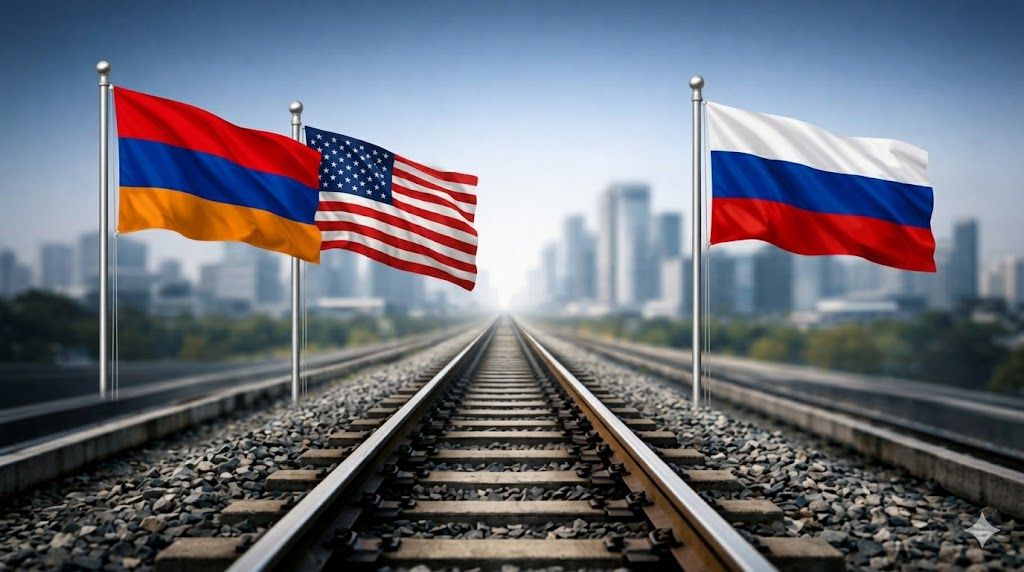
The photo was generated by AI
Here we are to serve you with news right now. It does not cost much, but worth your attention.
Choose to support open, independent, quality journalism and subscribe on a monthly basis.
By subscribing to our online newspaper, you can have full digital access to all news, analysis, and much more.
You can also follow AzerNEWS on Twitter @AzerNewsAz or Facebook @AzerNewsNewspaper
Thank you!