
The Gulf’s dilemma: Stand with Washington or risk Tehran’s wrath
Akbar Novruz
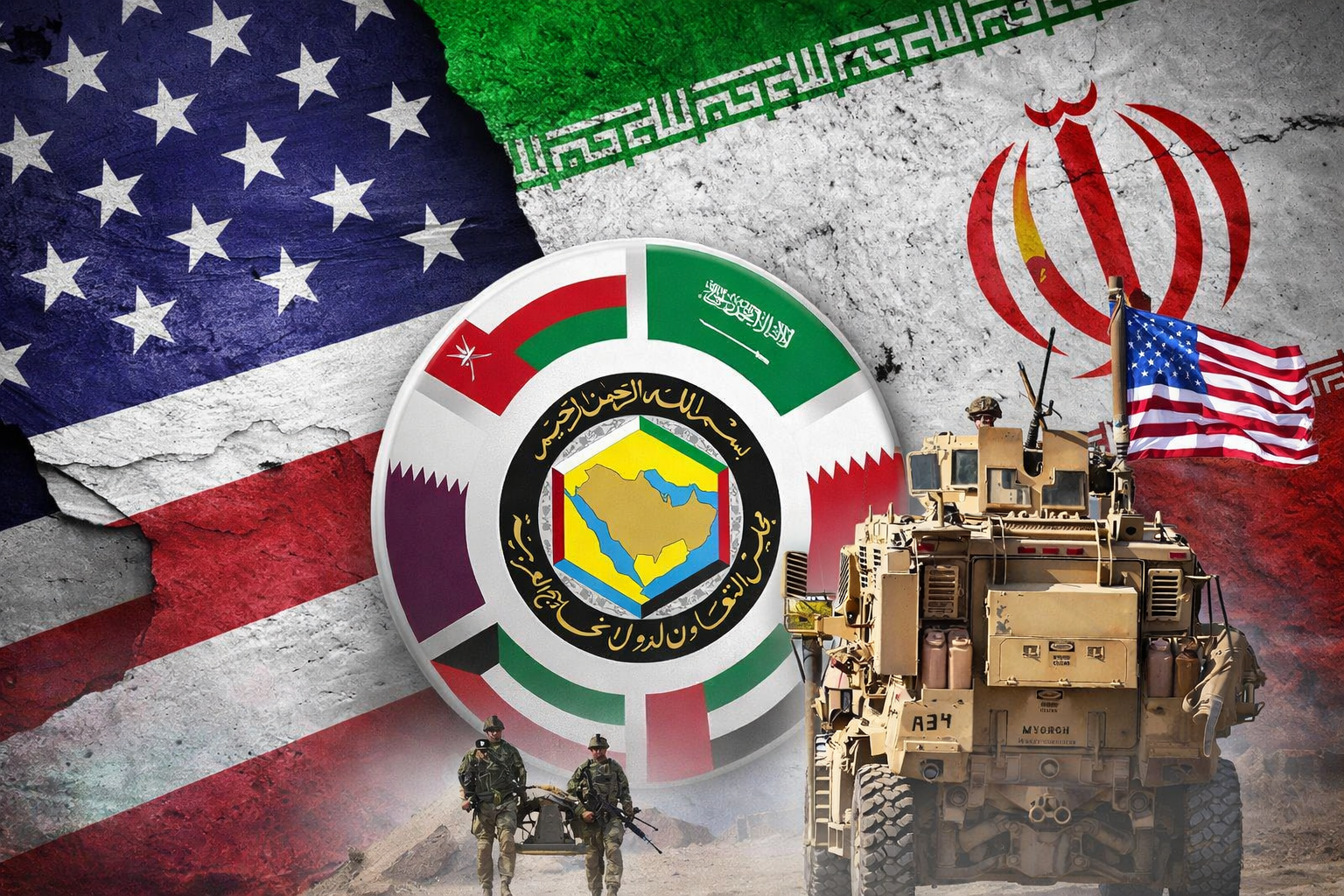
Read moreThe past four days have upended long-standing assumptions in the Persian Gulf. For decades, the prevailing doctrine among Gulf monarchies rested on a straightforward calculation: the deeper the security partnership with Washington, the stronger the deterrent shield against Tehran.
Hosting American forces was not merely a tactical choice; it was a strategic anchor designed to lock the region into the broader US security architecture and signal that any aggression would trigger consequences far beyond the Gulf itself.
What was once viewed as a stabilizing security formula, hosting American forces to deter Iran, has suddenly become the centerpiece of regional vulnerability. As Iran launched strikes against Gulf territories, arguing that US military infrastructure there facilitated attacks against it, a strategic paradox emerged: the very assets meant to protect Gulf monarchies appear to have drawn them into the line of fire.
Both attention and scrutiny are now turning towards the Gulf. Iran, which appears reluctant to enter a full scale war yet determined through calculated resistance to widen the scope of possible escalation, is increasingly being perceived as a threat by a number of Muslim states.
The question, therefore, is how realistic it is that the Gulf states could be drawn into this conflict and align themselves alongside the United States against Iran.
German geopolitical analyst Brendan Ziegler contended in his commentary to AzerNEWS that this moment represents “a structural shock to the Gulf security mindset.”
"The assumption had been that American presence would raise the cost of Iranian escalation. Instead, the recent events suggest that it may also lower the threshold for retaliation when Washington and Tehran enter direct confrontation. In this evolving environment, Gulf states are no longer passive beneficiaries of deterrence; they are frontline actors in a conflict whose tempo they do not fully control. For years, countries such as Saudi Arabia, United Arab Emirates, Qatar, Kuwait, and Bahrain calculated that hosting American forces would dissuade Tehran from aggression. Instead, those installations may have served as ready-made justifications for Iranian retaliation."
Ziegler also thinks that the Gulf nations' any further participation might be thorny and costly.
"Well, in the foundation, these countries are Muslim. Even though Iran's stance on Islam differs substantially by the ones in the Gulf, any sort of direct participation could have long and achy effect for them. Any sovereign action taken without considering public opinion, potential cooperation, or a shared understanding can later be used as an argument against it. While these countries certainly have the right to defend themselves, exceeding those bounds could undermine tore the neutrality mask and raise concerns for large corporations and countries that have been and are looking to invest."
The expert assumes that, if escalation does occur, Saudi Arabia would likely take the lead as the bloc’s political and economic core.
“Riyadh has the strategic weight, the military capacity, and the political influence to frame any collective response. However, such a move would almost certainly be synchronized with Washington, given their long-standing alliance. But the calculus is complex. Gulf economies are heavily dependent on energy exports, and critical infrastructure, refineries, desalination plants, and ports are exposed. A broader war would not just be a military confrontation; it would risk paralyzing the global energy market. Retaliation in that matter would invite further strikes and potentially drag the entire region into open war. If multiple Gulf countries enter the conflict, coordinated under Saudi leadership and backed by the United States, the confrontation could evolve from a bilateral US-Iran clash into a regional war architecture. But their reluctance underscores a deeper truth: the Gulf monarchies are acutely aware of how fragile their economic lifelines are."
Gulf States’ hosting of US Forces actually made them less safe, argues Moscow-based analyst Andrew Korybko. In his view, what was long portrayed as a stabilizing deterrent has instead exposed these countries to direct retaliation amid escalating confrontation between Washington, Tel Aviv, and Tehran.
“None of the Gulf States have yet retaliated against Iran, but it can’t be ruled out that one, some, or all of them are planning to do so,” he said, warning that escalation cannot be excluded. At the same time, he pointed out that they may be reluctant to enter a full-scale war given “how vulnerable their energy and civilian sites are.”
If several Gulf countries were to move toward open conflict, he also thinks that Saudi Arabia would likely step forward as the driving force within the Gulf Cooperation Council.
“If more than one of them goes to war against Iran… then it’s possible that Saudi Arabia would take the lead as the core of the GCC, their regional integration group,” he said, adding that “they’d obviously coordinate this with their shared US ally.”
However, he suggested that cohesion within the bloc should not be taken for granted. The United Arab Emirates, he argued, “might opt out of coordinating military action with Saudi Arabia due to the recent revival of their rivalry.” Even so, Korybko maintained that Riyadh would still try “to reaffirm its self-assumed role as the regional leader by rallying the smaller countries under its aegis.”
Beyond intra-GCC dynamics, Korybko drew attention to the broader historical and ideological backdrop. He said that, aside from their shared US alliance and economic dependence on resource exports, “the optics of Iran’s attacks… might be perceived by them as a Persian-Arab War.” While Arab-Iranian rivalry spans centuries, he noted that “their competition took on a sectarian dimension after Iran’s 1979 revolution and subsequent efforts to export its then-new governing model throughout the region.”
He further argued that “these same Arab states’ consequently common cause with Israel vis-à-vis Iran led to some in the Islamic Republic considering them traitors to the faith,” a perception that in his assessment deepened mistrust and intensified tensions.
According to Korybko, this historical context explains why Gulf states initially chose to host US forces as a deterrent. Yet he contended that “the security dilemma that had already set in between them and Iran led to the latter perceiving this as a means of better defending themselves ahead of the retaliation that would follow a speculatively planned massive first strike.” Iran, he said, “then began identifying targets on their territories and ensuring that it could still hit them after surviving a massive first strike,” which he noted “ultimately came last weekend, albeit without their direct participation.”
From Tehran’s standpoint, Korybko argued, complicity extends beyond direct involvement. “From Iran’s perspective, they’re all complicit in what just happened even if the role that US military infrastructure in their countries allegedly played was only indirect in the sense of providing radar or just logistical support,” he said. In his view, “Iran’s aforesaid perception and its response thereto in this context were totally predictable.”
Yet, he maintained, the Gulf States found themselves constrained by their strategic alignment. They were “already so tethered to the US that none of them wanted to risk its ire by asking its forces to leave once regional tensions worsened in the run-up to the ongoing war.”
Korybko concluded with a stark assessment: “They’re therefore all paying the cost of their epic miscalculation that hosting US forces strengthens their security when it actually guaranteed that they’d be targeted once Iran was hit by the massive first strike.” He added that “this is a lesson that the US’ allies in Europe and Asia should keep in mind” should similar signals ever emerge regarding potential confrontations with other major powers.
Here we are to serve you with news right now. It does not cost much, but worth your attention.
Choose to support open, independent, quality journalism and subscribe on a monthly basis.
By subscribing to our online newspaper, you can have full digital access to all news, analysis, and much more.
You can also follow AzerNEWS on Twitter @AzerNewsAz or Facebook @AzerNewsNewspaper
Thank you!