
Hormuz and Bab al-Mandab: Iran’s two pressure points on global trade

Qabil Ashirov
Read moreThe situation in Yemen is becoming increasingly tense. In recent days, media outlets close to Saudi Arabia have been widely reporting on the rapid offensive by Yemeni government forces and their advances in areas controlled by the Houthis. It was reported that a number of settlements had come under the control of government forces, that the offensive would continue, and that, as a result, the road to Sanaa could be opened.
However, on September 10, the direction of events suddenly changed. The Houthis launched an unexpected counterattack and captured the strategically important city of Mocha on the Red Sea coast. This ancient port city, located in Taiz province, is of particular importance due to its proximity to the Bab al-Mandab Strait. According to Reuters, the Houthis then advanced towards the strategic Hanish Islands in the Red Sea. Yemeni military sources also reported that government forces had abandoned Mocha and retreated further south towards Dhubab. Dhubab is located directly opposite the Bab al-Mandab Strait, near the island of Perim (Mayun).
The significance of these events is not limited to the loss of just one city. The capture of Mocha has brought the Houthis closer to the Bab al-Mandeb Strait, one of the world’s most important sea lanes. If they can consolidate their position in the Dhubab and Perim straits, the threat to international shipping through the Red Sea could increase significantly.
Yemen has long been a key staging area for regional rivalry between Iran and Saudi Arabia. More broadly, the conflict is one of the most important examples of the proxy network that Iran has built up over the past few decades.
Since the 1979 Islamic Revolution, Tehran has placed great emphasis on cooperating with local armed and political forces to expand its influence in the region. The basic logic of this strategy is simple: instead of engaging in direct confrontation with a more powerful adversary like the United States, Iran has been building forces in various parts of the region that can exert pressure on it.
However, this policy has been criticized for many years. The main argument of the critics was that Iran is significantly weaker than the United States in terms of economic, technological and military capabilities and cannot gain a strategic advantage by dividing its limited resources across multiple regional fronts. On the contrary, it can exhaust itself by fragmenting its forces.
The events of recent years give some basis to this argument. As a result of military and political pressure from Israel and the United States, a number of Iran’s key positions in the region have been seriously weakened. The fall of Bashar al-Assad’s regime in Syria is a significant strategic loss for Tehran. Hezbollah in Lebanon has suffered heavy military blows. Hamas has also suffered heavy losses in Gaza.
However, Yemen looks different. The Houthis remain one of Iran’s main partners in the region, and current events show that Tehran is not going to give up its position in Yemen easily. What is more interesting is that at a time when Iran itself is under heavy military pressure from the United States, the Houthis are going on the counterattack instead of retreating to the defensive.
According to Reuters, Iran’s Revolutionary Guards have provided weapons and tactical advice to the Houthis, and Iranian military personnel were involved in the planning of the latest operation. Tehran denies that it directly controls the Houthis. However, Iran has long been known to provide the Houthis with financial, weapons and technical support.
In fact, Iran’s strategy is not that difficult to understand. Western powers have tried to weaken their rivals for many years using economic sanctions and other pressure mechanisms. Tehran, in turn, can use its military and geographical capabilities to create economic costs for the United States and its allies.
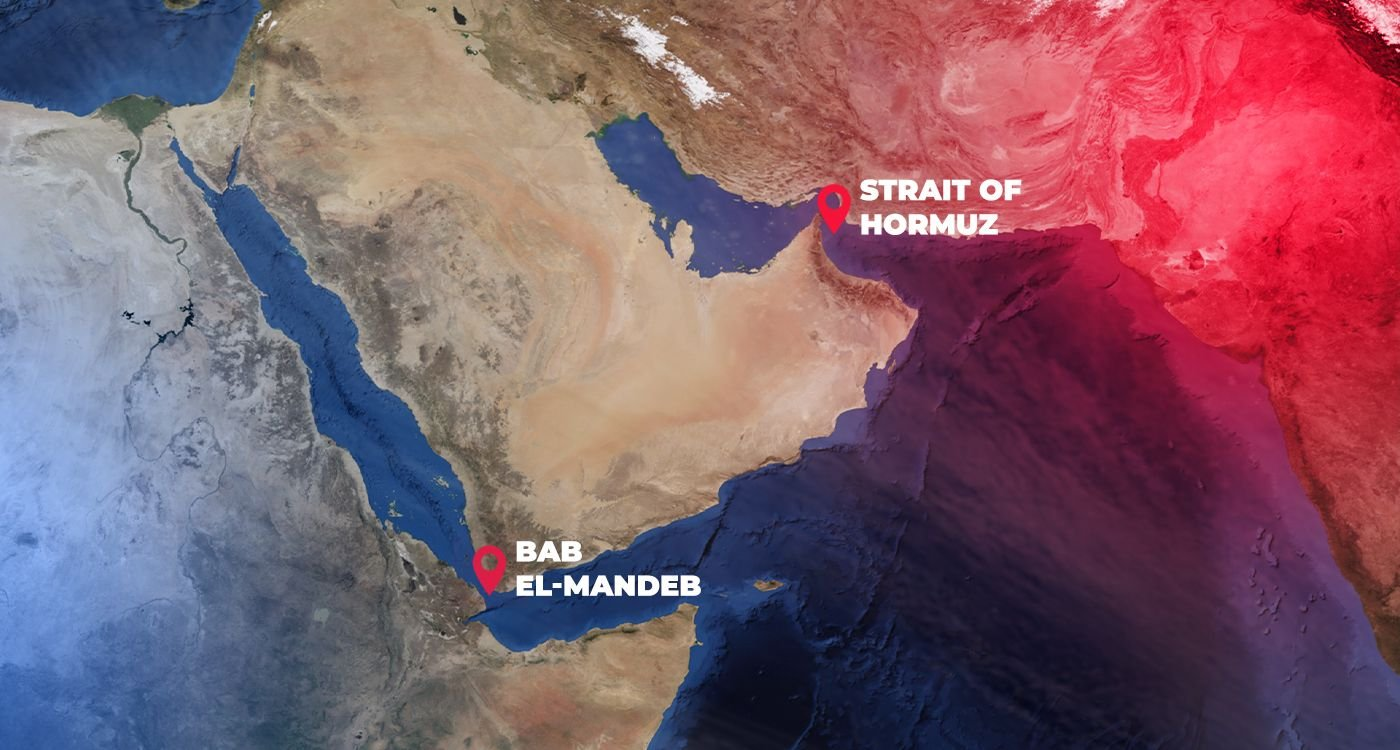
The world’s main “straits” are of particular importance here. The Strait of Hormuz transports huge volumes of oil and gas, which are vital to the world energy market. On the other hand, the Bab al-Mandeb connects the Red Sea with the Gulf of Aden and is one of the main gateways to the Suez route between Asia and Europe.
Now, Iran and the Houthis have the opportunity to simultaneously pressure two of the world’s most important sea passages. While disruptions in Hormuz directly affect the energy market, the threat in the Bab al-Mandab could make the Asia-Europe trade route more expensive and force ships to take longer alternative routes.
That is why the Houthis’ capture of Mocha had an immediate impact on the oil market. Brent crude oil prices crossed the $100 mark on September 10, approaching $109.
So what is happening in Yemen is not just another territorial battle. While Tehran has lost a number of key positions in the region, the Houthis are showing that Iran still has the ability to use geography as an instrument of economic pressure.
The main question now is: how close will the Houthis be able to get to the Bab al-Mandab, and how effectively will Iran be able to use this front in its confrontation with the United States?
The next events in Yemen may determine the answer to this question.
Here we are to serve you with news right now. It does not cost much, but worth your attention.
Choose to support open, independent, quality journalism and subscribe on a monthly basis.
By subscribing to our online newspaper, you can have full digital access to all news, analysis, and much more.
You can also follow AzerNEWS on Twitter @AzerNewsAz or Facebook @AzerNewsNewspaper
Thank you!