
Azerbaijan's growing reserves reinforce confidence in manat peg

Akbar Novruz
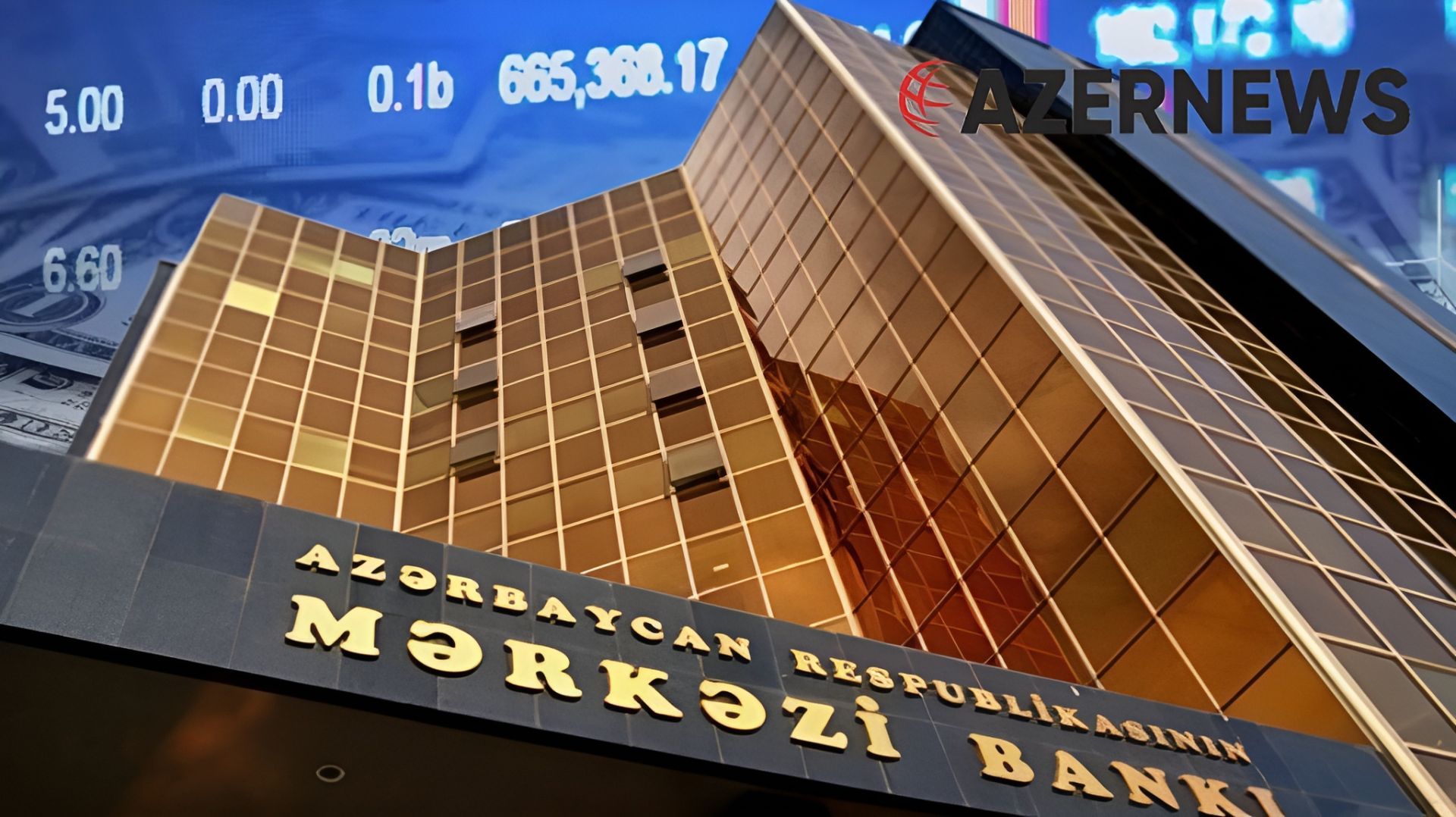
Read moreThe Central Bank of Azerbaijan was involved in something that is quite uncommon for the monetary authority of an emerging economy in the first six months of 2026, buying dollars that were not needed in order to avoid the strengthening of a certain currency. This is due to the fact that there is a structural oversupply of foreign exchange resulting from an increasingly larger current account surplus and an increasing move of residents from holding their money in dollars.
In April 2026, a substantial single-month purchase by CBA amounted to $1.0 billion, marking the largest transaction in the first half of the year. This was followed by a more moderate intervention in June 2026, with purchases totaling $394 million as the surplus continued to persist. Year-to-date, reserve growth has reached $1.64 billion since January 1, 2026, while the USD/AZN exchange rate has remained stable at 1.7000, unchanged since April 2017, for a duration of nine years.
The Central Bank acquired dollars worth $394 million just in June, a lower value than $1 billion in April, but still indicating consistent pressure on the currency. At the beginning of February 2026, the foreign exchange reserve position of the CBA was estimated to be at about $11.6 billion, a value that increased by an additional $1.64 billion during the first half of the year because of dollar purchases and profits gained from investments in the current foreign exchange reserves. SOFAZ, the sovereign wealth fund that oversees Azerbaijan's savings from hydrocarbons over the long term, controls an independent portfolio worth $64.8 billion for the year 2026, and, as such, gives the country total external liquid reserves that surpass even the total amount of manats in circulation.
Driver behind the surplus
The factors driving the glut of dollars consist of three parts. The first and foremost is the oil-fueled current account surplus in Azerbaijan, which still exists despite the steady decrease in the country’s oil production: the Southern Gas Corridor is delivering gas to 16 countries, including 10 EU states, thus providing steady income in hard currency, regardless of the decreasing oil production. The high energy prices driven by the Iran-US conflict and the Hormuz blockade, lasting already for four months, are keeping the income from oil exports at a high level during the first half of 2026, although due to the six-month delay in the pricing of Azerbaijani gas contracts, the price effect hasn’t shown up in the revenue numbers yet.
Second comes the phenomenon of "de-dollarization," which refers to the change in the structure of savings behavior starting from 2015, when the manat experienced intense devaluation, by almost 50%, to be exact, and there emerged a crisis in confidence in local currency savings. It took almost a decade to restore this confidence with a stable exchange rate of 1.7000 for Azerbaijan. As revealed by banking statistics, in the months of January through May of 2026, Azerbaijani banks bought $763.2 million of foreign currency from residents but sold only $489.3 million, which amounted to net purchases worth of $273.9 million from the people. People are exchanging dollars to manats at an approximate rate 56% greater than the other way round.
Third is the structural effect of Azerbaijan's non-oil export growth. The Ministry of Economy projects the manat to remain stable against the dollar through 202, both as a result of government intentions and due to the economic realities of the balance-of-payments situation that produces the surplus. Non-oil exports reached $3.3 billion in the first eleven months of 2025, a 7.3% increase, adding to the hard-currency inflows that the oil sector alone would have generated.
CBA’s official stance: “The bank indicated that ‘all or some of the foreign currency bought from the foreign exchange market can be diverted back to the market in order to achieve equilibrium, depending on the demand which would be formed in the market for the remainder of 2026.’” Such flexibility in reserves management, where buying occurs when the supply is greater than demand and selling occurs in reverse, is a classic managed float policy of central banks. The message it sends is that the 1.7000 peg is strong.
The tempering from the $1 billion in April to $394 million in June is significant and does not automatically mean that the surplus is shrinking. However, it could also be part of the normal seasonal cycles for imports or even a conscious decision by the CBA to let the reserves build up less rapidly. Either scenario fits within the CBA description of the market as being characterized by a "surplus of foreign currency supply over demand" on both cash and non-cash markets. The peg itself, steady at 1.7000 since April 2017, now nine years running, is the one most critical signal of macroeconomic stability that Azerbaijan possesses, and the reserve-building process underway in H1 2026 provides the CBA with another tool to defend it if conditions worsen in H2.
For those following Azerbaijan's macro story from an investment perspective, the data for H1 reveals a very positive situation in terms of its short-term fundamentals: a currency with strong backing from plentiful reserves, a country that is shedding dollars and rebuilding confidence in its own assets, and a central bank with more resources than it has spent. In Q1 2026, the revenue generated by SOFAZ was 3.18 billion manats, where asset management contributed 1.38 billion manats and gold and foreign exchange revaluation brought another 2.12 billion manats to its coffers. It appears that the story gets even better once the sovereign wealth fund is consolidated with the Central Bank's reserves. However, there is the issue of how long Azerbaijan's surplus driven by oil and gas will be sustainable, so as quickly and practically the economy drifts itself into more diverse and sustainable non-oil growth, this could be sustained even further.
Here we are to serve you with news right now. It does not cost much, but worth your attention.
Choose to support open, independent, quality journalism and subscribe on a monthly basis.
By subscribing to our online newspaper, you can have full digital access to all news, analysis, and much more.
You can also follow AzerNEWS on Twitter @AzerNewsAz or Facebook @AzerNewsNewspaper
Thank you!