
Azerbaijan's corporate expansion reaches from African oilfields to Central Asian banks

Qabil Ashirov
Read moreAzerbaijani companies are increasingly extending their commercial ambitions beyond national borders, acquiring strategic assets, entering new markets and participating in international infrastructure and industrial projects. From offshore oil and gas developments in the Mediterranean and West Africa to banking acquisitions in Central Asia and ocean-going cargo transportation, Azerbaijani enterprises are gradually establishing a broader international presence. This emerging expansion reflects an important shift in the country’s economic ambitions, with state-owned businesses seeking a greater role in global value chains and international investment markets.
The State Oil Company of Azerbaijan (SOCAR) remains the leading example of this transformation. Over the past several years, the company has pursued an international investment strategy encompassing energy production, refining, petrochemicals and fuel distribution. Its 51% stake in Türkiye’s Petkim petrochemical complex and 60% ownership of the STAR refinery have established a substantial industrial presence in one of the region’s largest economies. Its expansion into Italy through Italiana Petroli has further strengthened its European commercial position.
SOCAR’s upstream investments have added another dimension to this strategy. In 2024, the company acquired a 3% interest in the United Arab Emirates’ SARB and Umm Lulu offshore oil fields. In June 2025, it completed the acquisition of an approximately 10% effective interest in Israel’s Tamar natural gas field, in a transaction valued at around $1.25 billion. The company subsequently entered West Africa through a 10% stake in Côte d’Ivoire’s Baleine offshore oil and gas development, operated by Italy’s Eni. The transaction was announced in January 2026 and completed in September.
These investments demonstrate SOCAR’s growing interest in international upstream assets, providing exposure to different production environments, energy markets and commercial partnerships. The geographical distribution of its portfolio also creates opportunities for participation in the development of regional energy infrastructure and long-term production revenues.
Azerbaijan’s international corporate ambitions are increasingly visible in the financial sector. The International Bank of Azerbaijan (ABB), in which the state holds a controlling interest, completed the acquisition of 51% of Uzbekistan’s Davr Bank in September 2026. The transaction was valued at approximately $140 million. Operating under the ABB Davr brand, the Uzbek institution brings an established network of 43 branches and service centres, more than two million customers and a substantial presence in small-business financing.
Uzbekistan offers considerable opportunities through its population, expanding private sector and developing financial services market. ABB’s acquisition provides an established platform for entering this environment, creating prospects for corporate banking, retail finance, digital services and regional trade financing. The investment also strengthens Azerbaijan’s commercial connections with Central Asia, a region gaining importance in Eurasian trade and transportation networks.
The mining industry represents another emerging direction. AzerGold established its first foreign subsidiary, AzerGold Uzbekistan, in October 2026. The company is preparing geological exploration activities at the Akba gold deposit in Uzbekistan’s Kashkadarya region, with an initial exploration programme expected to last 18 months following the necessary licensing procedures. The project offers an opportunity to apply Azerbaijan’s accumulated mining expertise in an international market while developing additional commercial and technical capabilities.
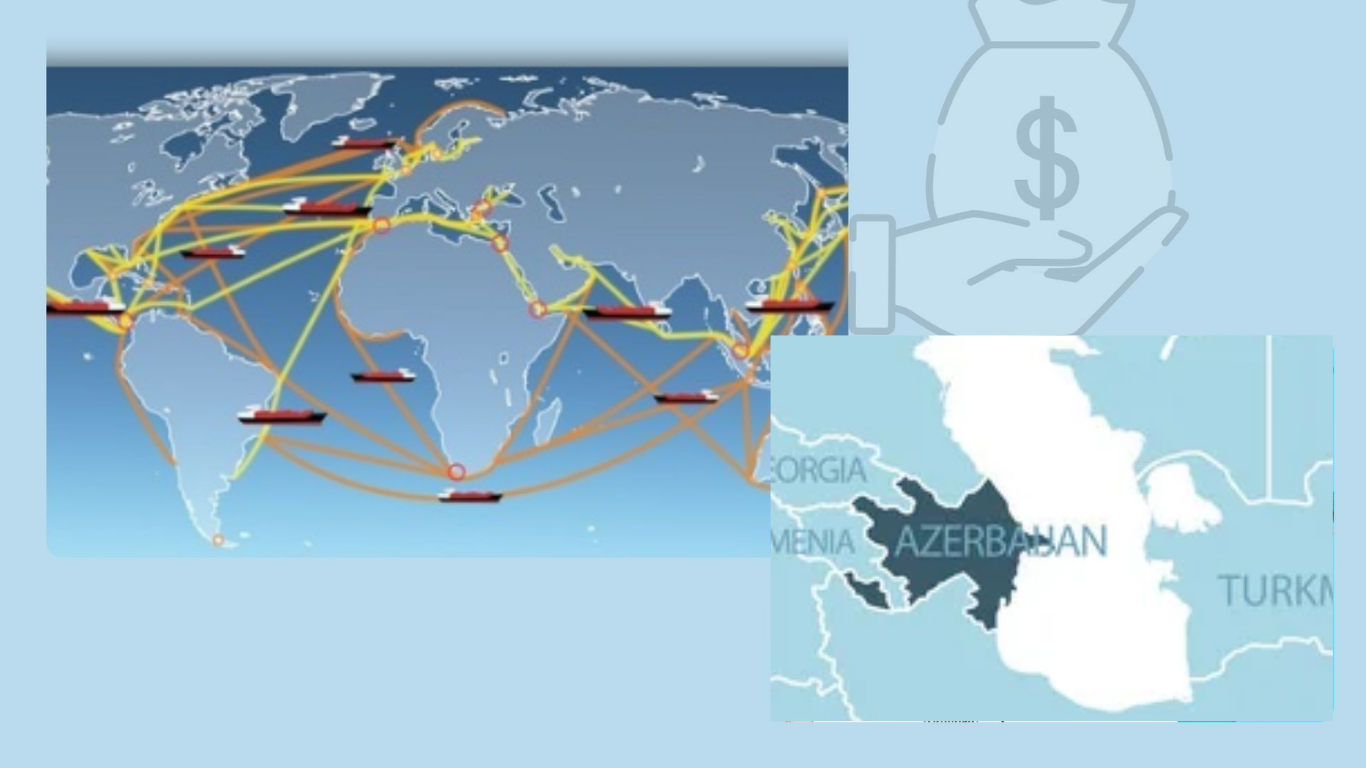
The transportation sector provides perhaps the most visible illustration of this geographical expansion. Azerbaijan Caspian Shipping Company (ASCO) has increasingly deployed its vessels on long-distance international routes beyond the Caspian Sea. In November 2025, its Handysize vessel Khojaly sailed from Australia's Port Kembla to Los Angeles carrying 24,251 tonnes of steel across the Pacific Ocean. In September 2026, another ASCO vessel, Murovdag, transported 33,134 tonnes of zinc from Chile's Antofagasta port to Belgium's Antwerp, crossing the Atlantic Ocean through the Strait of Magellan.
A further milestone came in November 2026, when the Aframax tanker Khankendi entered Australian waters after an 18-day voyage from Brunei. The vessel was acquired by SA Maritime AFEZCO, a joint venture established on an equal ownership basis by ASCO and SOCAR. This cooperation illustrates how Azerbaijani state-owned enterprises can combine their resources to participate in international maritime markets.
These developments have implications extending beyond individual corporate transactions. Overseas acquisitions can generate investment income, diversify revenue streams and strengthen Azerbaijan's economic relationships with partner countries. They also create opportunities for domestic companies to acquire international management experience, develop technological capabilities and establish commercial partnerships across multiple regions.
The expansion, however, brings greater financial and managerial responsibilities. International acquisitions require disciplined capital allocation, effective corporate governance and careful assessment of currency, regulatory and geopolitical risks. The commercial performance of these investments will ultimately determine their contribution to Azerbaijan's economic development.
Azerbaijan is gradually developing a more diversified international corporate presence through energy, banking, mining and maritime transportation. SOCAR, ABB, AzerGold and ASCO represent different dimensions of this process, each entering foreign markets through a distinct business model. Their expanding geographical reach reflects an emerging ambition to transform domestic corporate capabilities into internationally competitive assets.
The long-term significance of this strategy will depend on sustainable profitability, successful integration of acquired businesses and the ability to convert international operations into lasting economic value. For Azerbaijan, the development of overseas corporate assets could become an additional pillar of economic diversification, complementing traditional export revenues and strengthening the country's position in the evolving global economy.
Here we are to serve you with news right now. It does not cost much, but worth your attention.
Choose to support open, independent, quality journalism and subscribe on a monthly basis.
By subscribing to our online newspaper, you can have full digital access to all news, analysis, and much more.
You can also follow AzerNEWS on Twitter @AzerNewsAz or Facebook @AzerNewsNewspaper
Thank you!