
The Economist warns of financial shocks, geopolitical tensions and AI risks in 2027 outlook

Akbar Novruz
Read moreBritish publication The Economist has outlined the major economic, political and technological trends that could shape 2027, warning of potential financial market disruptions, geopolitical conflicts, risks associated with artificial intelligence and extreme weather events.
The projections were presented on November 17 in the publication's annual special edition, The World Ahead 2027, which examines emerging global challenges and possible developments over the coming year.
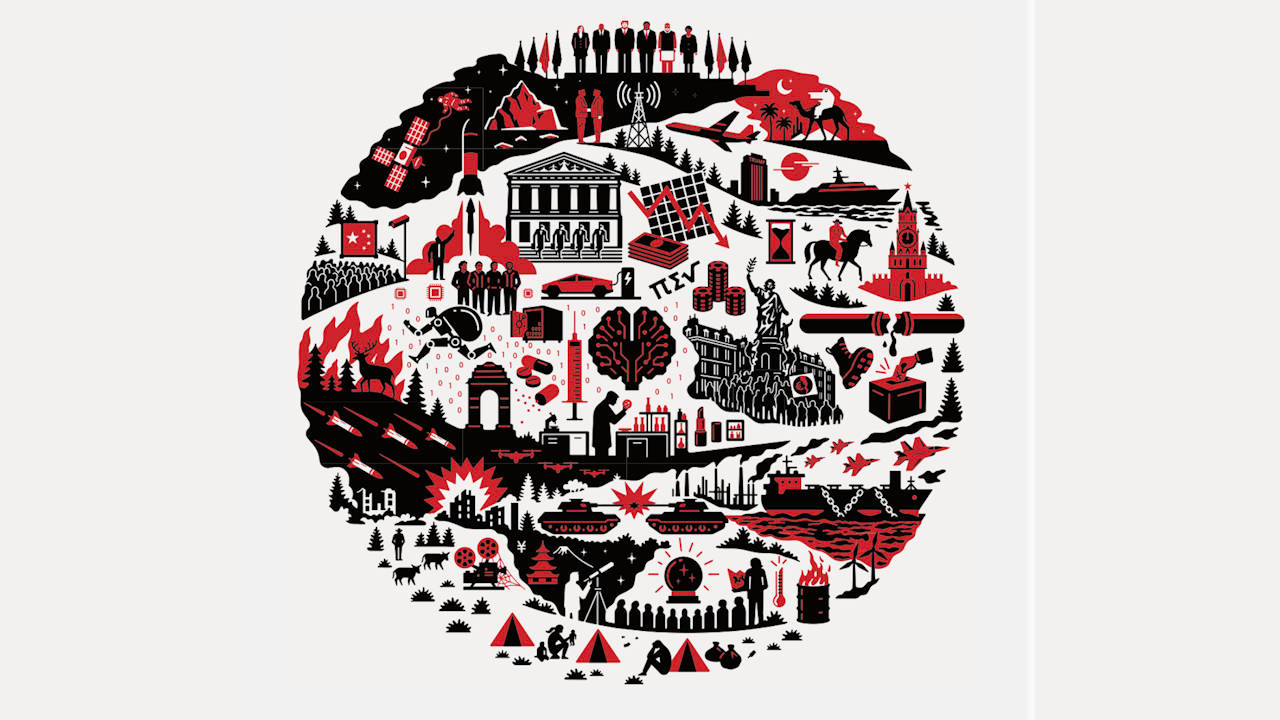
The issue's cover, designed by artist Kleon Peterson, features a striking combination of red, black and white, incorporating images of tanks, missiles, protesters, surveillance cameras, artificial intelligence and financial market turmoil. The illustrations collectively reflect an interconnected landscape of geopolitical instability and economic uncertainty.
According to The Economist, one of the most significant economic risks in 2027 could stem from rising public debt in developed economies and growing pressure on government bond markets. High public spending and increasing borrowing costs could threaten financial stability in several countries.
The publication also identifies the artificial intelligence sector as a potential source of market volatility. Complex financing arrangements, substantial investment commitments and rising debt among technology companies have raised concerns about the possibility of a sharp market correction.
In Europe, France's upcoming presidential election is highlighted as a major political event. The Economist suggests that a potential victory by Marine Le Pen could heighten political and financial uncertainty across the European Union.
Meanwhile, tensions surrounding Taiwan remain among the most serious security challenges in Asia. Concerns over China's military capabilities and reports that Beijing has instructed its armed forces to be prepared for possible operations against Taiwan by 2027 continue to fuel regional uncertainty.
The publication further suggests that the consequences of the war involving Iran could continue to affect global energy markets and fertilizer supplies, potentially creating additional economic pressures.
Climate-related risks also feature prominently in the outlook. A potentially powerful El Niño weather pattern could contribute to more frequent or intense droughts, heat waves and wildfires in different parts of the world.
Beyond geopolitical and economic challenges, The Economist identifies several structural changes likely to influence consumer behavior and business activity. These include the growing impact of weight-loss medications on consumer markets, declining spaceflight costs and changes in Hollywood's traditional business model.
Here we are to serve you with news right now. It does not cost much, but worth your attention.
Choose to support open, independent, quality journalism and subscribe on a monthly basis.
By subscribing to our online newspaper, you can have full digital access to all news, analysis, and much more.
You can also follow AzerNEWS on Twitter @AzerNewsAz or Facebook @AzerNewsNewspaper
Thank you!