
Iran war turns Strait of Hormuz into global economic pressure point

Ulviyya Poladova
Read moreThe US and Israeli war with Iran that erupted on February 28 did not begin suddenly. Its roots stretch back generations, from the 1953 coup against Iranian Prime Minister Mohammad Mosaddegh. Even in 2013, the CIA published internal documents proving direct organization and financing of the coup.
The point of open rupture came in 1979. The Islamic Revolution triumphed in Iran, and Ruhollah Khomeini came to power. Since then, the conflict has persisted on several levels simultaneously: the struggle for influence in the Middle East, sanctions, the nuclear program, and direct military episodes. Before this time, the conflict between Iran and the US was considered superficial. The sides openly spoke of their hostility toward each other.
Tehran officially announced the first successful enrichment of uranium at centrifuges in Natanz on April 11, 2006, although practical steps and work on preparation and processing of raw materials began in February 2006. Washington and Tel Aviv believed that the Iranians could create nuclear weapons and strike Israel and the West.
On July 14, 2015, Iran and a group of international mediators (the "six" in the 5+1 format) concluded the Joint Comprehensive Plan of Action (JCPOA), known as the "nuclear deal." Under this agreement, Tehran committed to limit its nuclear program and admit IAEA inspectors in exchange for the lifting of economic sanctions. Sanctions on terrorism, human rights, and the missile program remained largely in place. Therefore, Iran considered the economic effect of the deal to be limited, while the US insisted that the agreement should not turn a blind eye to Tehran's regional policy.
After the US withdrawal from the agreement in 2018, Tehran did not simply "gradually exit" the restrictions. From May 2019, Iran phased out its compliance.
By 2026, the IAEA reported that by the time of the strikes in mid-June 2025, Iran had accumulated 440.9 kg of uranium enriched to 60%. This is below the weapons-grade level of 90%, but technically already close to it: the transition from 60% to 90% requires far less work than the path from natural uranium to 60%.
One of the most dangerous direct episodes before 2025 was the killing of Qasem Soleimani. On January 3, 2020, the commander of the Quds Force of the Islamic Revolutionary Guard Corps was killed by an American drone near Baghdad International Airport. Several days later, Iran struck with ballistic missiles at bases housing American military personnel in Iraq.
After the collapse of the agreement, negotiations repeatedly reached dead ends. In June 2025, the US began bombing Iranian nuclear facilities. The current war against Iran began in late February 2026 with joint US and Israeli airstrikes, as a result of which Iranian Supreme Leader Ayatollah Ali Khamenei was killed, along with other high-ranking officials.
The US Central Intelligence Agency (CIA) and the US Department of Defense Intelligence Agency recently concluded that large-scale US airstrikes on Iran are unlikely to change Tehran's position in the negotiations.
On August 3, US President Donald Trump warned that Iran has a "last chance" to sign a peace agreement before "decapitation." In parallel, he noted that negotiations with Iran are underway.
"We are conducting negotiations. And we are doing so at Iran's request, with the support of Saudi Arabia, the UAE, and especially Qatar," Trump told journalists in the Oval Office.
However, Iran rejects this information, stating that it is conducting negotiations with Oman regarding navigation in the Strait of Hormuz.
Donald Trump also reported that the negotiations concern the resumption of shipping through the Strait of Hormuz and limiting Iran's nuclear program - two conditions of the deal that the US has repeatedly insisted upon. Iran refuses to accept these two conditions. Iranian authorities have repeatedly stated that Iran does not have a nuclear bomb and is only enriching uranium for peaceful purposes.
The war between Iran and the US demonstrates how volatile it is. Forces constantly shift. Neither Iran nor the US admits defeat. In April of this year, Donald Trump compared the war against Iran to the operation to abduct Venezuelan President Nicolás Maduro. However, as we see, everything turned out to be not so simple. The war between the countries continues to this day despite enormous costs. Last week, the US requested $18.2 billion from Congress to replenish interceptor missile stocks, Bloomberg reports. This amount is part of a package of additional funding totaling $67 billion previously submitted for consideration. According to sources, US military leadership is concerned about "dangerously low" ammunition levels in the country. It was to be expected, considering that missiles costing $4 million, which are difficult to manufacture, are used to destroy drones costing $35,000, which can easily be produced on a large scale.
The Trump administration has already put forward two theses: first, that there is no shortage of missiles in the American arsenal, and second, that Joe Biden is to blame for this (since he helped arm Ukraine and conducted airstrikes against the Houthis).
All of this is beginning to affect not only Middle Eastern countries but the global economy as a whole. Rising commodity prices have worsened the prospects for the world economy, which in recent years has already been experiencing one shock after another. Due to rising prices for oil, gas, fertilizers, and a number of other goods whose supplies have been reduced due to the blockade of the Strait of Hormuz, global GDP growth will be lower than expected, and inflation higher. Separately, the Houthis in Yemen continue escalation in the Red Sea, declaring a naval blockade and attacking tankers. They threaten to close the Bab-el-Mandeb Strait and are considering introducing tolls for commercial vessels, prompting the international community and regional countries to create new defensive coalitions.
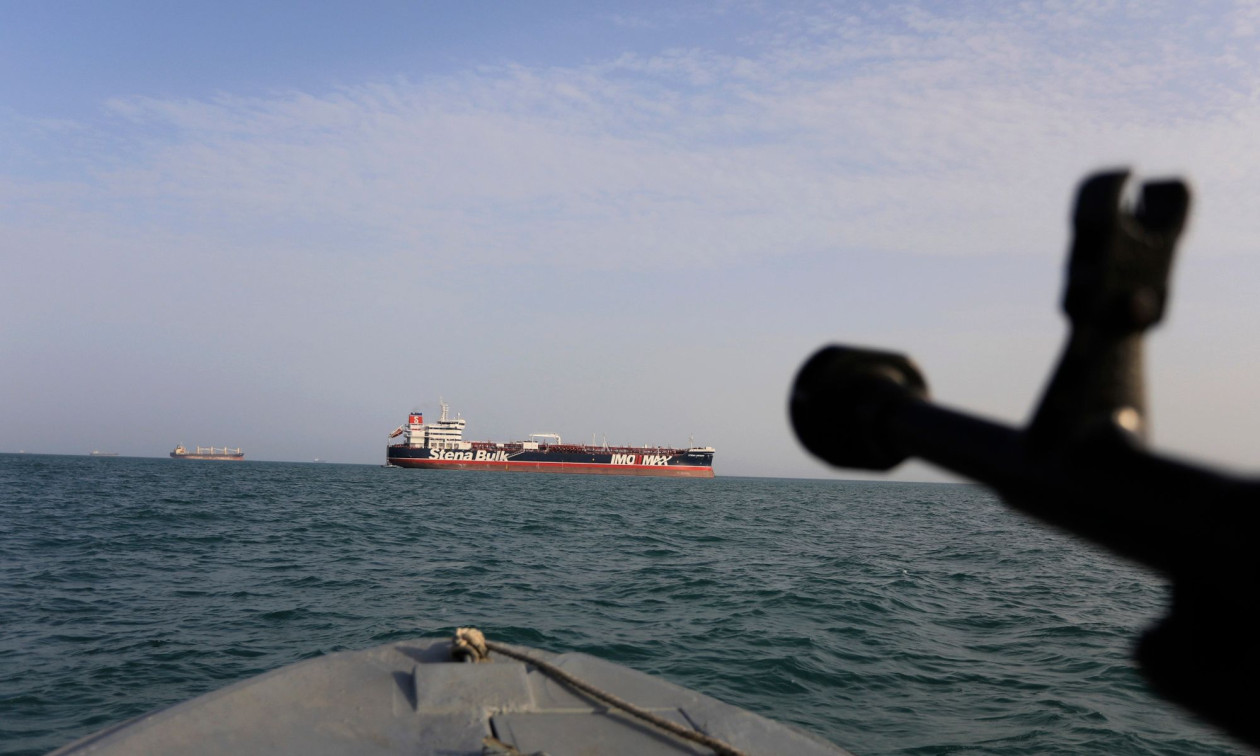
In recent months, the Strait of Hormuz has remained the main stumbling block in diplomatic efforts between the two sides. It is alternately closed and opened. Iran believes that only Tehran and Muscat can monitor navigation in the Strait of Hormuz, while Donald Trump asserts that the US will not allow Iran to charge fees for passage through the strait.
He had previously announced that the US would be the "guardians of the Strait of Hormuz" and that "as compensation for all expenses necessary to ensure security and protect this extremely unstable part of the world," Americans should receive "reimbursement of 20% of all transported cargo." However, the White House owner had to abandon this idea almost the same day, as it proved categorically unacceptable to the Arab monarchies of the Persian Gulf.
This idea is unacceptable for understandable reasons to Iran as well, which, having blocked the Strait of Hormuz after the start of US-Israeli bombings, now does not wish to relinquish control over this powerful lever of pressure.
On August 3, the Iranian Foreign Ministry stated that Tehran is ready to discuss the shipping regime in the strait only with Oman, but not with third countries.
Before the current war, roughly one-fifth of global petroleum consumption passed through the strait each day. Any serious disruption therefore affects not only Iran and the Gulf states but also global energy prices, inflation and economic growth.
The United States wants the strait open and predictable. Iran wants to prevent its adversaries from turning the waterway into an instrument of pressure against Tehran. The question, therefore, is not simply who controls Hormuz.
The legal framework is complicated by the fact that Iran and the United States have not ratified the 1982 UN Convention on the Law of the Sea. Nevertheless, the principle of freedom of transit through international straits is widely regarded by international-law experts as part of customary international law. That means Tehran cannot simply treat Hormuz as an exclusively Iranian waterway. Thus, the United States cannot appoint itself the owner or permanent guardian of the strait.
Iran has already warned that it will strike at American ships if they try to change the existing shipping corridors in the Strait of Hormuz or maintain a naval blockade of Tehran.
Could this become another Vietnam or Afghanistan?
As some experts believe, the US has once again gotten involved in an "endless war" with Iran that it cannot win but refuses to end.
It seems that history repeats itself like déjà vu. If one asks when the war might end, one can speculate at length - take even the wars in Afghanistan and Vietnam that the US waged for decades. The United States does not need to conquer Iran to achieve its main objectives. Iran does not need to defeat the United States militarily to survive the conflict.
The longer the war continues, the more countries it inevitably draws into the conflict. Middle Eastern states that host American military bases are already becoming part of the confrontation, as Iran periodically targets US positions in the region. This creates an increasingly difficult situation for Washington. The wider the geography of the attacks becomes, the harder it is to contain the war within the framework of a direct US-Iran confrontation. Any strike on an American facility could trigger a retaliation that affects another country and creates a new cycle of escalation.
At the same time, the Gulf states are finding themselves in a position they would very much prefer to avoid. On the one hand, they are US partners and rely on American security guarantees. On the other, their territories become potential targets of Iranian retaliation.
According to international media reports, the US military is preparing to launch a series of attacks on Iranian nuclear facilities, including a facility located under Mount Pickax south of Tehran. If these strikes are carried out, it will lead to a new round of escalation.
The Strait of Hormuz could ultimately become the key bargaining chip. Therefore, a possible deal could involve the reopening of the strait and guarantees for international shipping in exchange for restrictions and stronger international monitoring of Iran’s nuclear program.
However, such an agreement would not end the US-Iran rivalry. It would simply establish new rules for managing it. And that may be the most realistic way this war ends. Not peace between the United States and Iran, but a new framework for managing their rivalry, may prevent this from escalating into an endless war.
Here we are to serve you with news right now. It does not cost much, but worth your attention.
Choose to support open, independent, quality journalism and subscribe on a monthly basis.
By subscribing to our online newspaper, you can have full digital access to all news, analysis, and much more.
You can also follow AzerNEWS on Twitter @AzerNewsAz or Facebook @AzerNewsNewspaper
Thank you!