
Gyumri base becomes flashpoint in Armenia’s Russia recalibration

Akbar Novruz
Read moreRelations between Armenia and Russia continue to show signs of strain as trade disputes, diverging foreign policy priorities and growing political mistrust reshape what was once one of Moscow’s closest alliances in the South Caucasus.
The latest tensions emerged after Russia imposed restrictions on imports of Armenian milk and dairy products, prompting Armenian Prime Minister Nikol Pashinyan to raise the issue directly with Russian President Vladimir Putin during a recent telephone conversation. Pashinyan argued that the measures contradict both bilateral agreements and the rules governing the Eurasian Economic Union (EAEU).
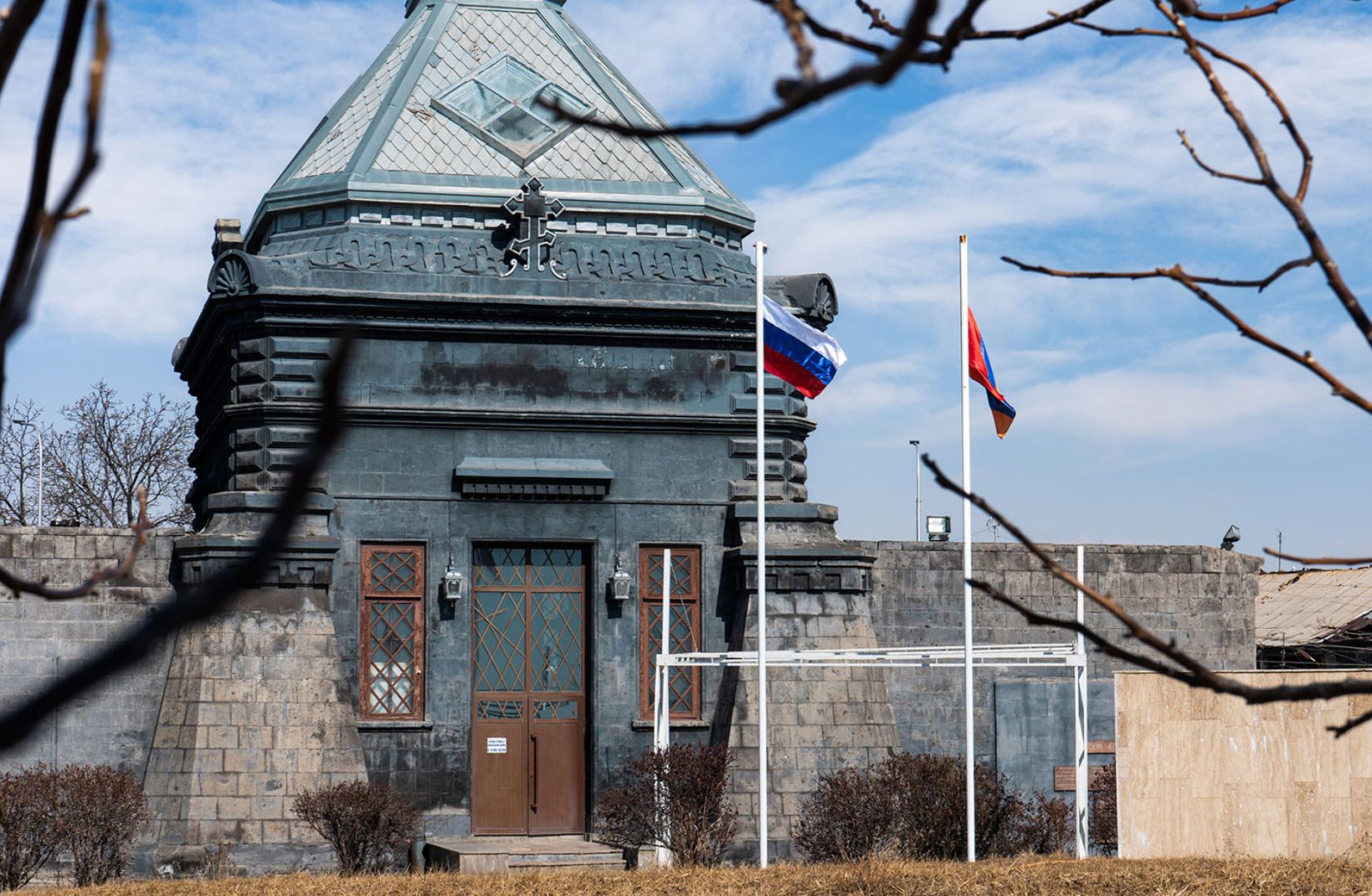
Alongside the economic disagreements, another issue has once again resurfaced in Armenian political debate: the future of Russia’s 102nd military base in Gyumri.
Although no official indication suggests that Yerevan intends to seek the base’s closure, growing public discussion has fueled speculation over whether Armenia’s broader geopolitical reorientation could eventually affect Moscow’s long-term military presence.
Speaking to AzerNEWS, Armenian activist and public figure Ishkhan Verdyan argues that, despite increasing public debate, the legal and political realities make such a scenario highly improbable.
“The Armenian government has never considered the early closure of the 102nd base in Gyumri and has repeatedly stated that such an agenda does not exist. This is logical, as the base’s presence is regulated by interstate treaties that cannot simply be terminated by a decree of the prime minister.”
The legal foundation of the Russian military presence dates back to 1995, when Armenia and Russia signed an agreement granting Moscow the right to station troops at the Gyumri base for 25 years.
That arrangement was significantly expanded in 2010, when both countries signed an additional protocol extending the agreement until 2044. The revised document also broadened the mission of the base, placing greater emphasis on contributing to Armenia’s national security rather than simply protecting Russian strategic interests in the former Soviet space.
Because the agreement constitutes an interstate treaty rather than a domestic political decision, Verdyan believes its termination would require considerably more than a change in political mood.
“The base has the legal right to remain until 2044, and the agreements regulating its presence include strategic military and political commitments, making early denunciation extremely difficult.”
Could Armenia legally withdraw?
International law does provide mechanisms allowing states to withdraw from treaties under exceptional circumstances. One argument occasionally raised within Armenian political circles concerns Russia’s perceived failure to fulfill its alliance obligations during recent military escalations involving Azerbaijan.
Verdyan acknowledges that such an argument could theoretically be advanced.
“International law allows for unilateral withdrawal from a treaty if one party fundamentally breaches its obligations. Armenia could, in principle, interpret the inactivity of the Russian base during recent military escalations with Azerbaijan as a refusal to fulfill allied commitments, which could formally provide grounds for denouncing the agreement.”
However, he stresses that legal possibility should not be confused with political feasibility.
“Such a scenario remains highly unlikely because it would effectively amount to a long-term rupture in relations with Russia, bringing serious short-term consequences for Armenia.”
Here comes the biggest dilemma. While Armenia has significantly deepened relations with the European Union, the United States and several Western partners over the past two years, Russia continues to remain one of Armenia’s principal economic partners, a major energy supplier and an influential actor within the Eurasian Economic Union.
Completely dismantling that relationship would carry substantial economic and security risks. Recent statements by Prime Minister Pashinyan appear consistent with that cautious approach. Earlier this year, he publicly stated that Armenia was not considering the withdrawal of the Russian military base.
More recently, commenting on Russia’s new legislation allowing the deployment of military forces to protect Russian citizens abroad, Pashinyan dismissed concerns that the law could expand the authority of the Gyumri base.
Instead, he emphasized that the base operates exclusively within Armenia’s legal framework.
That position suggests Yerevan is seeking greater oversight of Russia’s military presence rather than questioning the legal basis of the deployment itself.
The distinction is important.
Since the 2020 Second Garabagh War, Armenia has increasingly pursued what many observers describe as a multi-vector foreign policy, expanding ties with Western partners while attempting to preserve workable relations with Moscow.
That balancing strategy has become increasingly difficult as geopolitical competition between Russia and the West intensifies.
Moscow also has reasons for restraint
Verdyan argues that an outright confrontation over the Gyumri base would be damaging not only for Armenia but also for Russia.
“Such a development would only become possible in the event of open Russian aggression, leaving Armenia with no alternative. However, even that scenario is hardly being considered by Moscow because, while the consequences for Armenia would be local, for Russia they would be geopolitical.”
Here we are to serve you with news right now. It does not cost much, but worth your attention.
Choose to support open, independent, quality journalism and subscribe on a monthly basis.
By subscribing to our online newspaper, you can have full digital access to all news, analysis, and much more.
You can also follow AzerNEWS on Twitter @AzerNewsAz or Facebook @AzerNewsNewspaper
Thank you!