
SpaceX’s unexpected Moon crash
By Alimat Aliyeva
The Moon has endured millions of years of cosmic impacts. Countless asteroids and meteoroids have left their mark on its surface, creating the famous craters and rugged landscapes we see today. However, in recent decades, the Moon has also been struck by objects created by humans — including probes, landers, and pieces of rockets sent from Earth, AzerNEWS reports, citing BBC.
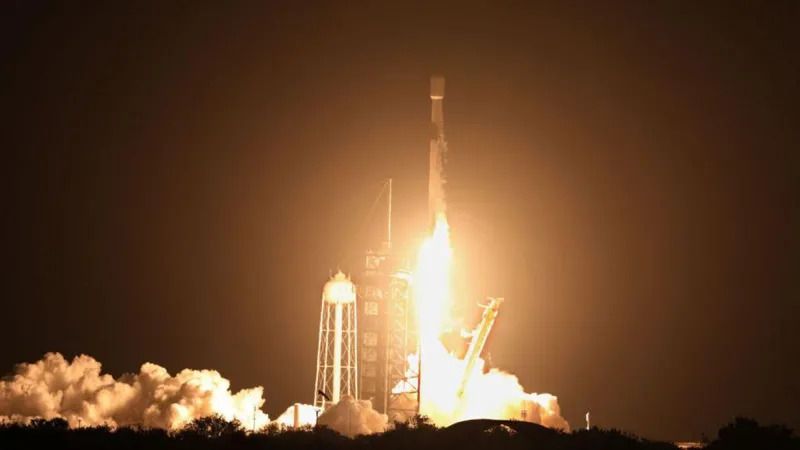
Now scientists expect another collision. On Wednesday, a discarded part of a SpaceX rocket is predicted to hit the Moon while travelling at a speed of around 2.43 kilometres per second (about 5,400 mph).
According to NASA’s Centre for Near-Earth Object Studies (CNEOS), the upper stage of a Falcon 9 rocket is expected to impact the lunar surface on 5 August. The conclusion was reached after independent astronomers analysed publicly available tracking data and discovered that part of the rocket was accidentally on a collision course with the Moon.
“There is no danger to Earth,” said NASA spokesperson Jimi Russell. The space agency will continue monitoring the booster for scientific and training purposes, and researchers may later study the impact site to learn more about how materials behave during high-speed collisions on the Moon.
Why is space junk becoming a serious problem?
This particular Falcon 9 rocket was launched as part of a US-Japanese mission designed to deliver two lunar landers and scientific equipment to the Moon. While the first stage of a Falcon 9 rocket is reusable and usually returns to Earth for future missions, other parts of the rocket can be left behind in space.
These abandoned objects are known as space debris. Some pieces can remain in orbit for years or even decades, creating risks for satellites, spacecraft, and future space missions. In some cases, debris can eventually collide with planets, moons, or other celestial objects.
Interestingly, this is not the first time a human-made object has crashed into the Moon. In 2009, NASA deliberately sent a rocket stage into the lunar surface as part of an experiment to search for water ice and study the dust released by the impact. The upcoming Falcon 9 collision is different because it was not planned — it is the result of an uncontrolled object drifting through space.
Events like this highlight an important challenge for modern space exploration: as humanity sends more missions beyond Earth, managing space debris will become increasingly necessary to keep future journeys safe and sustainable
Here we are to serve you with news right now. It does not cost much, but worth your attention.
Choose to support open, independent, quality journalism and subscribe on a monthly basis.
By subscribing to our online newspaper, you can have full digital access to all news, analysis, and much more.
You can also follow AzerNEWS on Twitter @AzerNewsAz or Facebook @AzerNewsNewspaper
Thank you!