
Armenia’s elections signal new regional reality shaped by Azerbaijan’s strategic shift

Ulviyya Poladova
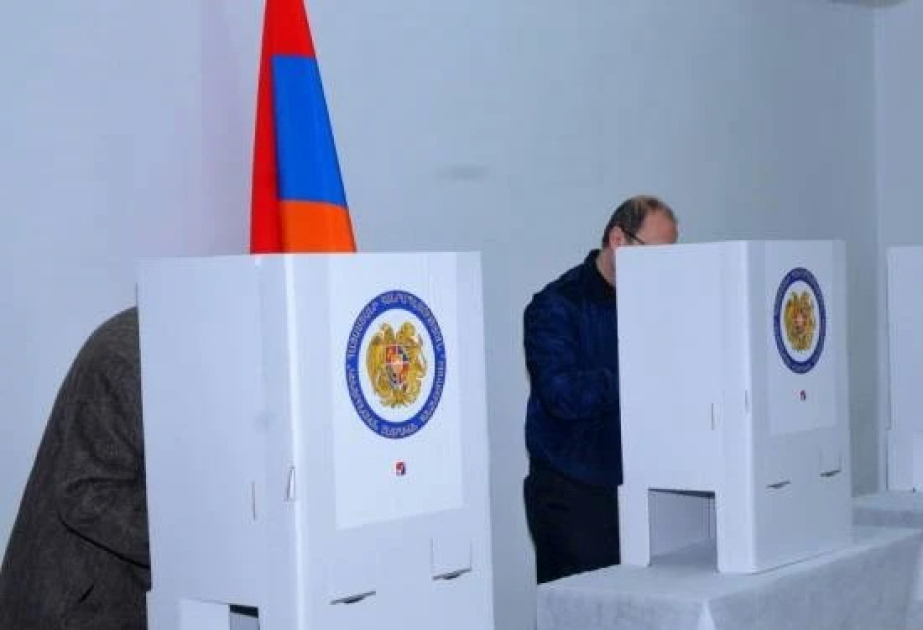
Read moreOn June 7, Armenia held parliamentary elections with a high voter turnout of 58.97%, resulting in the formation of a new National Assembly. A total of 17 political parties and two electoral blocs participated in the vote. According to Armenian law, the 107 members of the unicameral parliament are elected through a proportional system, with a 4% threshold for parties and 8% for blocs.
The main competition was between the ruling "Civil Contract" party and opposition blocs "Armenia" and "Strong Armenia," which are considered to hold pro-Russian positions.
According to the final results, Prime Minister Nikol Pashinyan’s "Civil Contract" party retained power in Armenia, although it failed to secure a constitutional majority.
Key issues in the election campaign included Armenia’s relations with its neighbors, its ties with Russia, and the future of the country’s membership in the Eurasian Economic Union (EAEU).
For Pashinyan, this was his third parliamentary election since 2018. During this period, Armenia experienced defeat in the Second Karabakh War, followed by a preliminary peace agreement with Baku mediated by US President Donald Trump in August 2025.
The elections in Armenia were accompanied by widespread reports of irregularities. Local and independent international observers reported violations at nearly 800 polling stations, indicating systemic problems in the electoral process.
Official statistics also point to significant issues. Armenia’s Ministry of Internal Affairs opened 79 criminal cases related to electoral violations, with 18 people detained. The Prosecutor General’s Office received more than 400 complaints, leading to 186 criminal cases and several arrests. The Anti-Corruption Committee initiated 115 cases, resulting in 214 detentions and 91 arrests. Most violations were related to organizational issues and breaches of voting secrecy.
Among the main irregularities reported were widespread vote-buying, violations of ballot secrecy, manipulation of voter lists, irregularities during vote counting, and pressure on opposition groups.
Despite these irregularities, Nikol Pashinyan’s continued leadership is viewed as aligning with Azerbaijan’s interests. Pashinyan supports the peace framework proposed by Azerbaijani President Ilham Aliyev, which provides a relatively stable basis for ongoing negotiations and regional peace initiatives.
It is important to note that highlighting electoral violations does not reflect hostility toward Pashinyan from Azerbaijan’s perspective. Rather, it reflects the relative nature of democratic standards and the perceived double standards of Western institutions. Reporting these irregularities allows Azerbaijan to challenge one-sided assessments of democratic processes while also critically addressing Armenia’s efforts to present itself as a fully democratic state.
A decisive factor shaping both the elections and the emerging political landscape in Armenia has been Azerbaijan’s resolute diplomatic, political, and military actions aimed at restoring its territorial integrity. By demonstrating the irreversibility of the new realities on the ground, Azerbaijan has created conditions in which the Armenian political elite can no longer afford to ignore the principles of peace and respect for internationally recognized borders.
The outcome of the elections, combined with Azerbaijan’s effective policies, underscores a broader truth: the era of revanchist myths and illusions in Armenian politics is irreversibly over.
In practical terms, the Armenian official is increasingly aware that normalization with Azerbaijan is unavoidable. The political and societal recognition of these realities reflects lessons learned from the past few years of conflict, including the Second Karabakh War and subsequent negotiations mediated by international actors. The June elections, therefore, were not merely a domestic contest - it represented Armenia’s gradual adaptation to a post-conflict regional order, where territorial compromise and peace are not optional but essential.
Azerbaijan consistently emphasizes its commitment to long-term peace and regional stability, regardless of internal political developments in Armenia.
Here we are to serve you with news right now. It does not cost much, but worth your attention.
Choose to support open, independent, quality journalism and subscribe on a monthly basis.
By subscribing to our online newspaper, you can have full digital access to all news, analysis, and much more.
You can also follow AzerNEWS on Twitter @AzerNewsAz or Facebook @AzerNewsNewspaper
Thank you!