
ANCA’s Karabakh heritage campaign slides into pre-election propaganda
Qabil Ashirov
Read moreThe Karabakh conflict, a tragedy that for decades stalled regional development, displaced hundreds of thousands, and claimed countless lives, has finally been relegated to the dusty shelves of history. The wounds opened by this long-standing confrontation have begun to cauterize. Those who suffered directly are striving to move forward, attempting to leave behind the shadows of those dark days, however difficult that may be.
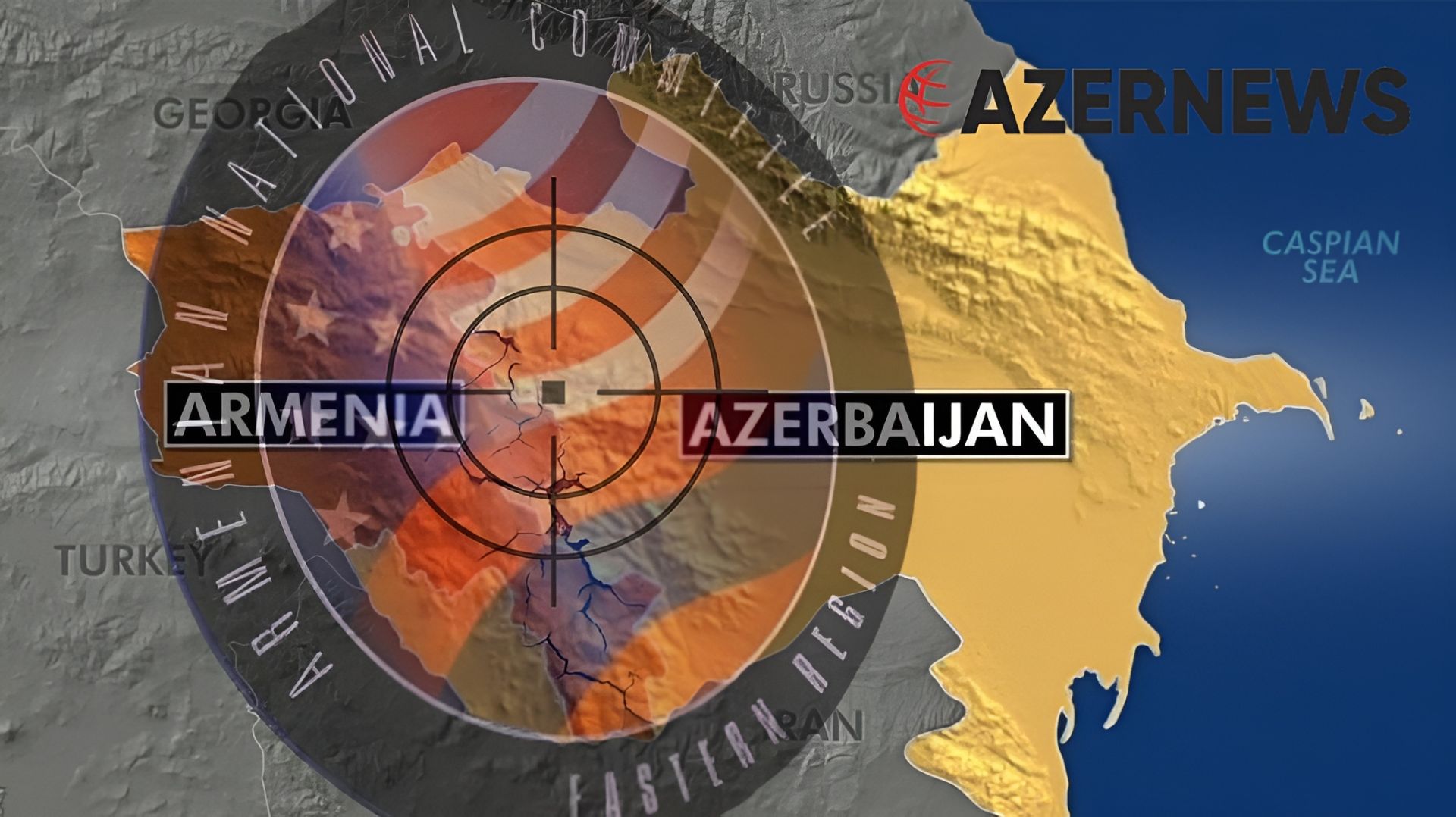
However, against this backdrop of nascent peace, certain groups remain intent on reigniting the conflict. These factions appear blind to the fact that their policies bring catastrophe not only to Azerbaijan but to themselves as well. To fuel this new fire, they have resorted to a familiar and cynical tactic: claiming that Azerbaijan is destroying Armenian cultural heritage in Karabakh.
When one hears these accusations, the old proverb comes to mind: “The thief is the first to cry 'stop thief!" It is a documented fact that Armenia is the last state with any moral authority to speak on the destruction of cultural heritage. This is not merely an Azerbaijani claim; one need only consult Thomas de Waal’s authoritative book, Black Garden, to understand the systematic erasure of Azerbaijani heritage within Armenia itself. De Waal provides ample evidence of the destruction of a mosque in Yerevan.
The devastation of the Azerbaijani cultural legacy was not limited to the Republic of Armenia. During the nearly 30-year occupation of Karabakh, the world witnessed the systematic desecration of Azerbaijani monuments. Long before these lands were liberated, Western and Russian media outlets published harrowing images and videos of historic mosques and caravanserais being repurposed as livestock stables. This evidence was documented not by partisans, but by neutral observers striving for objectivity.
The erasure reached such extremes that even the Armenian media or the mouthpieces of Armenian propaganda could not entirely hide it. Yerevan’s "Blue Mosque" has been repeatedly rebranded as an "Iranian Mosque" in Armenian media. Similarly, during the recent war, the War-Gonzo outlet—notorious for its anti-Azerbaijani and anti-Ukrainian stance—filmed the iconic Govhar Agha Mosque in Shusha and presented it as "Persian."
It is necessary to digress here to clarify a fundamental point: unlike the national structures of certain Christian denominations, Islam is cosmopolitan. While sects exist, there is no such thing as an "ethnic" mosque. For example, in Christianity, one finds the Armenian Catholic or Armenian Orthodox Church—institutions tied specifically to a nation. In Islam, you will never find a "Turkish Sunni Mosque" or an "Azerbaijani Shia Mosque." A mosque is a house of worship for all Muslims, regardless of ethnicity. By rebranding these sites, Armenian forces attempted to strip them of their Azerbaijani identity; where they could not destroy the stone, they tried to rewrite the history of the architects.
This pattern of "Armenian rebranding" does not limited to mosques and caravanserais, extending to the ancient churches of Azerbaijan. It is an established historical fact that Christianity predates Islam by some eight centuries. Consequently, many regions that are predominantly Muslim today once followed other faiths, such as Zoroastrianism and Christianity and more, prior to the Islamic era. Azerbaijan is no exception to this historical trajectory. Before the advent of Islam, the people of Azerbaijan practiced Zoroastrianism and Christianity, with Islam only gradually taking root and becoming the primary faith over time. Despite this clear historical progression, there is a persistent and tireless effort by Armenian interests to misappropriate these pre-Islamic churches—built by the ancestors of the Azerbaijani people—and present them exclusively as part of Armenian history."
Historical sources prove that the Council of Aguen, convened to establish religious canons for Caucasian Albania, took place in the territory of Agdam in lower Karabakh. This council made pivotal decisions regarding the region's economic, social, and religious life.
Furthermore, the most detailed account of this era is found in Movses Kaghankatvatsi’s The History of the Country of Albania. In this work, Karabakh is depicted as the beating heart of the Albanian state, home to numerous churches and sanctuaries. Historians attribute this density to the region's mountainous geography, which served as a natural fortress. Kaghankatvatsi provides extensive details on sites like the Amaras Monastery and more, describing the pilgrimages of King Vachagan the Pious and the preservation of sacred relics.
Kaghankatvatsi’s chronicles also reveal a fascinating, often overlooked tension: he records a letter from the Armenian Church demanding that the Albanian Church submit to its authority. The Albanian Church’s response was firm: they noted that Christianity had been declared the state religion in Albania earlier than in Armenia, making the Albanian Church the elder institution.
History tells us that this struggle was finally decided in the 1830s, after the Russian Empire’s conquest of the region. Following a petition from Armenian Church, the Russian Tsar abolished the independent Albanian Church and transferred its archives, properties, and jurisdiction to the Armenian Church.
These facts, though often ignored, speak volumes. Kaghankatvatsi’s writings prove that the roots of the Karabakh issue do not lie in the late 20th century; they stretch back over a millennium.
More precisely, to destroy these churches and temples would be for Azerbaijan to destroy its own history. Why would Azerbaijan demolish the very evidence that proves its people have inhabited this region for thousands of years? These monuments are not foreign impositions; they are Azerbaijani heritage—testaments to a rich, multi-layered past that we are committed to preserving.
Here we are to serve you with news right now. It does not cost much, but worth your attention.
Choose to support open, independent, quality journalism and subscribe on a monthly basis.
By subscribing to our online newspaper, you can have full digital access to all news, analysis, and much more.
You can also follow AzerNEWS on Twitter @AzerNewsAz or Facebook @AzerNewsNewspaper
Thank you!