
Smart but deadly: How drone age rewriting rules of warfare

Ulviyya Poladova
Read moreUnmanned aerial vehicles (UAVs) have evolved from experimental systems into one of the defining instruments of modern warfare. Initially conceived as pilotless aircraft during World War I, early prototypes such as the British Aerial Target and the American Kettering Bug demonstrated the basic concept of remote-controlled flight. However, their operational potential remained largely unrealized at the time. It was only decades later, particularly during the Vietnam War, that UAVs began to see systematic deployment, primarily in reconnaissance roles.
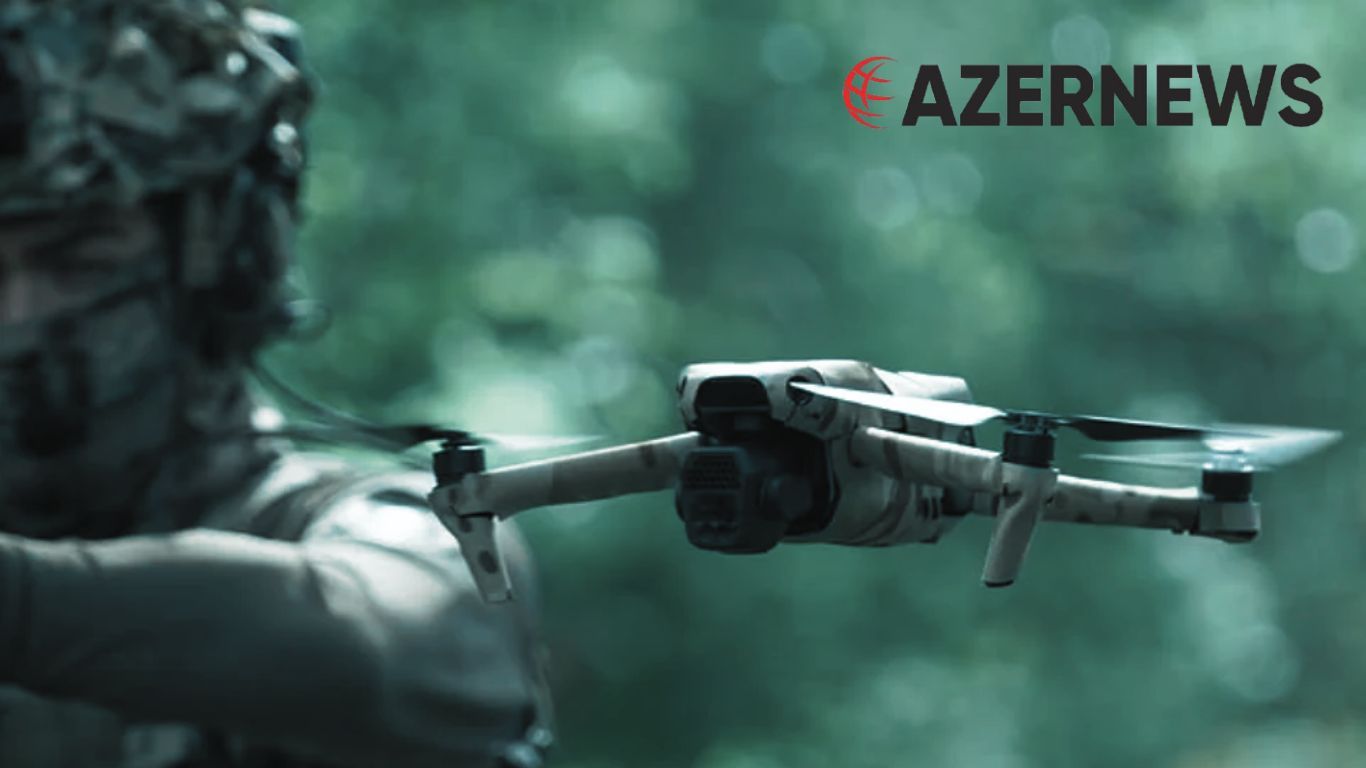
Over the past two decades, the role of UAVs has expanded dramatically. What were once niche surveillance tools have transformed into multi-functional platforms capable of executing a wide array of missions. Modern drones conduct intelligence, surveillance, and reconnaissance (ISR), adjust artillery fire, carry out precision strikes, and even participate in coordinated multi-domain operations. Advances in artificial intelligence, miniaturization, and communications technology have significantly enhanced their autonomy, endurance, and accuracy.
One of the most profound impacts of UAV proliferation is the transformation of the battlefield itself. Traditionally, front lines were clearly defined by physical positions such as trenches and fortified areas. Today, the concept of the battlefield has become far more fluid. The so-called "kill zone" has expanded significantly, often extending 10 - 15 kilometers beyond the line of contact in both directions. This shift is driven by the persistent presence of drones, which can detect, track, and engage targets far beyond traditional visual range.
Moreover, UAVs have introduced a new level of transparency to warfare. Continuous aerial surveillance reduces the possibility of concealment, making troop movements, supply lines, and even individual soldiers more vulnerable. This has forced militaries to adapt by improving camouflage, electronic warfare capabilities, and counter-drone systems. The rise of loitering munitions - often referred to as "kamikaze drones" - has further blurred the line between reconnaissance and strike capabilities, allowing operators to identify and eliminate targets within a single operational cycle.
Another critical dimension is the democratization of airpower. Unlike traditional aircraft, UAVs are relatively inexpensive and accessible, enabling not only major powers but also smaller states and non-state actors to deploy them effectively. Conflicts such as those involving Karabakh and the ongoing war in Ukraine have demonstrated how drones can decisively influence outcomes, shifting the balance even against conventionally stronger adversaries.
On September 27, 2020, long-standing tensions escalated into full-scale military operations. Azerbaijan launched a counter-offensive, utilizing modern warfare tactics - most notably the extensive use of precision drones and advanced satellite intelligence.
Undoubtedly, drones had been used in armed conflicts even before the Second Karabakh War - one only needs to recall their deployment in Iraq, Afghanistan, Yemen, and Syria since the early 2000s. However, in all these cases, unmanned aerial vehicles functioned as a supplement to conventional military forces - conducting reconnaissance, delivering precision strikes on pre-identified targets, and providing situational awareness.
What was once considered futuristic is now becoming a reality, with drones empowered by AI transforming industries, offering novel solutions. With the integration of AI, drones have evolved from simple flying machines to autonomous, smart devices capable of performing complex tasks without human intervention. They can now navigate difficult terrain, make decisions based on real-time data, and even work in tandem with other drones or systems.
Commercial manufacturing, precision guidance and advances in artificial intelligence and autonomy have democratized the ability of militaries and militant groups to accurately strike their adversaries. This includes first-person-view, or FPV, drones – a type of one-way attack drone with interfaces like video games – that groups aligned with Iran are already using to target American forces in the Middle East.
One-way attack drones have become one of the most prominent weapons in today’s conflicts, particularly in the war involving Russia and Ukraine, as well as in ongoing tensions across the Middle East.
The most notable category of one-way attack drones is designed for long-distance operations. These drones can travel hundreds or even thousands of miles to strike targets deep inside enemy territory. Unlike reusable drones, they are built to detonate on impact, making them functionally similar to cruise missiles.
One widely known example is the Shahed-136, developed by Iran. It reportedly has a range of up to 1,250 miles (2,000 kilometers), allowing it to hit targets far beyond the front lines. Despite this capability, it is relatively inexpensive, with an estimated cost between $20,000 and $50,000 per unit.
The affordability of these drones is one of their biggest advantages. In contrast, a conventional cruise missile such as the Tomahawk cruise missile used by the United States costs around $2 million each.
Since late February 2026, Tehran has fired thousands of one-way attack drones at targets across the Middle East. Iran’s one-way attack drones have hit buildings in Bahrain, Kuwait and the United Arab Emirates, and damaged the United States Embassy in Saudi Arabia. The UAE alone was targeted by nearly 700 Iranian drones in the war’s early days.
While many countries are developing drone capabilities, the United States, China, Türkiye, and Israel stand out as leaders in the field.
United States
The United States continues to lead in high-end drone capabilities. Its systems, such as the MQ-9 Reaper and RQ-4 Global Hawk, are known for their long-range operations, precision targeting, and integration with satellite and intelligence networks.
China
The China has rapidly expanded its drone industry, becoming a major supplier to countries around the world. Platforms like the Wing Loong II are widely exported, offering a balance of affordability and capability.
China’s strength lies in large-scale manufacturing and its growing influence in international arms markets.
Turkiye
Turkiye has gained global attention for its combat-proven drones. Systems such as the Bayraktar TB2 and Bayraktar Akıncı have been used effectively in multiple conflicts.
Israel
The Israel is one of the earliest developers of military drones and remains a leader in innovation. It specializes in surveillance systems and loitering munitions such as the IAI Harop.
Here we are to serve you with news right now. It does not cost much, but worth your attention.
Choose to support open, independent, quality journalism and subscribe on a monthly basis.
By subscribing to our online newspaper, you can have full digital access to all news, analysis, and much more.
You can also follow AzerNEWS on Twitter @AzerNewsAz or Facebook @AzerNewsNewspaper
Thank you!