
Iran’s new maritime restrictions put Hormuz under greater strain

Ulviyya Poladova
Read moreThe problem of transit through the Strait of Hormuz is beginning to affect an increasing number of countries. The volume of liquefied natural gas (LNG) transported through the strait has already fallen by 92 percent. But that's not the worst part. On September 9, Iran announced the creation of a new maritime "exclusion zone" or "restricted zone" in the Persian Gulf, which, according to Secretary of the Supreme National Security Council Mohsen Rezai, will begin at the borders of the American blockade of Iranian ports and extend to parts of the Gulf. Thus, any vessel entering the zone will be placed on Iran’s sanctions list.
In the last quarter of the previous year, 21.6 million barrels of oil per day passed through the Strait of Hormuz. Following the outbreak of the US-Iran war, this figure fell to 4.9 million barrels per day in the second quarter of this year. Over the same period, LNG flows through the strait declined from 10.5 billion cubic feet per day to 800 million cubic feet. As a result, oil volumes passing through the Strait of Hormuz fell by 77 percent over the period in question, while LNG shipments declined by 92 percent. The sharp drop in LNG flows points to a much deeper disruption to liquefied gas transportation along this strategically important route.
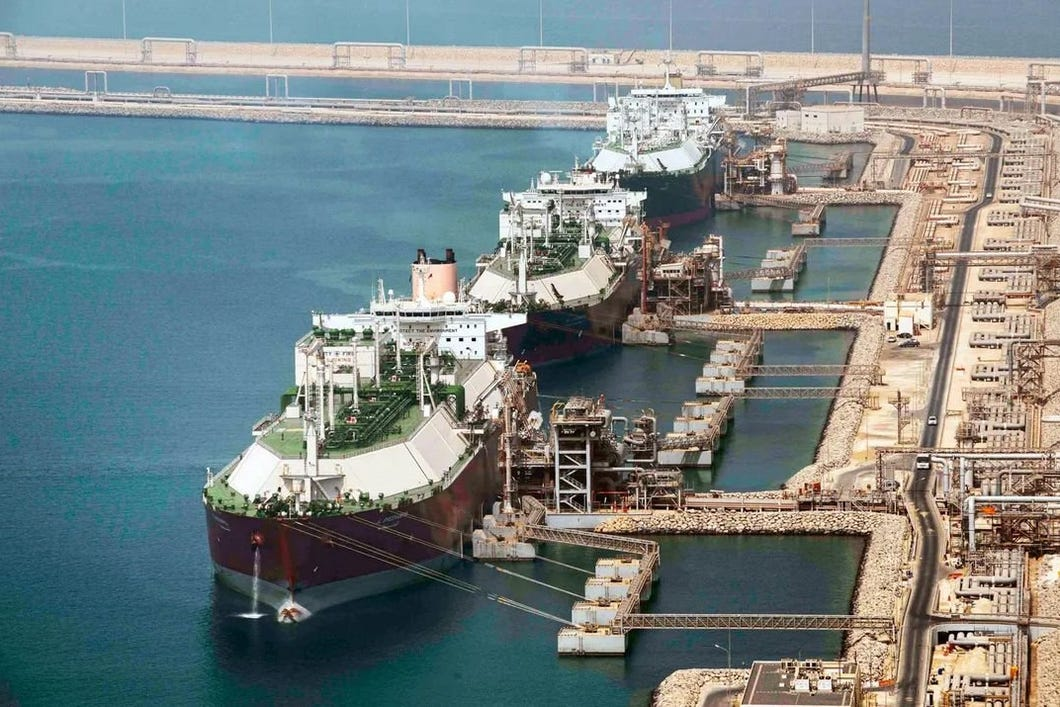
According to the Gas Exporting Countries Forum (GECF), around one-fifth of global LNG supplies pass through the Strait of Hormuz, the only maritime route used by Qatar and the United Arab Emirates (UAE) for their LNG exports. As the conflict intensified, the global LNG market experienced a significant decline between March and June. During this period, more than 300 LNG cargoes from Qatar and around 20 from the UAE could not be delivered.
Company Clarksons Research also shows how the difference between oil and LNG flows is reflected in tanker traffic. During the week of June 21-27, 66 crude oil tankers and 16 LNG vessels passed through the Strait of Hormuz. In the week of August 23-29, however, only four crude oil tankers made the passage.
India has felt the consequences of the decline in transit particularly sharply. The country is the world’s second-largest importer of liquefied petroleum gas (LPG) after China. India consumes more than 33 million tonnes of LPG annually, of which 13.1 million tonnes are supplied by domestic production and processing. The remaining volumes are imported from the United Arab Emirates, Qatar and Saudi Arabia. Between March and July, India received only 60 percent of the volumes it had purchased from the Persian Gulf during the same period last year. With storage capacity limited, importers have turned to the US market.
LPG supertankers are now forced to travel along the Atlantic coast, round Africa’s Cape of Good Hope and continue through the Indian Ocean. Previously, a voyage from the Persian Gulf to the Indian port of Haldia took around two weeks. The new route from the US Gulf Coast takes more than 45 days each way. The full delivery-and-return cycle has therefore increased to three months, while freight costs have risen by 30 percent.
Europe has also been hit hard. Following an unusually hot summer and amid risks to LNG supplies through the Strait of Hormuz, the European fuel market is becoming increasingly volatile. Having moved away from Russian gas, the EU now relies on supplies from the US and Norway for almost 60 percent of its needs, making a fresh price spike potentially a greater threat this winter than an actual hydrocarbon shortage. The European Union is entering the winter season with its lowest gas storage level in 15 years, at 65.6 percent. Among the most vulnerable EU countries is Germany, Europe’s traditional industrial powerhouse. According to Gas Infrastructure Europe (GIE), underground gas storage facilities were only 65.6 percent full at the beginning of September - the lowest level recorded for this period since 2011.
Disruptions to supplies from the Middle East have also affected the wider Asian market, which has an annual turnover of $80 billion. In China, the world’s largest consumer of liquefied petroleum gas (LPG), petrochemical companies have been forced to scale back production in an effort to reduce fuel consumption. Indonesia, where more than three-quarters of LPG consumption is covered by imports due to insufficient domestic processing capacity, has also come under price pressure. In April, Indonesian President Prabowo Subianto visited Russia to discuss direct energy supplies and ways to diversify imports.
After six months of war, the Strait of Hormuz has effectively ceased to function as a normal trade route. According to Kpler, an average of only around 10 vessels a day passed through the strait in the 10 days to September 8, the lowest level since May. On September 7, just seven cargo vessels passed through the waterway. The Gulf states, which were considered a benchmark of stability before the war, are bearing much of the burden of the conflict. They are increasing security spending and diversifying their international partnerships. For instance, in the UAE, work on pipelines designed to bypass the Strait of Hormuz is being expanded, while ports outside the strait are experiencing a surge in activity.
Experts point to significant structural differences between oil and LNG transportation and infrastructure. Oil benefits from a larger and more flexible tanker fleet, as well as extensive storage capacity, while LNG lacks the same degree of flexibility. Differences in oil and LNG transportation are shaped by tanker fleets, storage facilities, vessel costs, security risks and the geographical concentration of LNG export infrastructure.
Security risks in the Strait of Hormuz are therefore having a direct impact on energy transportation. While a limited number of oil tankers continue to pass through the strait, disruptions are proving far more pronounced in LNG transportation.
While senior US and Iranian officials argue over who controls the Strait of Hormuz and how it should be used, countries continue to suffer heavy losses. The most negative scenario may not be a formal declaration of a complete blockade, but a prolonged period of uncertainty. Iran does not necessarily have to block every vessel from passing through the strait. It is enough for shipowners, insurers and captains to consider Hormuz too dangerous. In that case, the strait would remain formally open but become almost impassable for commercial shipping. As we noted earlier in the article, insurance costs are also rising rapidly. After all, why take on a route that offers no guarantees of safe passage?
Photo: QatarEnergy
Here we are to serve you with news right now. It does not cost much, but worth your attention.
Choose to support open, independent, quality journalism and subscribe on a monthly basis.
By subscribing to our online newspaper, you can have full digital access to all news, analysis, and much more.
You can also follow AzerNEWS on Twitter @AzerNewsAz or Facebook @AzerNewsNewspaper
Thank you!