
EU needs Azerbaijan more than it likes to admit
Akbar Novruz
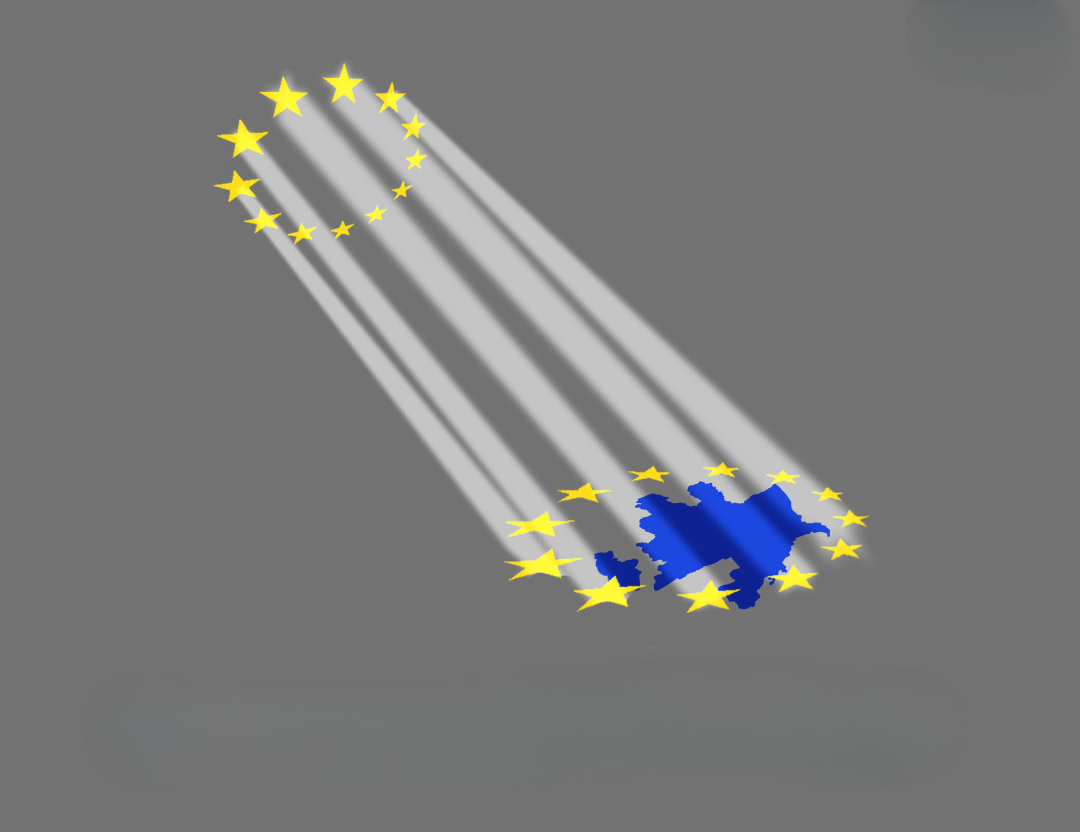
Read moreThere is a particular kind of diplomatic choreography that gives away more than the speeches do. It must have raised questions as to who was courting whom when Ursula von der Leyen, Antonio Costa, and Kaja Kallas visited Baku over a period of ten months – the president of the European Commission, the president of the European Council, and the European Union’s chief foreign policy official, respectively – all making a beeline to a nation of ten million on the western shores of the Caspian Sea.
The official framing, delivered by the EU's newly appointed ambassador to Azerbaijan, Marijana Kujundžić, at a roundtable in Baku last week, was suitably diplomatic. "We are entering a new phase of our relations," she said. "They have intensified." Negotiations on a new bilateral agreement, stalled for years, are set to resume at the end of September. The EU, she noted, remains Azerbaijan's largest trading partner, three decades after the two sides signed their first partnership agreement in 1996.
All true, and all beside the more interesting point. There is definitely an 'unevenness' in the traffic of visitors between Brussels and Baku. Azerbaijani delegations visiting Brussels consist mostly of ministers, like Minister of Foreign Affairs Jeyhun Bayramov and Minister of Energy Parviz Shahbazov, whereas President Ilham Aliyev has not set foot in Brussels in years. Perhaps it is the only possible proof of which of the two parties needs the other. The reason is not hard to find, I assume.
With the conflict between Russia and Ukraine and the urgent attempts by Europe to disengage itself from Russian gas supplies, Azerbaijan went almost overnight from being simply a useful secondary supplier to a near necessity. One of the pipelines supplying gas from Azerbaijan to the rest of Europe, via Georgia and Türkiye, through the Southern Gas Corridor, is one of the only non-Russian pipelines that the Europeans can boast about. By her own admission, von der Leyen's main objective in Baku was the implementation of an agreement signed in 2022 according to which Azerbaijan undertook to increase gas deliveries to the EU by almost twofold up to 20 bn m3 annually until 2027, as well as the construction of the "Green Energy Cable" under the Black Sea.
For his part, Costa took advantage of his visit to Baku to argue for sustained EU engagement as mediator in the Armenia-Azerbaijan peace process, as well as Baku’s involvement in the development of the Middle Corridor, the Caspian transportation corridor that is now being mentioned in Brussels as a way around the Russian routes. Kallas’ concern, on the other hand, was even more straightforward: the military-political stability of the South Caucasus, cutting off the channels through which Moscow tries to circumvent Western sanctions, and creating a modicum of security structure in the Caspian-Black Sea basin.
Where the leverage runs out
This is when the EU's old approach begins to show its limits. The Europeans have always made their agreements on trade and cooperation subject to certain criteria – regulatory convergence, human rights standards, judicial reform, and the trappings of their "values-based" diplomacy. But now, they are doing this even in Azerbaijan by advocating its entry into the WTO, lowering customs duties, granting access for European businesses, and above all, monitoring systems linked to civil and political freedoms.
But Baku is not having any of that. Azerbaijan has absolutely no intention of joining [at least for now] the WTO due to concerns about what it will do for the country’s agriculture and non-oil economy, but it wants to secure its own flexible trade agreement instead. Regarding the political prerequisites, the stance taken by Baku has been indisputable: there should be no interference in Azerbaijan’s internal affairs, period, and all relations should be based exclusively on "equal partnership and respect for sovereignty." Taking into account the continuous flow of European Parliament resolutions regarding human rights in Azerbaijan and Baku’s perception of pro-Armenian bias in some of the EU institutions, this attitude has become one of distrust.
The only sphere in which convergence occurs without any friction is the one farthest removed from politics altogether: energy. In the case of the Green Energy Cable and the export of renewable energy to Europe, the interests of the two sides align clearly enough that the file has more or less negotiated itself. There could not be a more telling demonstration of how the priorities of the EU have shifted: whereas Brussels used to try to lead on the basis of values, and make the economic interest the carrot that was offered for good behaviour, it is now the economic interest doing the job of values-based diplomacy.
Perhaps, there is a deeper irony buried in Costa's interest in the Armenia-Azerbaijan peace process. The European Union clearly hopes to come across as the indispensable player bringing about stability in a region that, at long last, has made headway toward true peace after decades of war, given that it is technically the most effective peace agreement in the 21st century. This hope is less likely to be taken seriously in Baku because in recent years, Europe’s own institutions have been adopting resolutions which Azerbaijan sees as favoring the other side. One cannot both seek to establish oneself as an unbiased arbitrator and advocate for one of the sides.
What distinguishes this period from others in EU-Azerbaijani diplomacy is not the demand by Brussels of something from Baku because this has been the case throughout; what has changed now is that Baku, after three decades, has no great compulsion to make this easy. The traditional model of the European Union’s quid pro quo in exchange for market access rests on an imbalance that has ended.
None of this means the relationship is heading for rupture. Both sides have too much to lose. However, "inextricably linked" may be the way that the ambassador and his staff would refer to this situation privately. Nevertheless, "inextricably linked" does not necessarily mean "equal." What this year’s events really show is an EU shifting from its preferred moralist diplomacy to its transactional realpolitik due to its anxieties about post-Ukraine energy needs, and an Azerbaijani government that will happily allow the EU to make the shift. When talks resume this month, the outcome worth watching is not whether a deal gets signed, but which side's definition of "partnership" survives the negotiating table intact.
Here we are to serve you with news right now. It does not cost much, but worth your attention.
Choose to support open, independent, quality journalism and subscribe on a monthly basis.
By subscribing to our online newspaper, you can have full digital access to all news, analysis, and much more.
You can also follow AzerNEWS on Twitter @AzerNewsAz or Facebook @AzerNewsNewspaper
Thank you!