
Fed rate hike risks put Azerbaijan in focus as currency reserves hit record

Qabil Ashirov
Read moreThe US Department of Labor's announcement of the number of non-farm payrolls in the country on September 4 was eagerly awaited around the world, including Azerbaijan.
In detail, central banks around the world were expected to lower interest rates in 2025. Several central banks, including the Azerbaijani central bank, also lowered interest rates in 2025.
This trend was expected to continue in 2026. However, as a result of the ongoing Ukraine-Russia war and the war in the Middle East, some experts began to doubt the possibility of lowering interest rates.
In June 2026, first the European Central Bank raised interest rates by 0.25 percentage points to 2.25, and then the Bank of Japan (BOJ) raised its policy rate by 0.25 percentage points to 1% from 0.75%, overturning these expectations.
Inflation in the US also exceeded the Fed's expectations. Inflation in the US also remains above the Federal Reserve's 2% target. The annual CPI in July was 3.4%. The latest speech by Fed Governor Christopher J. Waller weakened expectations that interest rates would be cut soon. Thus, Mr Waller said, “If this continues in the data due over the next two weeks, I would be inclined to support holding the target for the federal funds rate at its current setting.” Mr Waller also added, “If the incoming data for August show this improvement has been fleeting, then it may be appropriate to raise the policy rate when the FOMC meets on September 15 and 16.”
The U.S. Bureau of Labor Statistics (BLS) reported today that nonfarm payrolls rose by 162,000 in August, while the unemployment rate remained unchanged at 4.1 percent. Inflation above the Fed’s target and labor market gains that were significantly stronger than expected have dampened expectations of a slowdown in the U.S. economy.
These indicators increase the likelihood that the Fed will keep interest rates at their current levels at best, or raise them in a more severe scenario.
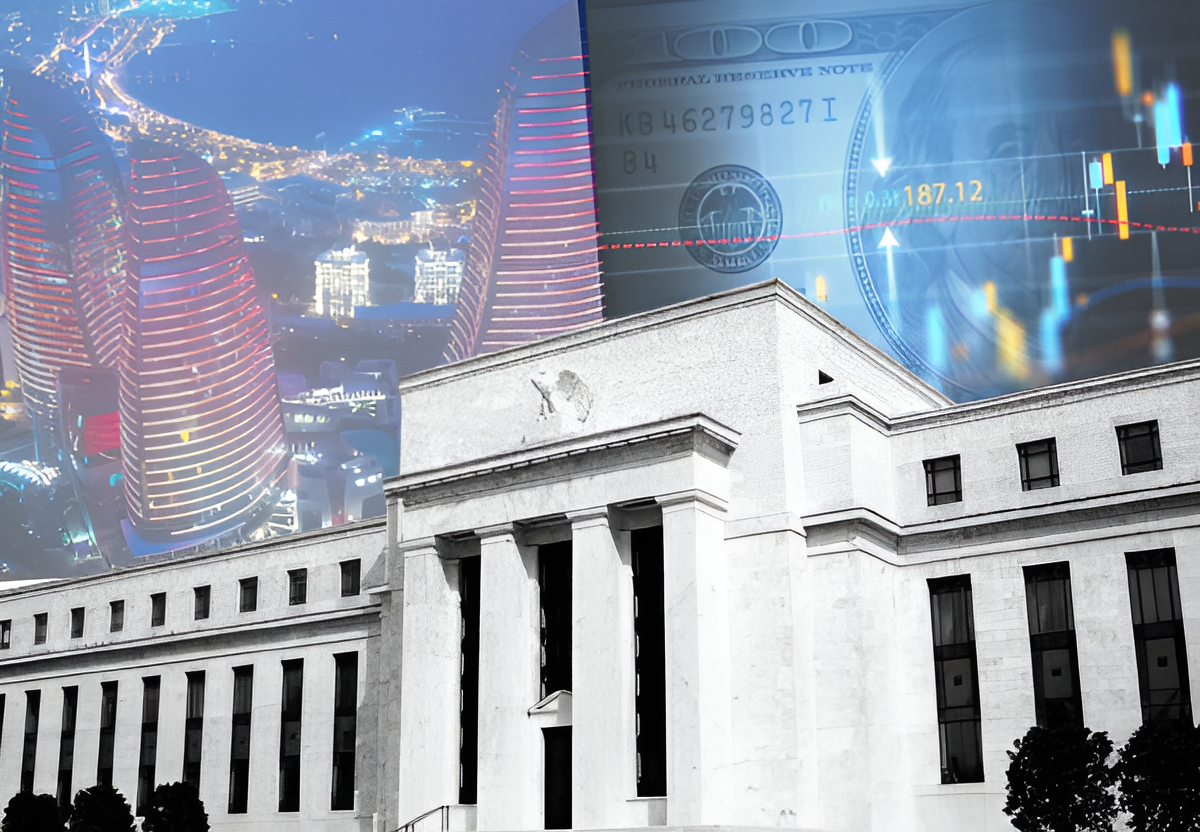
A Fed rate hike could boost the yields on U.S. dollar-denominated assets, making the dollar more attractive to investors and increasing capital flows into the U.S., which could put pressure on emerging market currencies and financial markets.
An unexpected increase in U.S. interest rates linked to monetary policy could also raise long-term interest rates in emerging market economies, dampen capital flows, and depreciate local currencies against the dollar. As a result, central banks may be forced to raise or maintain interest rates at high levels to protect the national currency and price stability. On the other hand, not raising interest rates and allowing the national currency to weaken could result in higher import prices and stronger inflationary pressures.
As for Azerbaijan, the situation may differ somewhat from other emerging markets. Azerbaijan’s large foreign exchange revenues from energy exports and high foreign exchange reserves create an important buffer against financial shocks.
Thus, the continued high energy prices against the backdrop of the Russia-Ukraine war and ongoing tensions in the Middle East could support Azerbaijan’s foreign exchange inflows and partially offset potential pressures on global financial markets. The 2026 state budget assumes an oil price of $65 per barrel, while prices are hovering $90-100 per barrel.
On the other hand, rising natural gas prices in Europe could also be an additional positive factor in terms of Azerbaijan’s revenues from energy exports. The increase in the price of futures for October at the TTF gas hub in the Netherlands to 69.9 euros per megawatt-hour also indicates that prices in the European gas market remain high.
Furthermore, the official foreign exchange reserves of the Central Bank of Azerbaijan amounted to $13.77 billion as of July 31. This is the highest figure since 2015. The reserves have increased by $2.2 billion or 19.5% since the beginning of the year.
Moreover, the volume of deposits in the banking sector also remains high. As of August 1, the total deposit portfolio of banks amounted to ₼44.5 billion (approximately $26.2 billion). Of this, approximately ₼22.2 billion ($13.1 billion) is held by companies, ₼17.9 billion ($10.5 billion) by households, and ₼4.4 billion ($2.6 billion) by financial institutions. This indicates that a fairly large domestic financing base has been formed in the banking sector.
However, this does not mean that Azerbaijan is completely isolated from global inflationary processes. Rising global food and raw material prices, rising logistics costs, and price increases in major trading partners may put pressure on domestic prices through import inflation.
Therefore, in a scenario where the Fed raises interest rates, the initial impact on Azerbaijan may be limited compared with that on more vulnerable emerging markets. However, if monetary tightening in the United States continues for an extended period, strengthening the dollar and further tightening global financial conditions, the Central Bank of Azerbaijan may also adopt a tighter monetary policy in response to rising risks to inflation, the foreign exchange market, and financial stability.
Here we are to serve you with news right now. It does not cost much, but worth your attention.
Choose to support open, independent, quality journalism and subscribe on a monthly basis.
By subscribing to our online newspaper, you can have full digital access to all news, analysis, and much more.
You can also follow AzerNEWS on Twitter @AzerNewsAz or Facebook @AzerNewsNewspaper
Thank you!