
Franck Papazian wants France to act like the dictatorship it opposes

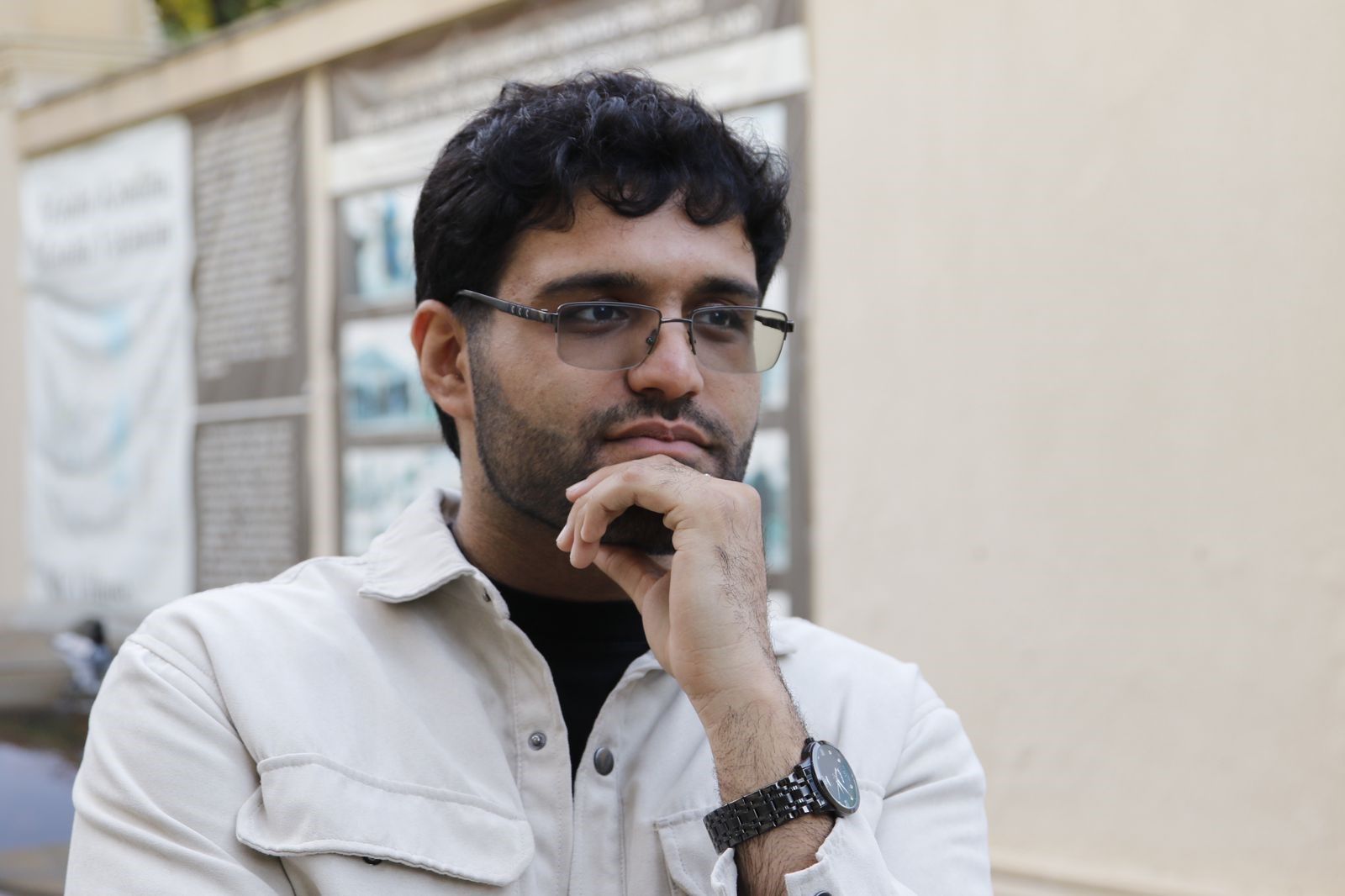
Akbar Novruz
Read moreLast week, on September 2nd, Paris City Hall quietly skipped the opening of a photo exhibition of Armenian nationals imprisoned in Baku over war crimes, which had been due to take place in the square outside its own front door. Three days later, Franck Papazian, co-chair of the Coordinating Council of Armenian Organisations in France (CCAF), appeared on CNews to deliver the verdict: the French government had "caved to Azerbaijan's threats." His prescribed remedy, delivered with the weary patience of a man who has said it before because he has, is not new. According to their demands, the government should cut diplomatic ties with any country that goes against their principles and, if necessary, expel its ambassador - in short, it should simply dance to their tune. "You have to behave like a dictatorship, in reality," he explained, "if you want to be respected by one."
It is worth sitting with that sentence, because Mr Papazian clearly has not. The proposition that democracies earn the respect of authoritarian states by imitating them is not a theory of deterrence, per se. It is a theory of surrender dressed in combat fatigues. Democracies are, in his telling, congenitally "weak" against dictatorships because they contain "powers", plural, deliberative, inconveniently accountable. That weakness is usually called the separation of powers, and most people who have lived under its absence consider it rather the point of the exercise.
None of which invalidates his fundamental point. There really is an argument, put forth in a much less sensational way by others, that Western capitals should not allow the security of a small number of hostages to be used to stifle discussion of all other issues: that quiet surrenders to coercion, repeated often enough in enough city halls and enough exhibitions, send states engaged in coercion the message that coercion pays off. Indeed, small vulnerable nations do require supporters elsewhere who can make human rights abuses unacceptably expensive for the offending state, and the Armenian diaspora, spread out through the legislatures and editorial offices of much of Europe, is among the few resources available to such a nation of three million.
Let us continue with the next play of this theatre. Mr Papazian's brand of advocacy prefers the recalled ambassador to the patient case, the ultimatum to the argument, "zero weakness" to any weakness at all, a standard that, applied literally, leaves diplomacy with nothing to do but perform resolve for a domestic audience while French citizens remain, by his own account, at risk in Azerbaijan. Demanding "no weaknesses" from a government mid-negotiation for hostages is certainly a mood, and moods do not get people out of Baku's prisons.
There is a broader irony that seems lost on Mr Papazian and the CCAF, which has spent recent years urging Yerevan itself toward precisely the maximalism he now recommends for Paris. Armenia, in 2020 and again in 2023, has tried to be firmer, and the outcome was not particularly good for those villages who lost in the process. A diaspora that has seen this happen in Paris, Los Angeles and Beirut and has learnt a lesson of more brinkmanship rather than less does not seem to be in a position to advise anyone.
The true failing of France is not one of weakness but of lack of coherence: officials bending to pressure in private but without ever saying anything in public, forcing the French people to find out about the surrender of their square from CNews and not the Quai d'Orsay. It's a failing worthy of criticism. It doesn't mean that the answer is for French foreign policy to mirror their adversary. As Mr Papazian is correct that silence carries a price, he still needs to explain what imitation would cost. And this brings us to our famous word: sustainability.
A sustainable peace in Armenia and Azerbaijan will not be achieved by recalling ambassadors out of anger or holding hostages up for camera shots on French TV, even if it is satisfying for the Frenchmen watching. It will be achieved slowly, without accolades, through sustaining the agreement until it becomes common practice. That’s not what Mr Papazian is selling you at all. He’s selling a politics that relies upon an open wound, for he has no use for a man who defends peace when there is none to defend anymore. Franck Papazian is a useful specimen of the type that reflects how peace between Armenia and Azerbaijan has left some commentators searching for a new cause.
Here we are to serve you with news right now. It does not cost much, but worth your attention.
Choose to support open, independent, quality journalism and subscribe on a monthly basis.
By subscribing to our online newspaper, you can have full digital access to all news, analysis, and much more.
You can also follow AzerNEWS on Twitter @AzerNewsAz or Facebook @AzerNewsNewspaper
Thank you!