
Moody's upbeat on Azerbaijan's oil wealth as diversification gains momentum
Akbar Novruz
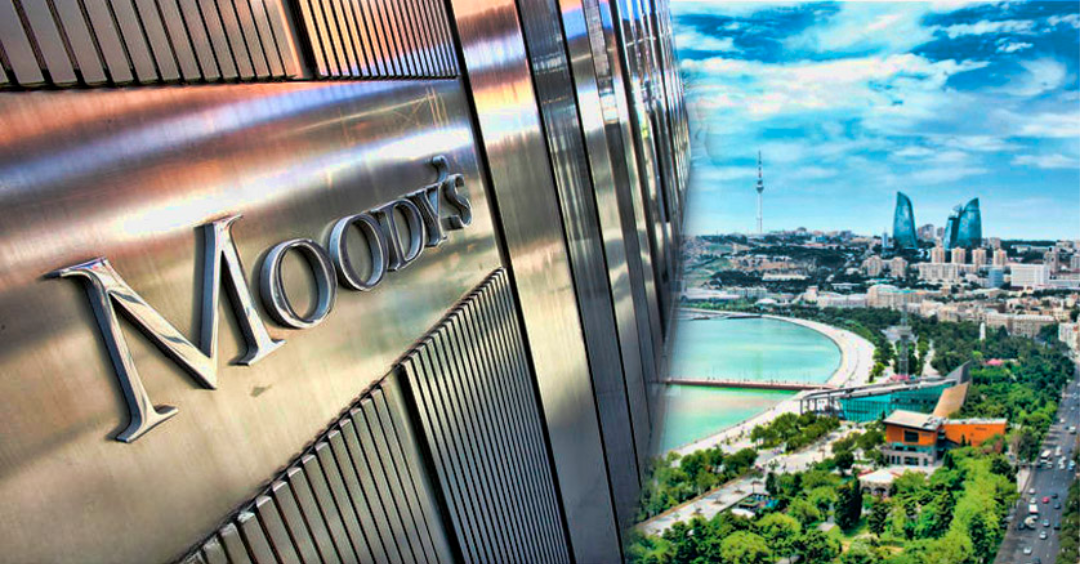
Read moreLast year, Azerbaijan passed the milestone that it had failed to pass for decades. The upgrading of Moody's to Baa3 in July 2025, which is the lowest level of investment-grade rating from Moody's, was an official recognition of the maturity of financial management in Azerbaijan on par with other countries at the top of the developing nations.
Perhaps rating agency reviews rarely make headlines when nothing changes. The latest one from Moody's on Azerbaijan, released on July 9, is exactly this kind of review. It reaffirms the investment-grade Baa3, with a stable outlook and the standard note that no decisions regarding the rating are imminent. But a periodic review, analyzed carefully, says more than it seems. It provides a window into how the economy compares to itself, where things are going right, getting better, or continuing to be problems. The window on Azerbaijan right now deserves closer inspection.
One of the headlines suggests SOFAZ's assets reached 97 per cent of GDP in 2025, an extraordinary fiscal buffer by any standard, and the primary reason Azerbaijan has been able to maintain investment-grade status despite an oil production curve that is pointing in only one direction. Elevated oil prices in 2026 should provide more income and lead to an increase in the amount of money in SOFAZ, which would result in increased resistance of the country's economy to any economic shocks in 2026, according to Moody's. This prediction is being fulfilled at the moment when the price of a barrel reaches $109 due to US-Iran conflicts.
Fiscal discipline meets structural drag
While Azerbaijan's strong external asset position provides an important buffer, sustaining long-term growth will depend on continued economic diversification. Real GDP contracted by 0.3 per cent year-on-year in the first quarter of 2026, and overall growth remained subdued during the first five months of the year. Moody's expects full-year growth of around 1.5 per cent, reflecting a period of adjustment in which expanding non-oil sectors are increasingly offsetting softer performance in the oil industry. As the mature ACG fields naturally experience declining output after producing roughly 500 million tonnes of oil since operations began, Azerbaijan's economic strategy is gradually shifting toward strengthening non-oil industries, attracting investment, and improving productivity. The country's sizeable financial reserves provide policymakers with valuable fiscal space to manage this transition, though maintaining the pace of structural reforms will be essential to ensuring sustainable long-term growth and economic resilience.
The non-oil segment is performing useful functions in the view of Moody’s itself. It mentions information and communication technology, tourism, and manufacturing industries as positive factors. Digital infrastructure projects and the development of regional transit routes, especially the Middle Corridor through which the cargo turnover has increased five times within seven years and which allows Azerbaijan to be the pivot in the east-west trade route in Eurasia, provide the structural basis for medium-term growth. According to Moody’s, the country will have economic growth between 2 and 2.5 percent in the medium term when the slowdown in the construction industry associated with the Karabakh rebuilding ends.
SOCAR review
The affirmation of SOCAR's credit rating alongside the sovereign assessment adds an important corporate dimension to Azerbaijan's overall credit profile. Moody's reaffirmed SOCAR's long-term issuer rating at Baa3 with a stable outlook, maintaining the investment-grade status the company first received in 2025. Under Moody's Government-related Issuers methodology, SOCAR's rating is closely linked to that of the Azerbaijani government, reflecting the company's strategic role in the national economy. The agency notes the strong correlation between the credit profiles of SOCAR and the state, as well as the high likelihood of government support in the event of financial stress.
The SOCAR assessment also highlights several areas that investors will continue to monitor as the company expands its international presence. Among those, according to Moody's, are the gradual depletion of mature oil and gas reserves, rising leverage after the merger with Southern Gas Corridor CJSC at the end of 2024, the complicated corporate structure of SOCAR, and the possibility to further improve the quality of public disclosure. Leverage increased to 2.9x in 2024 from 2.4x in 2023, mostly because of the merger. However, even after reaching the highest level since 2019, it is much lower than the 5.2x average level seen in 2018-2020. Leverage is expected by Moody's to remain below 3.0x for the next 18 months, and thus, will not lead to any changes in the company's rating. Nevertheless, the continued international growth of the company, including the recent $3.27 billion deal with Italiana Petroli, will also have to be taken into account, especially in terms of balance sheet management.
Armenia, again, as a rating variable
Geopolitics gets its own paragraph, and a notably more optimistic one than in past cycles. Moody’s cites expanding economic ties with Armenia, development of transport corridors in the region, and international support of the peace process as examples of factors which help mitigate geopolitical risk, although it adds, not without emphasis, that the peace accord remains unsigned. The relations remain tense, yet the risk trajectory goes downward in the agency’s assessment. For Azerbaijan, this may be the most important single line in the entire rating report since a rating agency considers the peaceful track of development a credit positive factor rather than an area of uncertainty.
What Baku should take from this
A periodic review that confirms an unchanged rating might seem like the least newsworthy possible outcome. Indeed, a complete transformation from one thing to another takes time, as Azerbaijan aims to increase the non-oil industry's involvement in the economy much more than it used to be. Yet, the report offers some signs for Baku to pay attention to. First, there is no threat to the investment-grade rating earned in July 2025, the size of the SOFAZ buffer fund is too big to be depleted just because of a difficult year. As Moody's announced when upgrading its assessment at the time, the positive outlook was based on the following reasons: the reduction of economic and fiscal dependency on hydrocarbons, improvement of monetary policy and public finance management.
The second one is more forward-looking and less comfortable. The country's Baa3 credit rating is supported by the significant financial cushion provided by the State Oil Fund of Azerbaijan (SOFAZ), which has accumulated substantial reserves over three decades of hydrocarbon revenues. These reserves provide important fiscal flexibility and help the country navigate periods of lower energy earnings. At the same time, sustaining credit strength over the long term will increasingly depend on the ability of the economy to generate growth beyond the oil sector and further strengthen resilience to commodity price cycles. With an oil price of $109 per barrel, this factor is irrelevant. But at $65 – which was the base case assumption of Moody’s regarding SOCAR’s oil prices a year ago – the issue becomes important. The geopolitical oil price premium protecting the Azerbaijani fiscal calculus is, by definition, a temporary phenomenon. Building a broader economic base, improving governance frameworks, and expanding non-oil growth drivers will be key to ensuring that Azerbaijan's economic resilience increasingly rests on structural strengths rather than external market conditions.
Here we are to serve you with news right now. It does not cost much, but worth your attention.
Choose to support open, independent, quality journalism and subscribe on a monthly basis.
By subscribing to our online newspaper, you can have full digital access to all news, analysis, and much more.
You can also follow AzerNEWS on Twitter @AzerNewsAz or Facebook @AzerNewsNewspaper
Thank you!