
Baku-Yerevan economic engagement lowers regional geopolitical risks

Ulviyya Poladova
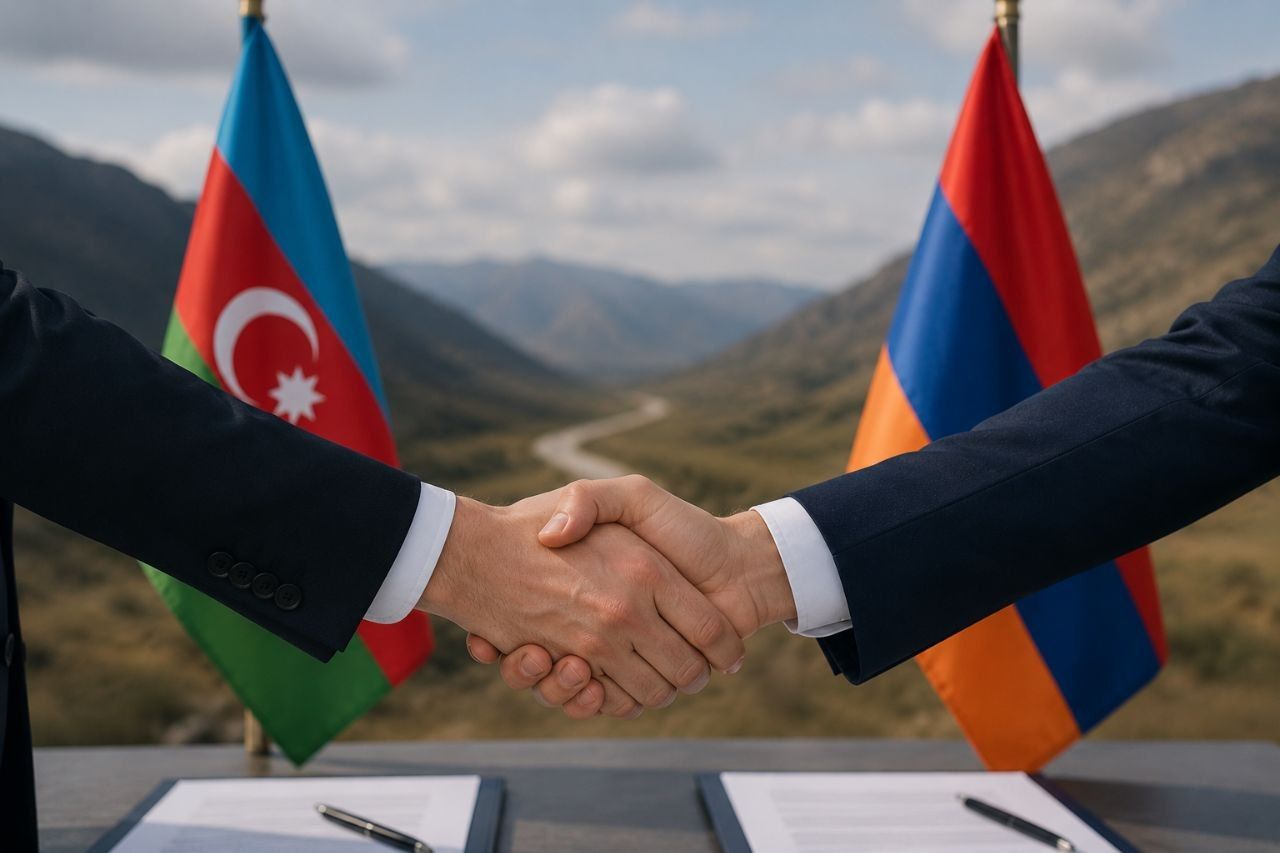
Read moreEconomic normalization between Azerbaijan and Armenia is beginning to produce measurable effects in trade, transit and regional connectivity. The most important point is that both countries have moved from a zero-sum confrontation toward limited, practical cooperation. That shift matters because in the South Caucasus, even modest changes in transport access, customs flows, and investor expectations can have outsized geopolitical and economic consequences.
Moody's recent assessment clearly reflects this transition, as the growing economic cooperation between Baku and Yerevan, progress in the construction of transport corridors, and sustained international support for the peace process reduce geopolitical risks even in the absence of a fully ratified peace treaty. That is a cautious but meaningful judgment. It suggests that rating agencies now see normalization not merely as a diplomatic aspiration, but as a factor with real implications for state resilience, fiscal flexibility, and regional market integration.
Traditionally, sovereign rating agencies assessed the South Caucasus primarily through the lens of military tensions and political uncertainty. Today, they are increasingly evaluating the region based on economic integration, infrastructure development, and transport connectivity.
The agency also highlighted Azerbaijan's strong fiscal position, emphasizing the government's commitment to medium-term fiscal consolidation beyond the oil sector.
According to Moody's, Azerbaijan has successfully narrowed its non-oil primary deficit through stronger non-oil revenue collection while maintaining more moderate expenditure growth as spending on the reconstruction of formerly conflict-affected territories gradually declines.
Another key strength identified by Moody's is the continued expansion of the State Oil Fund of Azerbaijan (SOFAZ), whose assets reached approximately 97 percent of GDP in 2025, placing Azerbaijan among the countries with the strongest sovereign fiscal buffers relative to similarly rated economies.
Moody's expects elevated oil prices during 2026 to generate additional fiscal gains through higher hydrocarbon revenues, allowing further accumulation of SOFAZ assets. These reserves significantly enhance Azerbaijan's ability to absorb external shocks while preserving considerable fiscal flexibility.
The data from the State Customs Committee of Azerbaijan reveals that Azerbaijan exported goods worth $17.129 million to Armenia in January-June 2026.
Meanwhile, more than 36,000 metric tons of grain, nearly 8,000 metric tons of fertilizer, 1,136 metric tons of propane, 133 metric tons of aluminum and 414 metric tons of anthracite have been transported from Russia to Armenia through Azerbaijan.
One of the most significant infrastructure initiatives linked to regional normalization is the Trump Route for International Peace and Prosperity (TRIPP) project, also widely associated with the proposed Zangezur Corridor. The project aims to establish a transport connection between mainland Azerbaijan and its Nakhchivan Autonomous Republic through Armenian territory while simultaneously creating broader regional transport opportunities. Beyond its bilateral significance, the corridor has the potential to become an important component of wider Eurasian transport networks linking Central Asia, the Caspian region, the South Caucasus, Türkiye, and European markets.
Modern transport corridors not only reduce shipping times and logistics costs but also stimulate investment, encourage industrial development along transport routes, and create new opportunities for customs cooperation, warehousing, and cross-border services.
For Azerbaijan, the project would strengthen its position as a regional logistics hub.
The positive assessment was also shared by S&P Global Ratings. In its report published in 2026, the agency revised Armenia's sovereign outlook from Stable to Positive, citing improving regional geopolitical and security conditions.
According to S&P, the revision reflects growing confidence that continued normalization between Armenia and Azerbaijan could substantially improve regional stability.
The agency specifically noted that progress toward restoring diplomatic relations and reopening trade links has the potential to reduce security risks that have weighed on the South Caucasus for decades.
However, the agency cautioned that lasting peace will ultimately depend on the signing of a legally binding peace agreement and its effective implementation.
Many analysts identify the August 8, 2025 trilateral meeting in Washington as a defining moment in the normalization process.
Following talks hosted by U.S. President Donald Trump, Azerbaijani President Ilham Aliyev and Armenian Prime Minister Nikol Pashinyan signed a Joint Declaration aimed at advancing peace between the two countries and restoring transport connectivity between mainland Azerbaijan and Nakhchivan.
S&P describes the U.S.-mediated agreement as an important political milestone because it demonstrated high-level political commitment to de-escalation while contributing to improved regional security.
Although the declaration did not constitute a formal peace treaty, it created a political framework within which practical cooperation could begin.
In other words, while economic cooperation is advancing, institutionalizing peace remains essential for securing long-term stability.
The best way to understand the present phase is as a transition from hostile separation to conditional interdependence. Azerbaijan and Armenia are not allies, and they are not yet at the stage of deep normalization. But they are beginning to test whether limited economic cooperation can create stabilizing incentives that politics alone could not produce.
Yet the process remains incomplete and vulnerable. Without a ratified peace treaty, the new Armenian Constitution (without territorial claims), credible implementation mechanisms, and broader domestic acceptance, today’s gains could remain provisional. Normalization is already producing real economic and infrastructural effects, but its long-term stabilizing power will depend on whether these early gains are institutionalized before political resistance or regional shocks undermine them.
If that institutionalization succeeds, the South Caucasus could move from being known primarily as a corridor of conflict to becoming a corridor of connectivity. If it fails, the region may once again discover how quickly fragile openings can close.
Here we are to serve you with news right now. It does not cost much, but worth your attention.
Choose to support open, independent, quality journalism and subscribe on a monthly basis.
By subscribing to our online newspaper, you can have full digital access to all news, analysis, and much more.
You can also follow AzerNEWS on Twitter @AzerNewsAz or Facebook @AzerNewsNewspaper
Thank you!