
Azerbaijan's JF-17C program reflects new defense strategy

Qabil Ashirov
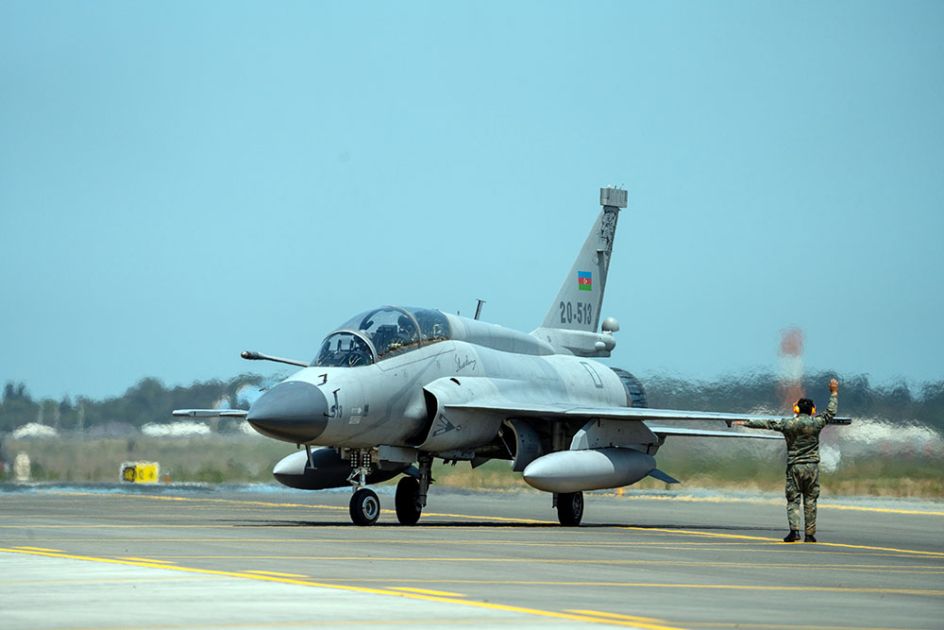
Read moreOver the past few months, the skies above Azerbaijan have bore witness to a quiet, yet profound, technological shift. Following an initial debut in late June, the Azerbaijani Air Force once again mobilized its newly acquired JF-17C (Block-III) "Thunder" multirole fighter jets for a series of high-profile training flights. Operating alongside legacy platforms like the Su-25ML close-support aircraft and L-39 jet trainers, these sleek, single-engine fighters executed complex piloting and combat maneuvers at various altitudes, signaling that their integration into the country’s active fleet is proceeding at an accelerated pace.
Rather than a theatrical display of saber-rattling, these back-to-back exercises deliver a calculated, measured message to the wider region. Beyond the geopolitics, they demonstrate how Azerbaijan’s military hierarchy is systematically addressing a long-standing vulnerability: its dependence on aging Soviet-era aviation technology.
The acquisition of the JF-17C, co-developed by Pakistan and China, represents a monumental leap forward for Azerbaijan’s defensive architecture. For decades, the backbone of the nation’s air power rested on Soviet-designed platforms, specifically the MiG-29. While capable in their prime, these aircraft belong to an era of mechanical radars and analog warfare.
The "C" variant (Block-III) shifts Azerbaijan firmly into the realm of 4.5-generation warfare. The most critical upgrade lies in its nose cone: the KLJ-7A Active Electronically Scanned Array (AESA) radar. Unlike older, mechanically steered radars that search the skies like a physical flashlight, the AESA radar utilizes thousands of solid-state transmit/receive modules. This allows the JF-17C to track multiple targets simultaneously, resist hostile electronic jamming, and spot incoming threats at much greater distances.
Furthermore, the integration of advanced weaponry like the PL-15E beyond-visual-range (BVR) missile completely alters the strategic calculus. With an operational range exceeding 140 kilometers, these missiles grant Azerbaijani pilots the ability to engage aerial threats long before they can pose a direct danger to domestic airspace. Accompanied by modern Helmet-Mounted Displays (HMD) that allow pilots to lock onto targets simply by looking at them, the JF-17C provides a sophisticated qualitative edge that the country's aviation inventory previously lacked.
When a nation repeatedly highlights its newest, most advanced military hardware in official state media—as Azerbaijan did in both June and July—it is rarely a coincidence. However, the message being sent here is one of calculated deterrence rather than aggressive posturing.
First, the exercises serve as a declaration of rapid operational capability. Buying a fighter jet is only the first step in a complex logistical process; training pilots, establishing maintenance pipelines, and integrating new tactics can take years. By showcasing the JF-17C executing combat maneuvers in formation, Baku is signaling that its pilots have already bypassed the transition phase. The "Thunder" is no longer just a static parade piece—it is a fully functional, combat-ready asset.
Second, the drills highlight tactical interoperability. By pairing the JF-17C with the Su-25ML, the Air Force is demonstrating how it intends to fight. In a modern conflict, the Su-25ML—modernized to carry smart munitions—performs close air support on the ground. However, these ground-attack jets are vulnerable to enemy interceptors. The JF-17C, with its superior radar and BVR capabilities, can fly high-altitude cover, establishing air superiority while the Su-25s operate safely below.
Ultimately, Azerbaijan is signaling a decisive pivot away from Russian defense procurement. At a time when maintenance, parts acquisition, and upgrades for Russian-made hardware have become geopolitically complex, the partnership with Pakistan offers a reliable, modern, and unencumbered alternative. The message to neighbors and regional powers is clear: Azerbaijan is building a modern, self-sustaining defense model that is no longer tethered to the post-Soviet military-industrial complex.
The skies above Baku are changing, and with the JF-17C leading the formation, Azerbaijan’s defense strategy is flying directly into the digital age.
The JF-17C's arrival is about far more than replacing aging aircraft; it reflects a broader transformation in Azerbaijan's defense philosophy. By investing in modern sensors, long-range precision weapons, and diversified defense partnerships, Baku is reshaping its air force to meet the demands of contemporary warfare rather than the realities of the past. Whether this modernization ultimately shifts the regional military balance remains to be seen, but one conclusion is already evident: Azerbaijan's air power is entering a new era defined by advanced technology, greater operational flexibility, and a steadily expanding capacity for independent deterrence.
Here we are to serve you with news right now. It does not cost much, but worth your attention.
Choose to support open, independent, quality journalism and subscribe on a monthly basis.
By subscribing to our online newspaper, you can have full digital access to all news, analysis, and much more.
You can also follow AzerNEWS on Twitter @AzerNewsAz or Facebook @AzerNewsNewspaper
Thank you!