
Baku's tourism boom runs into diversification reckoning by World Bank
Akbar Novruz
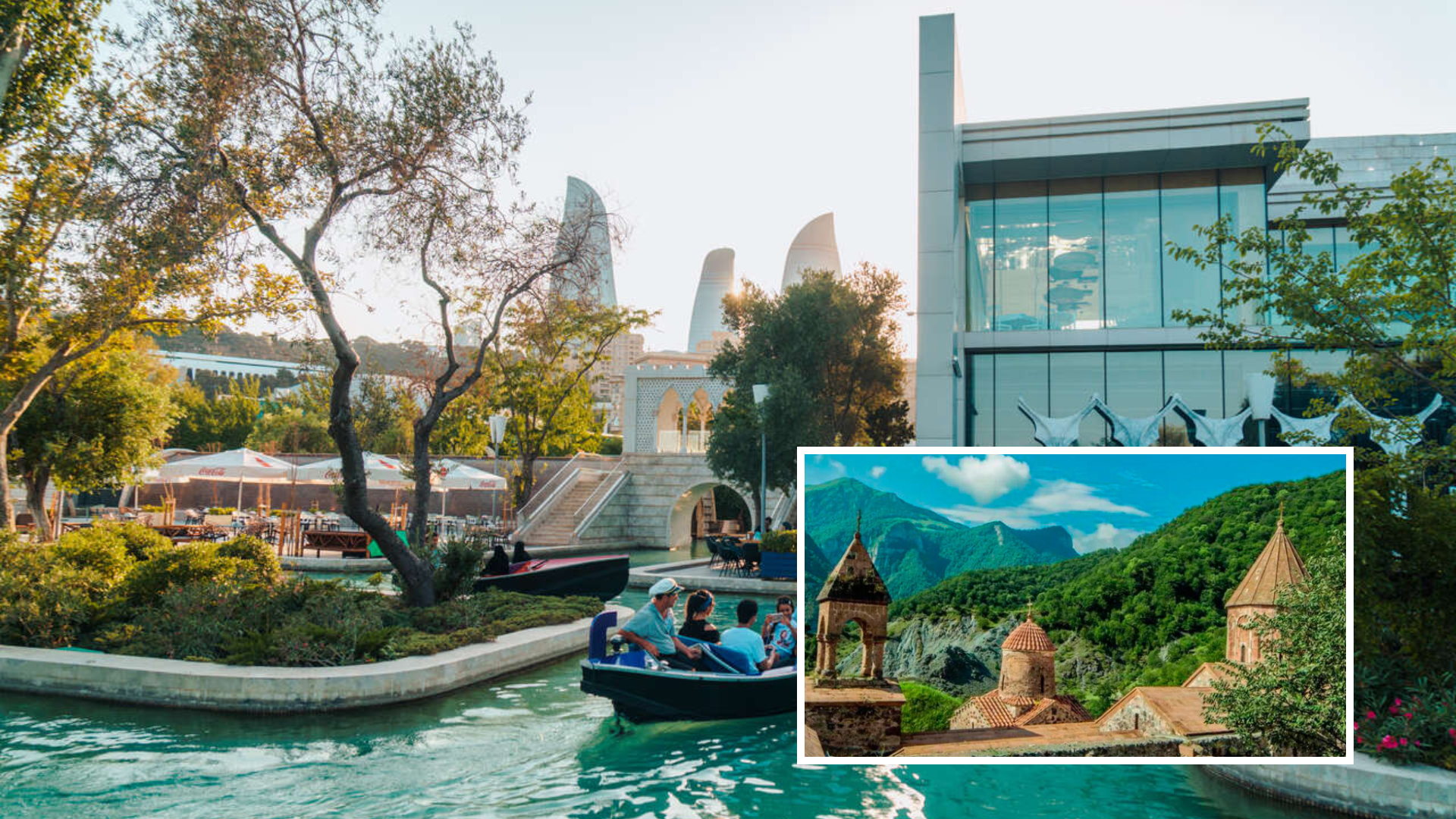
Read moreFor a government that has spent a decade building a tourism industry around five-star hotel chains, Formula 1 circuits and international summits clustered in a single city, the message from the World Bank last week in Baku has been eye-catching. Azerbaijan, according to the World Bank, “has to stop branding itself as Baku and develop a non-hydrocarbons economy for the rest of the country, or risk wasting one of its few sectors that can offer employment to those who will lose jobs in the hydrocarbon sector.”
The occasion was the presentation of the World Bank's "Azerbaijan Country Economic Memorandum Spring 2026", unveiled at an event titled "Unlocking Azerbaijan's Tourism Potential to Drive Economic Growth and Diversification". According to Rolande Pryce, the World Bank's regional director for the South Caucasus, tourism must move away from cities to focus on the regions, since the industry does not live up to its full potential in terms of visitor numbers and employment. As one might have expected, the choice of date was deliberate, since according to the World Bank's estimates, the growth of the country's economy in 2025 was only 1.4 percent, and given the latest numbers, it does not look like it will exceed it.
Perhaps, none of this is abstract for Baku's planners. The country's tourism recovery, robust through 2022–24, has since gone into reverse. The number of foreign arrivals in the first five months of 2026 contracted 11% compared to the previous year to 871,700 people, and the expenditure of international tourists plummeted by almost 23% to nine hundred and forty-four million manats. This followed a 2025 in which tourist numbers from Russia, India, and various Middle Eastern markets were declining. The issue is also identified by the World Bank in its structural form, and there are only three or four major sources of foreign tourists to the country.
As mentioned by the World Bank’s Senior Private Sector Development Specialist Shaun Mann at the forum, “development of air connections is crucial in promoting tourism: while developing tourism destinations, one needs to work together with the airline industry for launching new air connections.” The main issue is to offer tourists not only Baku, but the 'Baku+' experience, to encourage visitors to travel to the regions and stay in the country for longer.
Prescription by the Bank is based on lessons learned somewhere else. Shaun Mann cited examples of Bali, Machu Picchu, and Reykjavik, where there was an interplay between the central hub/capital and other places where visitors can spend their time, in contrast with focusing all investments in just one place. Furthermore, he mentioned that Azerbaijan still has things to do in terms of improving its services, offering, and the development of its tourism ecosystem, which is much more realistic than official rhetoric usually used by the government.
It is less about the content of the latest advice and more about the fact that it aligns perfectly with an independent analysis that made similar findings even prior to the Bank’s report. Academic research on tourism recovery of Azerbaijan in post-pandemic conditions, conducted in the context of a paper written in 2026 and published in the World Journal of Tourism Management, reveals the same structural problems: the country is too dependent on a few specific source markets, has developed a capital-centric model and fails to deliver on the promises laid down in governmental strategies. The study mentions one more thing that is absent from the Bank’s roadmap, Azerbaijan has seen this movie before. In 2016, "Strategic Roadmap for the Development of the Specialised Tourism Industry" was adopted with a perspective of 2025 and featured goals that are very similar to those announced in 2023, regional diversification, better connectivity, and a larger international base of tourists.
In author's seperate paper, on Azerbaijan's tourism sector, examining the same World Bank findings presented in Baku, arrived at a comparable reading of where the binding constraints lie, pointing to the concentration of arrivals in three or four source markets and the Baku-first pattern of infrastructure investment as the factors most likely to determine whether the regional pivot actually happens, rather than the availability of natural or cultural assets, which the dissertation treats as largely already sufficient.
However, the areas where the Bank wishes development to take place are not homogeneous. The Azerbaijani tourism workforce is already predominantly from the countryside, and data shows that around three-quarters of the 178,000 people employed within the tourism industry are from the regions – thereby disputing the notion of a purely Baku-based industry despite tourist expenditure being predominantly in the capital. Additionally, the freed-up territories of Karabakh constitute yet another challenge and an opportunity in one: an area with tourism potential but none of the necessary infrastructure that would allow tourism to take place – roads, energy supply, accommodation facilities, etc., thus presenting a task quite unlike that of changing marketing strategies for existing regional locations.
All of this does not make the Bank’s roadmap wrong. There were indeed diversifying effects in inbound markets in Azerbaijan due to air connectivity liberalization and visa digitization in the period from 2017 until 2025, including tourists coming from India, Saudi Arabia, China, and Türkiye, which confirms that consistent policy actions do yield some effect. However, the difference between Azerbaijan's strategic priorities in relation to the development of tourism infrastructure and its implementation is the very thing which the Bank and independent analysts in the field are trying to stress right now. It should be noted, however, that the recommendations have already been included in the new national program in relation to last-mile connectivity and subsidies for regional infrastructure. The main question is whether Azerbaijan will be able to implement it into reality and not put it aside like the roadmap formulated in 2016.
Here we are to serve you with news right now. It does not cost much, but worth your attention.
Choose to support open, independent, quality journalism and subscribe on a monthly basis.
By subscribing to our online newspaper, you can have full digital access to all news, analysis, and much more.
You can also follow AzerNEWS on Twitter @AzerNewsAz or Facebook @AzerNewsNewspaper
Thank you!