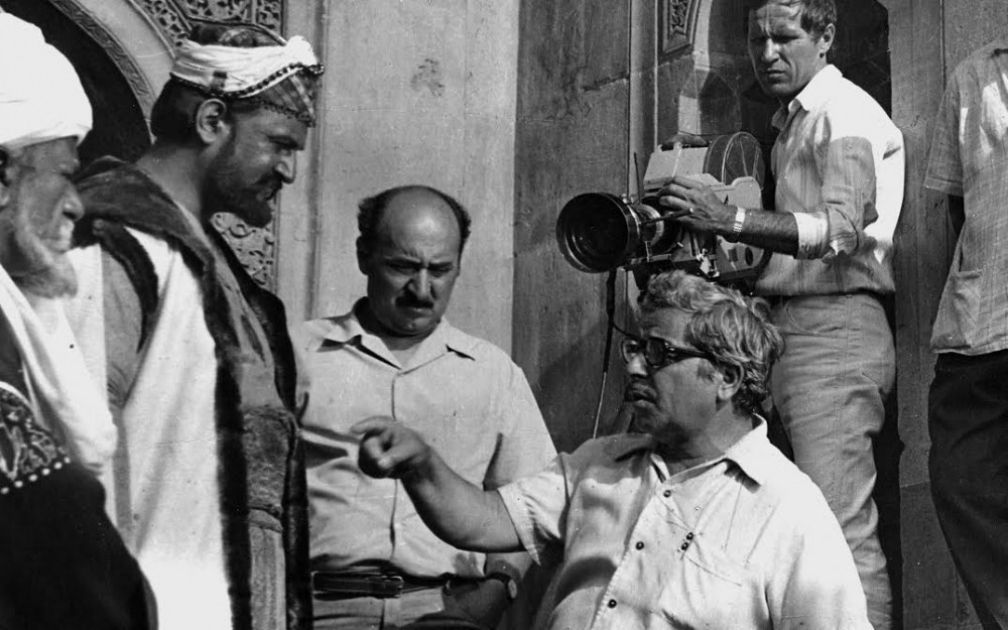
Azerbaijan marks the birthday of Rasim Ismayilov, the
distinguished Azerbaijani cinematographer, film director, and
screenwriter, AzerNEWS reports.
The acclaimed filmmaker, whose 90th birth anniversary is being
commemorated, devoted his life to the development and flourishing
of Azerbaijani cinema.
Beginning his career at Azerbaijan Television in 1962, the young
cinematographer wrote the screenplays for the short television
films Azerbaijan Reports and Two More People. As a director, he
made several documentaries, including The Roads of the Blue Screen
and The Rhythms of the City.
In 1965, he directed the animated film Talking Lights, followed
by The Reds, the Blacks and the Others in 1969. The latter, an
allegorical animated film based on his screenplay, received the
Diploma for Best Director at the Prometheus-69 Festival in
Kyiv.
Ismayilov made his debut as a cinematographer in feature films
with the novella Passing Through the Mountain Forest, part of the
film anthology The Force of Attraction. He later entered mainstream
cinema as the director of photography for Huseyn Seyidzade's
historical-revolutionary film The Invincible Battalion (1965), his
first major feature film.
Throughout his career, he served as cinematographer on numerous
films that have become classics of Azerbaijani cinema, including
Sevil, I Want Seven Sons, The Last Pass, The Day Has Passed,
Nasimi, Dede Gorgud, The Bay of Joy, Babek, and many others. His
artistic vision played a vital role in bringing these landmark
productions to the screen.
During a 46-year career dedicated to Azerbaijani cinema,
Ismayilov spent 20 feature films and 10 documentaries as a
cinematographer.
As a director and screenwriter, he also created four
installments of the satirical film magazine Mozalan and two
animated films. His final screen production was The Trap, released
in 1990. In addition to his filmmaking career, he taught at the
Azerbaijan State University of Culture and Arts.
Rasim Ismayilov was awarded the honorary title of Honored Art
Worker in 1976 and received the State Prize in 1978.
He passed away on March 3, 2004, at the age of 68. His book
Flying Plane Trees was published posthumously.

![Renowned cinematographer that left lasting impact local cinema [PHOTOS]](https://www.azernews.az/media/2026/07/15/ierofejrf1.jpg)