
Slovakia's Shusha diplomacy reinforces Azerbaijan's strategic role in Europe
Akbar Novruz
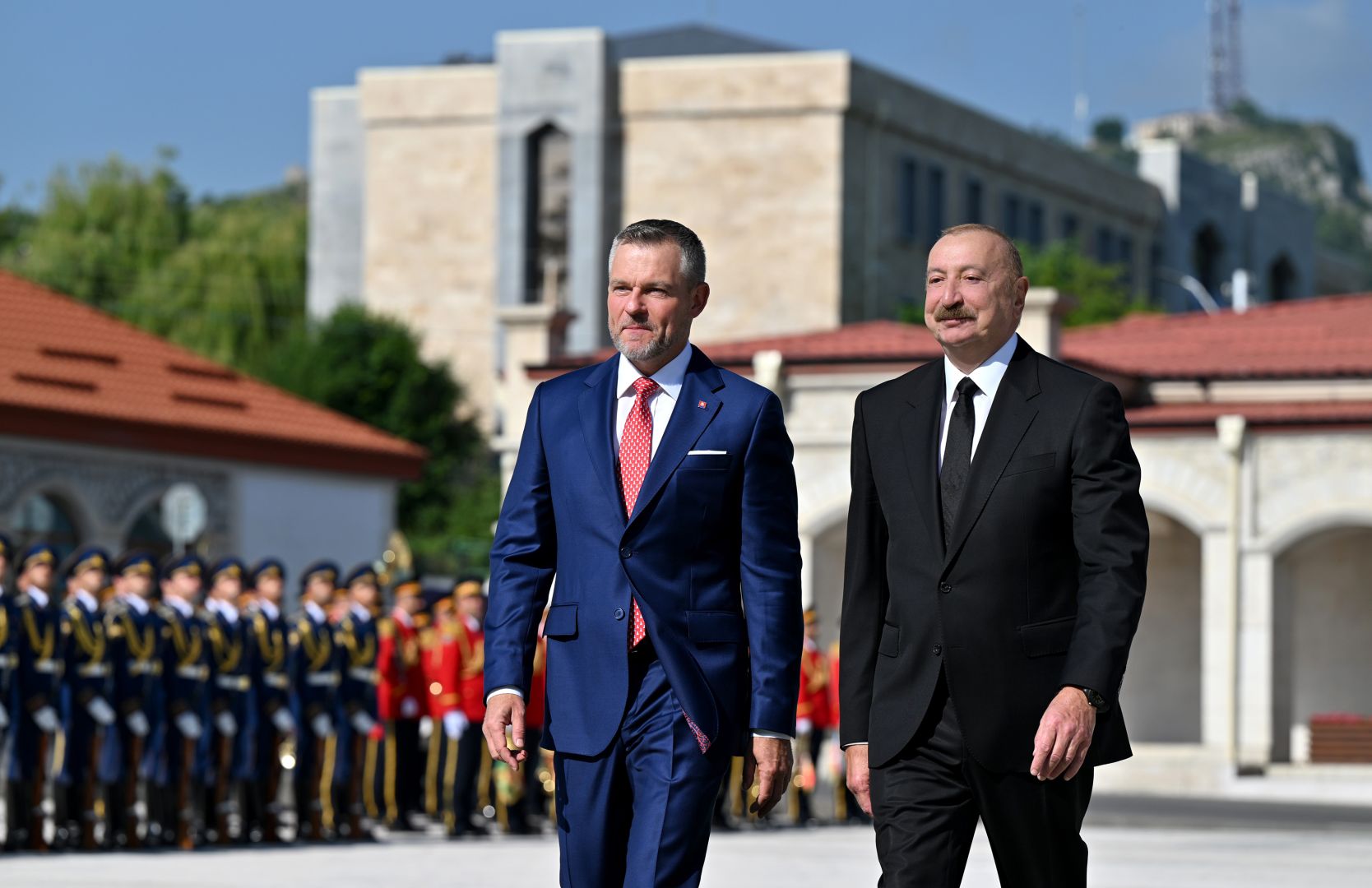
Read moreWhen Slovak President Peter Pellegrini posted on X before boarding his flight to Azerbaijan - "Our two countries have built strong relations. This visit is an opportunity to turn that trust into closer cooperation in energy, trade, and investment"- the language was diplomatic boilerplate of the kind that accompanies any bilateral state visit. However, the visit itself was far from being routine. On July 13, President of Slovakia arrived at Fuzuli International Airport for his state visit to a country where he was welcomed by foreign minister Jeyhun Bayramov amidst all the honours in terms of protocol, including Slovak and Azerbaijani flags and the guard of honour, which speaks of the importance of the visit even before it begins, at an airport which was not there five years ago, on territories that were under occupation for three decades.
Joint press conferences held on July 14 took place in Shusha, where before addressing the microphones, both presidents inspected the shot-to-pieces busts of prominent Azerbaijani figures – an inevitable part of a Shusha visit that, at once, acts as a cultural tour and a political act. Left half-destroyed as the relics of the occupation, these busts serve as evidence of the results of the occupation.
However, the press releases themselves contained the usual information in a tone warmer than that of the language used in them. For example, Aliyev remembered his visit to Slovakia at the end of last year and said that he was pleased that their agenda was "quite extensive," adding that it was enough just to see the composition of their delegations to understand that the cooperation was wide. He also noted that Pellegrini's presence in Garabagh specifically was a mark of the sincerity of the relationship: "This once again demonstrates how sincere and warm our relations are."
Pellegrini, on the other hand, emphasized that the ties between Slovakia and Azerbaijan "go beyond the economic and diplomatic spheres" and cited the increasing numbers of exchanges between the peoples of both nations as an example. The proof that it was not just talk about that aspect of the relationship was contained in the same speech, as the direct flights between Baku and Slovakia would start already in October 2026, which was announced during the visit of Aliyev to Bratislava.
Friendship built on energy and timing
The relationship between Slovakia and Azerbaijan has been deepening for several years, but its most consequential chapter opened in 2022, when Russia's full-scale invasion of Ukraine forced Slovakia, heavily dependent on Russian gas transiting through Ukrainian pipelines, to find alternative supplies fast. Azerbaijan stepped in. As Pellegrini himself mentioned in Shusha, thanking Aliyev for the "prompt response in the time of energy crisis and readiness to supply natural gas to Slovakia without Ukrainian transit" contributed greatly to overcoming the situation. Slovakia's energy imports from Russia have not been fully severed. Fico's government has been more reluctant than most EU members to accelerate decoupling, but Bratislava has been systematically developing Azerbaijani supply as a hedge, and the Pellegrini visit deepens that hedge institutionally. Now, however, it is all about the period after the current one ends, with the ministers discussing possibilities for ensuring stable energy sources beginning in 2027.
The context in which this visit is happening sharpens the energy dimension considerably. European gas prices are near €50 per megawatt hour. Gas prices in Europe stand at around €50 per megawatt hour. The TAP pipeline is operating at full capacity. It is precisely at a time when Europeans feel most vulnerable to their energy sources that the President of Slovakia visits Azerbaijan and discusses ways of reinforcing the one link that does not involve either Russia or Iran in their energy needs. The timing of this visit, right after the Shusha Global Media Forum, where Aliyev asked European financial bodies to support expanding the gas corridor, lends it a strategic air.
NATO issue
In addition to energy, the Embassy of Slovakia in Baku will continue to act as the NATO Contact Point Embassy for Azerbaijan up until 2027 and 2028, a position that ensures that Bratislava retains a distinct organizational footprint in a nation that holds an extremely neutral foreign policy stance and does not have any foreign military bases in its territory. The relationship provides Slovakia with an influence in the South Caucasus region that is incommensurate with its size or proximity to the region, and the influence has definite strategic importance in NATO and EU frameworks.
Both of the defence ministers have worked together, and the first results of this defence cooperation are expected to be presented by Slovakia at the defence exhibition in Baku in September. No details about how the cooperation was made have been disclosed, but the fact that it has been mentioned during the visit read-out shows that there is more than just gas pipes and schools between the two countries.
Pellegrini's visit is the latest in a series of European engagements with Azerbaijan and the liberated territories that have accelerated significantly in 2026. His visit is the fourth time he has come to Azerbaijan in different capacities, as speaker of parliament, as prime minister, as COP29 participant, and now as president.That continuity of personal involvement within these various institutional positions is uncommon and intentional. This is because Slovakia has made an assessment that the relationship with Azerbaijan carries too much economic weight and strategic significance to be subjected to the common position of the EU towards a country that has been criticized by several resolutions passed in the European Parliament.
For Azerbaijan, the visit of Pellegrini takes place on the same week as the Shusha Global Media Forum, as well as during the month of the embargo on Russia’s oil exports, an accumulation of events that collectively illustrate the principle that President Aliyev has been espousing for the last ten years: that a state located at the junction of Europe’s most critical alternate energy and transit networks is not forced to make a choice between the East and the West, as both require its resources. The arrival of Slovakia to Shusha to conclude agreements about energy, rebuilding, and air traffic represents just another piece of evidence in support of that assertion. October flights will bring that from diplomacy into everyday life, which is generally when relations between states become sustainable.
Here we are to serve you with news right now. It does not cost much, but worth your attention.
Choose to support open, independent, quality journalism and subscribe on a monthly basis.
By subscribing to our online newspaper, you can have full digital access to all news, analysis, and much more.
You can also follow AzerNEWS on Twitter @AzerNewsAz or Facebook @AzerNewsNewspaper
Thank you!