
Why HSBC thinks gold could fall to $3,800

Qabil Ashirov
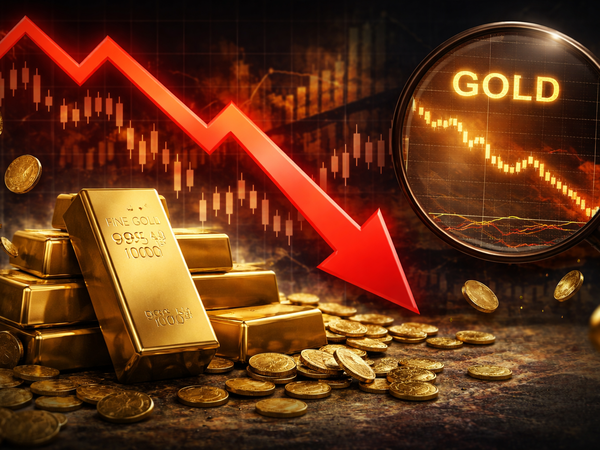
Read moreFor centuries, gold has enjoyed an almost mythical reputation as the ultimate store of value, an unassailable fortress capable of shielding wealth from the ravages of inflation, political chaos, and economic ruin. Investors have historically run to this glittering commodity at the first sign of macroeconomic distress, treating it not just as an asset, but as a financial religion. However, recent developments in the global monetary landscape suggest that this long-standing adoration might be blinding market participants to a harsher, more volatile reality. The recent decision by global banking giant HSBC to slash its gold price forecasts, warning that the metal could plunge as low as $3,800 per ounce, serves as a stark reminder that even the most hallowed safe havens are not immune to the gravity of fundamental macroeconomic forces.
The primary culprit behind this sudden shift in sentiment is none other than the relentless resurgence of the United States dollar, combined with the Federal Reserve’s uncompromising, hawkish monetary stance. For a long time, gold bugs argued that rampant global uncertainties would perpetually fuel the commodity’s ascent, but they routinely underestimated the sheer gravity of yield. When the Federal Reserve maintains a strict high-interest-rate environment, the opportunity cost of holding a non-yielding asset like gold becomes painfully apparent. Why park capital in a metal that pays no dividends and bears storage costs when the global reserve currency offers guaranteed, highly attractive yields? The strength of the greenback acts as a powerful economic vacuum, sucking liquidity out of speculative commodities and redirecting it into dollar-denominated debt instruments. HSBC’s analytical adjustments simply reflect this mathematical reality, proving that sentimentality cannot compete with the tangible pull of central bank interest rates.
By slashing its 2026 average gold forecast by over six per cent to $4,560 and introducing a sweeping, unpredictable trading corridor that bottoms out at $3,800, the bank has effectively punctured the narrative of gold’s unstoppable upward trajectory. This adjustment exposes a critical structural vulnerability within the precious metals market: its profound susceptibility to wild swings driven by currency valuations rather than intrinsic utility. While gold retains an emotional appeal during geopolitical flare-ups, its day-to-day valuation remains heavily shackled to the fortunes of the U.S. Dollar Index. When the dollar flexes its muscles on the global stage, gold inevitably bleeds. Investors who bought into the metal at its absolute peak, expecting a continuous and unhindered march toward higher valuation milestones, are now discovering that the path downward can be just as steep and unforgiving.
Of course, institutional defenders of gold will quickly point out that HSBC left its ultra-long-term projections for 2028 and 2029 relatively unblemished, holding them at $5,200 and $5,300, respectively. They argue that the underlying structural risks of the global economy will eventually vindicate those who hoard the precious metal. But relying on a five-year horizon to justify holding an underperforming asset in the present is a luxury few retail investors can afford. This long-term optimism reads more like a consolatory nod to traditional market dynamics than a guarantee of future performance. In an era increasingly defined by rapid technological adaptation, digital assets, and highly dynamic corporate equities, the old thesis that gold is the only true shield against systemic collapse feels increasingly antiquated. The global economy is evolving, and the instruments used to hedge against its volatility are changing as well.
Ultimately, the current market dynamic reveals that the real risk to wealth preservation is not inflation or geopolitical friction, but rigid financial dogmatism. Wealth managers and individual investors who treat gold as an untouchable, permanent anchor in their portfolios risk suffering prolonged capital stagnation as the dollar continues its dominance. The era of buying gold blindly and expecting guaranteed immunity from market downswings is drawing to a close. As central banks navigate this complex macroeconomic epoch, flexibility and a cold, analytical view of yield must replace old-world romanticism. Gold will undoubtedly survive as a trading vehicle and a cultural artefact, but its status as a flawless, all-weather sanctuary is officially up for debate. Those who refuse to acknowledge the power of a soaring dollar and the shifting priorities of global capital may soon find that their golden safety net has turned into a heavy, unyielding anchor drag.
Here we are to serve you with news right now. It does not cost much, but worth your attention.
Choose to support open, independent, quality journalism and subscribe on a monthly basis.
By subscribing to our online newspaper, you can have full digital access to all news, analysis, and much more.
You can also follow AzerNEWS on Twitter @AzerNewsAz or Facebook @AzerNewsNewspaper
Thank you!