
Middle Corridor must evolve into economic corridor to unlock full potential, PMCG says

AzerNEWS Staff
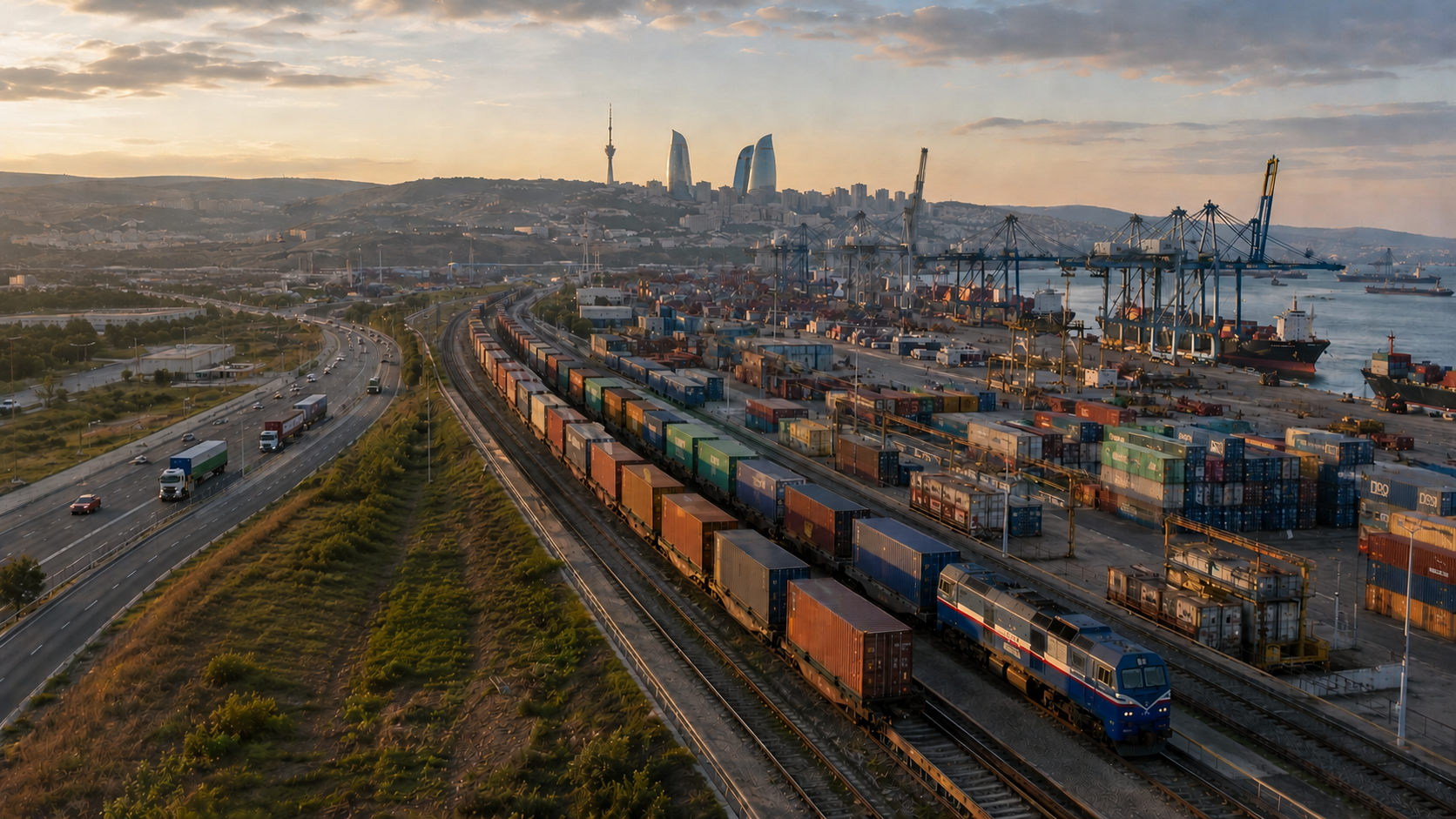
Read moreThe Trans-Caspian International Transport Route, commonly known as the Middle Corridor, should develop beyond its role as a transport route and become a fully integrated economic corridor capable of driving investment, industrial growth and regional integration, according to PMCG President Alexi Alekishvili, AzerNEWS reports.
In an article, Alekishvili argued that the corridor has the potential to become much more than an alternative freight route linking Europe and Asia by creating new economic opportunities across the region.
He noted that the growing importance of the Middle Corridor has been driven by the COVID-19 pandemic, disruptions to traditional supply chains, and geopolitical shifts, including Russia's war against Ukraine, which have accelerated demand for alternative trade routes connecting Europe and Asia through the South Caucasus and Central Asia.
According to Alekishvili, while Asia accounts for roughly 30–35% of global exports and Europe for 35–40% of global imports, the majority of trade between the two regions has historically passed through the Suez Canal and the Northern Route. Rising geopolitical risks, however, have encouraged governments and businesses to seek more resilient logistics networks.
"The main issue today is not increasing transit volumes, but the ability of the route to become an economic corridor," he said.
"Transport corridors ensure the movement of goods, while economic corridors create added value. They attract investment, stimulate industrial development, promote integration into global supply chains, and create new jobs."
Alekishvili pointed to growing trade among Central Asian countries and strengthening economic ties with China, Türkiye, the South Caucasus and the European Union as evidence of the region's positive momentum.
However, he noted that the corridor remains significantly underutilized. In 2023, the Middle Corridor accounted for only about 1% of trade volume and 5% of trade value between the European Union and China, while its transport capacity remains below 10% of that of the Northern Route.
Citing World Bank projections, Alekishvili said trade along the Middle Corridor could increase 4.5-fold by 2040 if operational and regulatory barriers are removed.
He stressed that infrastructure development alone would not be sufficient to achieve this goal. Differences in customs procedures, trade regimes and regulatory frameworks remain major obstacles, while only five of the eight countries along the route are members of the World Trade Organization, limiting the creation of a harmonized trading system.
Alekishvili also argued that the corridor's success depends on close coordination among all stakeholders, including governments, ports, railway operators, border authorities and logistics companies.
"Sustainable development of the Middle Corridor is not possible without the active participation of the private sector," he said, adding that greater competition in logistics services, trade financing, insurance instruments and access to modern commercial mechanisms are equally important.
He concluded that the current momentum presents a unique opportunity to transform the Middle Corridor into a long-term engine of Eurasian economic development through stronger institutions, harmonized regulations and deeper regional cooperation.
Earlier, PMCG representatives told Trend that Azerbaijan occupies one of the Middle Corridor's most strategic positions thanks not only to its geographic location but also to its expanding role in regional coordination, railway connectivity and efforts to strengthen stability in the South Caucasus.
The company said Azerbaijan, together with Georgia, serves as a critical transport hub linking Central Asia with Europe through the integration of the Port of Baku, Georgia's Black Sea ports of Batumi and Poti, and the Baku-Tbilisi-Kars railway.
PMCG also noted that recent positive developments in relations between Azerbaijan and Armenia have improved prospects for long-term regional stability and transport connectivity, while emphasizing that closer operational coordination among Armenia, Azerbaijan, Georgia and Türkiye remains essential to increasing capacity, reducing transit times and improving the corridor's overall competitiveness.
According to the company, additional investment in rail infrastructure, port modernization, digital platforms, unified customs procedures and stronger private-sector participation will be crucial to maximizing the Middle Corridor's economic potential and attracting greater international investment.
Here we are to serve you with news right now. It does not cost much, but worth your attention.
Choose to support open, independent, quality journalism and subscribe on a monthly basis.
By subscribing to our online newspaper, you can have full digital access to all news, analysis, and much more.
You can also follow AzerNEWS on Twitter @AzerNewsAz or Facebook @AzerNewsNewspaper
Thank you!