
Slovakia's gas push reveals bigger shift in Europe's energy future

Ulviyya Poladova
Read moreSlovakia's push to secure long-term gas supplies from Azerbaijan is not just another bilateral energy negotiation. It reflects a larger structural shift in Europe's gas market.
The forced unwinding of dependence on Russian fossil fuels, the scramble for alternative suppliers, and the emerging competition among Central European states for whatever reliable non-Russian volumes remain available.
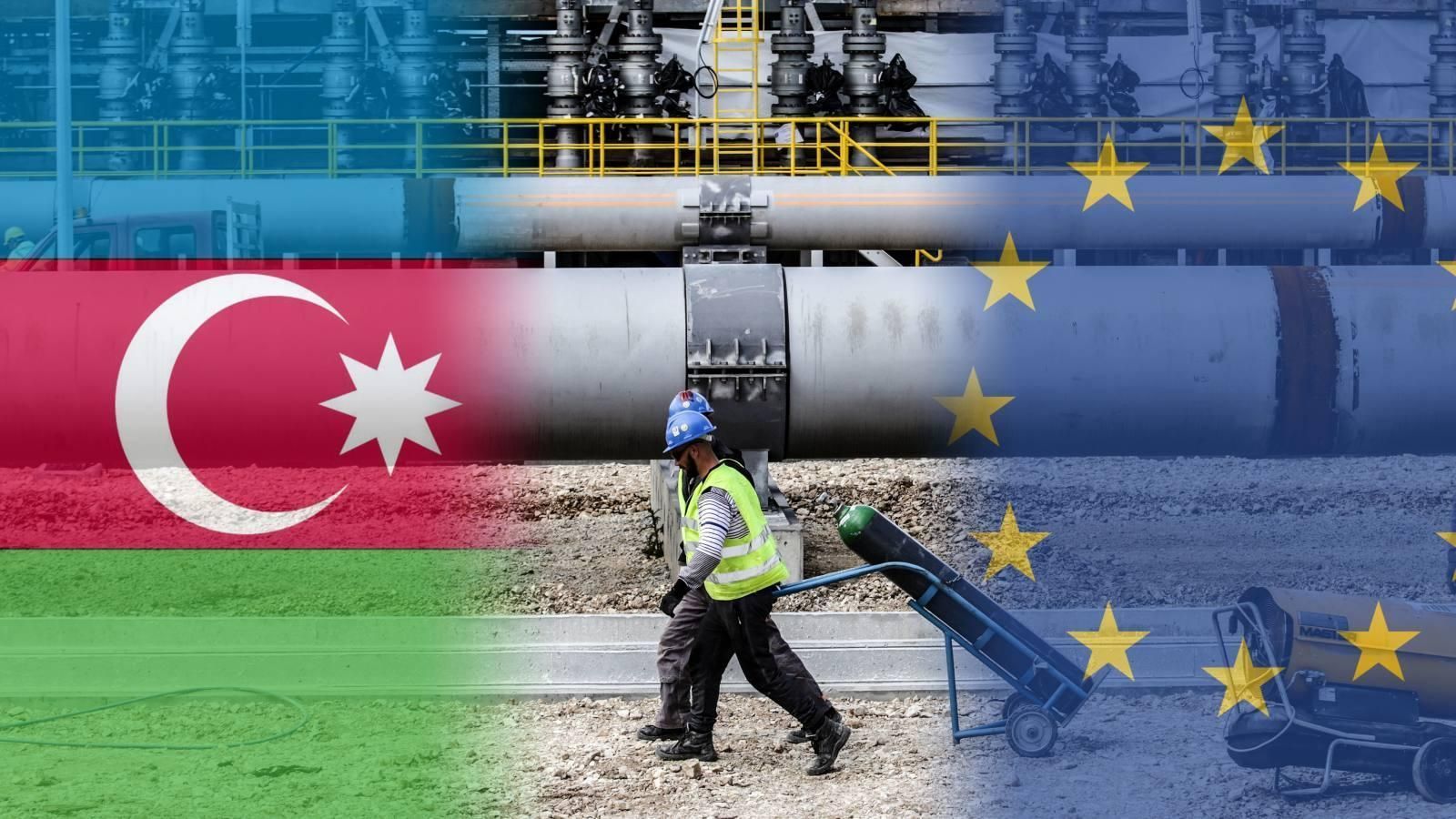
As European governments seek reliable long-term alternatives, Azerbaijan has emerged as one of the few producers capable of offering both additional supply and geopolitical stability.
The latest indication of this shift came during Slovak President Peter Pellegrini's official visit to Azerbaijan, where Economy Minister Denisa Saková confirmed that Bratislava is negotiating a long-term natural gas supply agreement with Azerbaijan's state-owned energy company SOCAR.
Under the EU's roadmap, imports of Russian pipeline gas must cease by 30 September 2027, while Russian LNG imports are scheduled to end on 1 January 2027. For Slovakia, whose energy system has historically depended on Russian supplies, securing replacement volumes has become a strategic priority.
Speaking after meetings in Shusha, Saková said Slovakia is discussing a contract that could provide approximately 1.2 billion cubic meters (bcm) of Azerbaijani gas annually after 2027.
The negotiations illustrate a broader trend across Europe: governments are increasingly prioritizing supply security over short-term price considerations, recognizing that diversified energy partnerships have become an essential component of national security.
This is why Slovak officials are reportedly interested in long-term purchase arrangements rather than short spot-market deals. In today's European gas market, where security of supply has become as important as price, this kind of arrangement is increasingly attractive.
From Azerbaijan's perspective, the logic is equally straightforward. Expanding gas production and export infrastructure requires capital, and capital requires confidence. If Baku is to invest in new extraction, field development, compression, and export capacity, it needs guaranteed demand over a sufficiently long horizon.
President Ilham Aliyev touched upon expanding Azerbaijan's gas presence at the opening of the IV Shusha Global Media Forum.
"We started to supply Germany and Austria this year, and this is a part of our overall strategy to expand our presence on global and particularly European gas market," President Ilham Aliyev said during his speech at the opening of the 4th Shusha Global Media Forum.
According to the head of state, the European market was a premium market, the market with the best prices. Therefore, Azerbaijan was very interested to expand its capacity.
Interest in Azerbaijani gas extends well beyond Slovakia.
Earlier this year, Czech energy group CEZ announced its intention to negotiate long-term gas supplies from Azerbaijan following talks between Czech Prime Minister Andrej Babiš and President Ilham Aliyev.
Several Southeast European countries, including Bulgaria, Romania, Hungary, Serbia, Croatia, Slovenia, North Macedonia, Austria and Greece have also expanded energy cooperation with Azerbaijan in recent years.
Today Azerbaijani natural gas reaches 16 countries, including 14 European states, making the Southern Gas Corridor one of Europe's most important non-Russian energy routes.
Another important aspect of the Slovak visit is that discussions reportedly extended beyond natural gas to electricity transit. Azerbaijani officials presented a medium-term corridor project that would carry electricity from Uzbekistan, Kazakhstan, and Azerbaijan via Türkiye to Europe. Denisa Sakova described the idea as having major potential, especially for European countries planning to phase out coal and increase imports of lower-carbon power.
The strengthening partnership between Azerbaijan and Europe reflects more than commercial interests.
Following the 2022 energy crisis, the European energy market has entered a phase of structural transformation. The sharp reduction of Russian supplies, volatile LNG prices, and intensified competition for tanker shipments have prompted EU and non-EU countries alike to accelerate revisions of their energy strategies.
Azerbaijan has emerged as a key player in this evolving landscape. In the first quarter of 2026, the country exported 6.5 billion cubic meters of gas, half of which went to Europe. In 2025, Azerbaijan exported 25.2 billion cubic meters via pipelines, with European markets accounting for 50% of that volume. Specifically, Azerbaijan delivered 12.5 billion cubic meters to EU countries in 2025, a 53.8% increase compared to 2021, representing more than half of the total growth in just four years.
In January 2026, SOCAR began deliveries to Germany and Austria through the Trans Adriatic Pipeline (TAP), which runs from the Greek-Turkish border through Greece and Albania to southern Italy, and from there further north. In June 2025, SOCAR signed a ten-year contract with German energy holding Sefe, supplying 1.5 billion cubic meters annually. With the expansion to Western European markets, Azerbaijan now exports gas to 16 countries, ten of which are in Europe.
This extensive reach highlights Azerbaijan’s strategic focus on diversification, deliberately supplying resources to as many partners as possible. Several European countries are actively developing or have already established energy ties with Baku.
As Europe's energy diversification accelerates, Azerbaijan is positioning itself as a strategic bridge connecting the Caspian region with European markets through a network of pipelines, transport corridors and future electricity interconnections.
Here we are to serve you with news right now. It does not cost much, but worth your attention.
Choose to support open, independent, quality journalism and subscribe on a monthly basis.
By subscribing to our online newspaper, you can have full digital access to all news, analysis, and much more.
You can also follow AzerNEWS on Twitter @AzerNewsAz or Facebook @AzerNewsNewspaper
Thank you!