
South Caucasus has moved beyond 3+3 format
Akbar Novruz
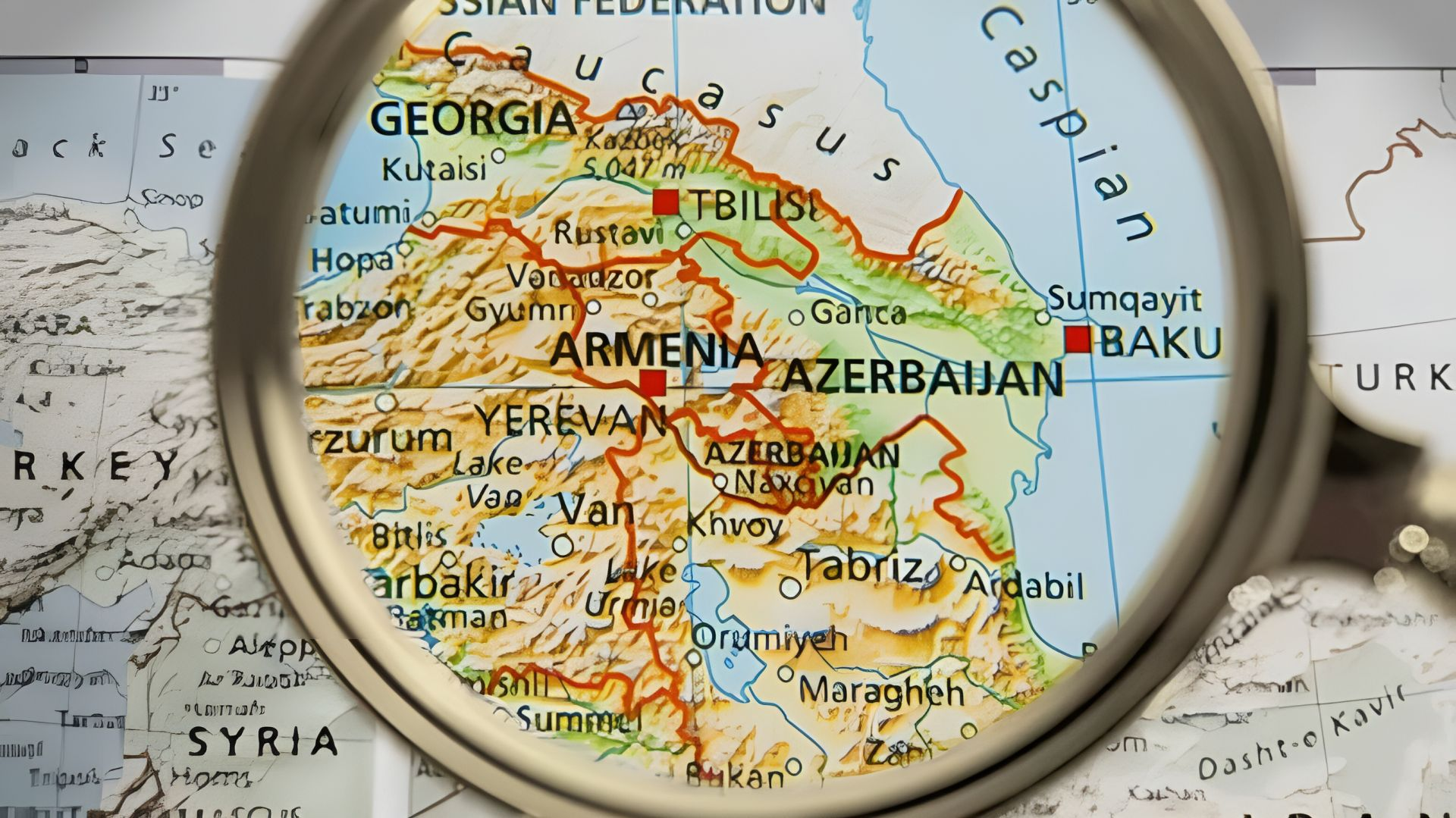
Read moreUnfortunately, not every diplomatic initiative survives contact with the diplomacy that follows it. It sounds so eye-catching and laudable in a way; it kind of feels too good to be true. Among the more telling moments at the Shusha Global Media Forum this week was the question nobody expected to produce a significant answer. The "3+3" Format - three South Caucasus states plus Türkiye, Russia and Iran, conceived in the immediate aftermath of the 2020 war as a framework for regional self-governance, has gathered "dust on the shelf" of post-conflict ideas for the better part of four years, overtaken by bilateral deals, American brokerage and the sheer pace of events on the ground.
Azerbaijan's own proposal, floated in late 2021 as a vehicle for regional countries to manage regional affairs without external referees and barely convened. When a journalist in Shusha this week asked President Ilham Aliyev whether it was still alive, the question itself carried the answer. "I think no one has returned to this topic for a long time," Aliyev said, with the equanimity of a man who has moved on.
The South Caucasus has reached the point where it is in a period of multipolar competition; everyone from Washington to Beijing to Riyadh has a stake in its future, right when its own leaders are making the most important decisions for it. This is not chaos, although there are aspects of this as well. Instead, it is flux, calculated and quick, in a place that has been in the same unhappy state for thirty years.
We all know how that ice broke thanks to Baku and Yerevan's reasoning. White House meeting between Trump, Aliyev, and Pashinyan was the trigger but not the cause of what is now unfolding. The cause was the accumulated exhaustion of all parties with a frozen conflict that was economically ruinous and strategically outdated.
Three-country problem?
Well, the South Caucasus is more than one story. It is three separate stories with a growing degree of complexity in their interactions, and the key to grasping the reality of today's South Caucasus is in recognizing that the three trends are diverging, not coming together. Armenia is moving west, slowly but surely, and always under the shadow of Russian influence. Azerbaijan is moving in no particular direction, since it doesn't have to: geography and infrastructure mean that it is of equal importance for Russia, Europe, China, Türkiye, and Central Asia. And Georgia is changing faster than it can adapt, perhaps at risk not of exclusion by force, but of marginalisation by design. Each trajectory carries its own specific risks. When these risks are viewed together, they point to the same conclusion: the current strategic advantage is time-sensitive.
Azerbaijan's vision of what the region's architecture should look like was stated with unusual candour by Aliyev at the Shusha Global Media Forum this week. Asked whether the long-dormant "3+3" format was still alive, he was characteristically blunt: "No, no. We initiated it as a post-conflict platform to achieve full settlement and the complete restoration of our sovereignty. At the time we initiated it, part of Garabagh was still under occupation."
The format has since been overtaken by events, he argued, and any revival must look fundamentally different: a full six-sided, or for now, five-sided, given Georgia's absence, mechanism with an agenda covering energy, transport and security across the entire region, not merely a bilateral Azerbaijani-Armenian issue dressed up in multilateral clothing. It is the implicit warning in the response that carries the punch here: "It should not become another Minsk Group." That reference was pointed. The OSCE Minsk Group spent nearly three decades mediating the Garabagh conflict without producing a resolution; in Baku's reading, the format became a mechanism for managing a conflict rather than ending one, and for keeping external powers in the room long after their presence served any useful purpose. The message to Moscow, which views the 3+3 format as an opportunity to reassert a convening role in a region where it is losing one, was unmistakable.
The window of opportunity
The South Caucasus's new reality is the product of choices - by Aliyev, Pashinyan, and to a significant extent Trump, that could have gone differently and could still be reversed. The constitutional gap in Armenia, the Russian leverage instruments, and the Georgian political paralysis have been resolved. On top of that, the window created by simultaneous Russian and Iranian disruption to global trade routes will not stay open indefinitely as well.
What would squander the opportunity is familiar from every previous attempt at South Caucasus peace: outside interference that generates domestic political crises before the peace process can establish itself; impatient institutions in Brussels and Washington that dictate terms that the governments simply cannot fulfill without forfeiting the domestic support necessary for fulfillment; and, finally, time itself, which gives the spoilers, the Russian corporate structure, the lobbies of the diasporas, the opposition factions, a chance to organize against the process while it is too young to be consolidated.
The peace agreement has been initialled. The TRIPP corridor is being planned. The new order in the South Caucasus is not an idealized diplomatic ambition but a tangible phenomenon, manifested through the trucks full of oil traveling from Azerbaijan to Armenia for the first time in three decades, including bilateral diplomacy that is increasingly driven by the region's own governments rather than outside powers. There is a saying in the history of this region that things happen very slowly and then very quickly. It seems that the latter has started. What remains to be seen is whether it ends.
Here we are to serve you with news right now. It does not cost much, but worth your attention.
Choose to support open, independent, quality journalism and subscribe on a monthly basis.
By subscribing to our online newspaper, you can have full digital access to all news, analysis, and much more.
You can also follow AzerNEWS on Twitter @AzerNewsAz or Facebook @AzerNewsNewspaper
Thank you!