
SOCAR uses green fuel to deepen its strategic footprint in Türkiye

Qabil Ashirov
Read moreThe global energy landscape is undergoing an unprecedented paradigm shift, forced to reconcile the insatiable demand for mobility with the absolute urgency of climate action. Within this complex matrix, the aviation sector stands as one of the most stubborn bastions of carbon emissions. For decades, commercial flight has relied almost exclusively on fossil-derived jet fuel, leaving a massive environmental footprint that standard electrification cannot easily erase. However, the path forward is increasingly being illuminated by strategic corporate alliances that bridge the gap between traditional fossil fuel infrastructure and the green economy. A primary example of this evolution is the expanding footprint of Azerbaijan’s state oil company in the Turkish market, a trajectory that has recently found a fresh, forward-looking expression through a collaborative venture into the realm of Sustainable Aviation Fuel.
This deepening involvement in Türkiye’s industrial and energy sectors is not merely a story of traditional hydrocarbon supply; rather, it represents a calculated pivot toward multi-layered, integrated energy diplomacy. By embedding itself within the infrastructure of one of the region's most dynamic aviation markets, the energy giant is redefining its role from a conventional oil and gas supplier to an active architect of regional decarbonization. The recent memorandum signed with a prominent Turkish low-cost carrier to systematically evaluate and develop the Sustainable Aviation Fuel value chain is a clear testament to this strategic maturation. Rather than viewing the inevitable energy transition as a threat to its core business model, the company is positioning itself to lead the change from within, leveraging its substantial operational capacity in Türkiye to cultivate an entirely new ecological and economic ecosystem.
The logic underpinning this expansion is both environmentally urgent and economically sound. Sustainable Aviation Fuel, manufactured from renewable waste and organic feedstocks, offers a drop-in solution capable of reducing aviation emissions dramatically without requiring entirely new aircraft designs or fueling infrastructure. Nevertheless, the primary obstacle preventing its widespread adoption globally has always been scalability and supply chain fragmentation. This is exactly where the strength of a major integrated industrial group becomes indispensable. By initiating technical and economic feasibility studies, assessing aggregate domestic demand, and charting out the logistics of local production, the partnership aims to construct a reliable, localised value chain from scratch. For the aviation industry, which has faced mounting regulatory pressure and shifting consumer expectations regarding carbon footprints, securing a domestic, sustainable fuel source is essential for long-term survival.
From a broader perspective, this initiative signals an ambitious broadening of bilateral economic ties. The energy corporation has already established itself as Türkiye’s largest integrated industrial investor, with extensive assets spanning refining, petrochemicals, and distribution. Stretching these capabilities into advanced fuel technologies is a natural and highly sophisticated progression. It reflects an understanding that future market dominance will belong to those who can guarantee energy security while simultaneously lowering the carbon intensity of that energy. The corporate synergy achieved by pairing a major energy producer with an airline that has already integrated sustainable fuels into its operations since the early 2020s creates a powerful framework. It combines commercial market demand with industrial supply capability, offering a template for how heavy industries can cooperate to achieve net-zero targets.
Furthermore, the implications of this expanding partnership extend far beyond national borders. The commitment to explore sustainable fuel projects not only within Türkiye but also in broader international markets highlights an ambition to export regional green solutions globally. As a joint working group of senior executives is established to analyse the structural readiness of the country’s aviation ecosystem, the project sets a precedent for public-private alignment in climate policy. It demonstrates that the transition to cleaner transport is not a solitary burden to be borne by airlines alone, nor is it a challenge that energy companies can ignore.
Ultimately, this strategic expansion into sustainable aviation underscores a profound realisation: the future of energy is integrated, cooperative, and undeniably lower-carbon. By driving the development of cleaner fuels in Türkiye, the energy group is securing its relevance in a post-fossil world while providing the Turkish aviation sector with the vital tools needed to navigate an increasingly carbon-constrained global economy. This is a blueprint for survival, showcasing how legacy industrial giants can reinvent themselves as cornerstones of a sustainable future.
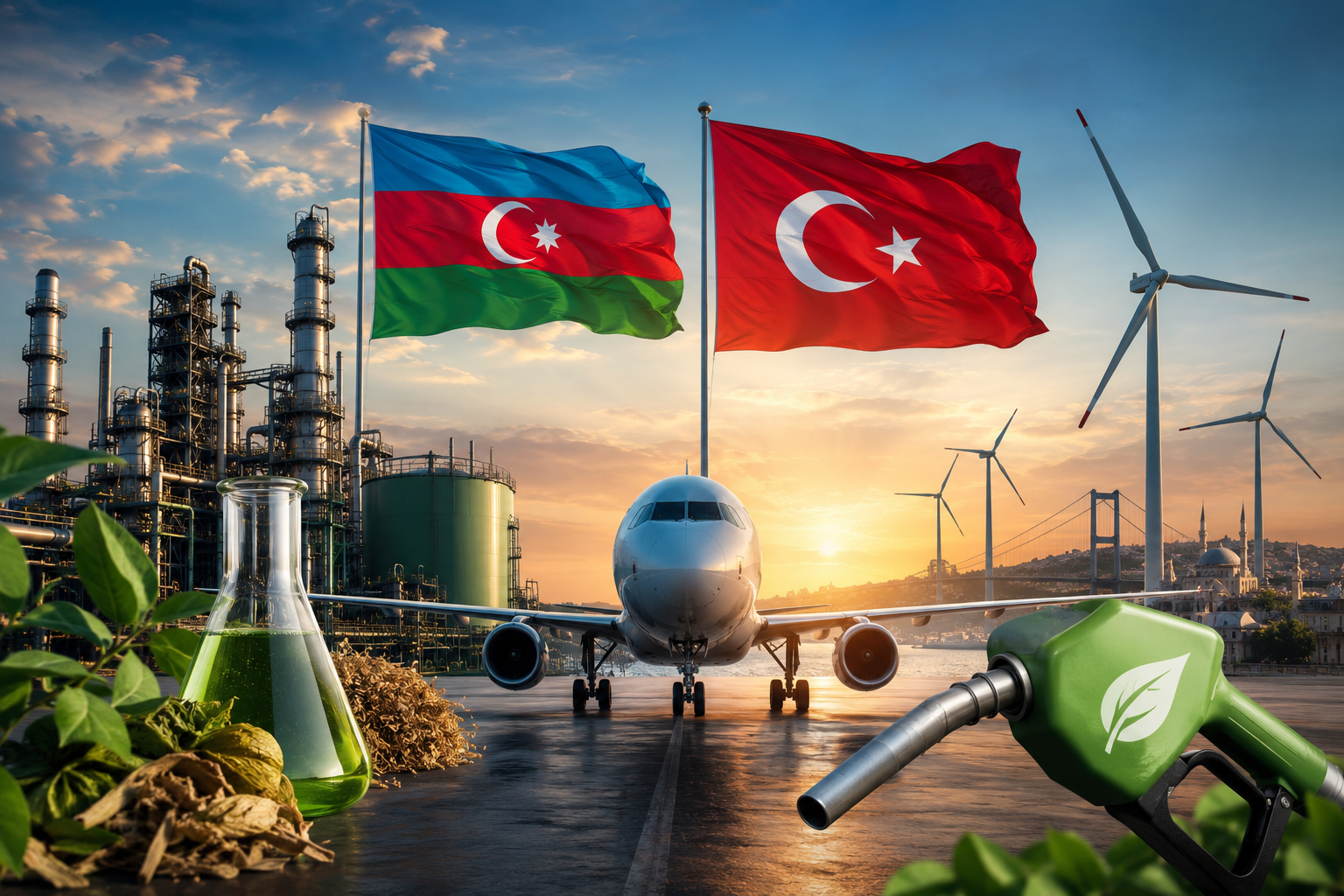
Image by AI
Here we are to serve you with news right now. It does not cost much, but worth your attention.
Choose to support open, independent, quality journalism and subscribe on a monthly basis.
By subscribing to our online newspaper, you can have full digital access to all news, analysis, and much more.
You can also follow AzerNEWS on Twitter @AzerNewsAz or Facebook @AzerNewsNewspaper
Thank you!