
Ancient 4th-century Byzantine city found in Egypt
by Alimat Aliyeva
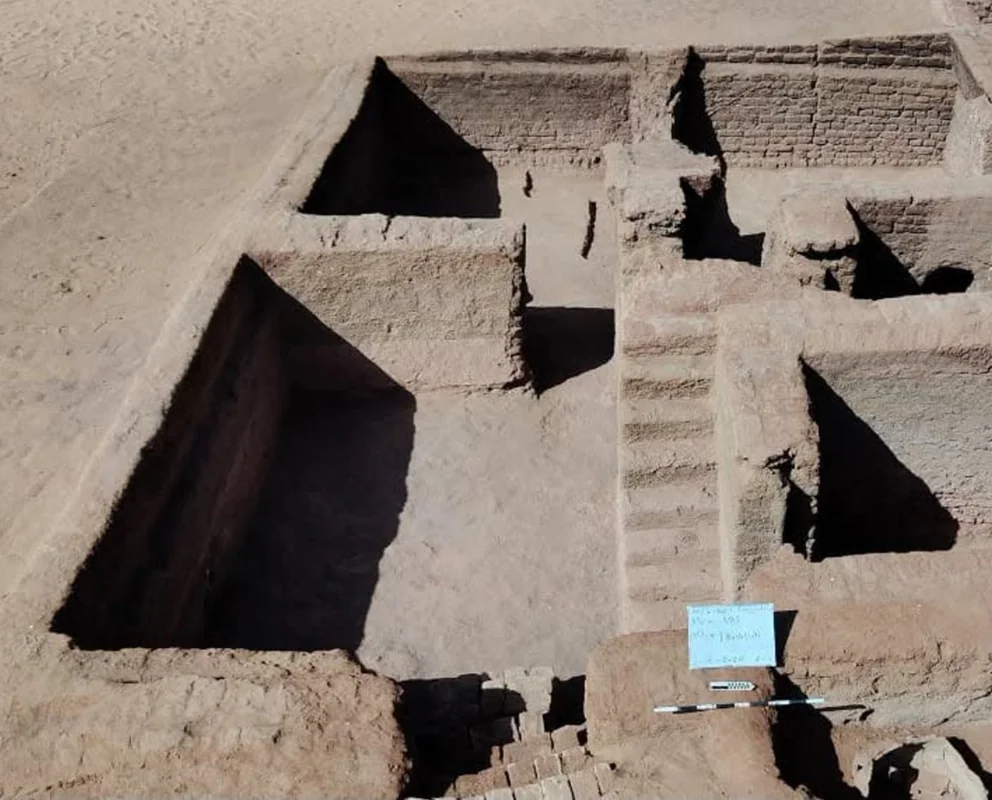
Archaeologists have uncovered a remarkably well-preserved Byzantine-era city in the western desert of Egypt, AzerNEWS reports.
Excavations in the Dakhla Oasis revealed a 4th-century urban settlement that included residential quarters, a basilica, two watchtowers, defensive walls, and multi-room apartment buildings featuring reception halls and vaulted ceilings.
Researchers also discovered ovens used for baking bread, kitchen utensils, grain-processing tools, as well as bronze and gold coins dating back to the reign of Roman Emperor Constantius II. In addition, around 200 ceramic fragments were found, many bearing inscriptions that appear to record aspects of trade and everyday economic activity.
In a separate discovery at the Marina el-Alamein archaeological site, 18 ancient tombs were excavated. Among the most notable finds were a 2.5-meter-long granite sarcophagus containing human remains, a plaster statue of a sphinx, and gold coins placed inside the mouths of the deceased—an ancient funerary practice believed to help the dead pay their passage into the afterlife.
Interestingly, archaeologists note that such findings highlight how interconnected Roman Egypt was with the wider Mediterranean world. The combination of Christian-era Byzantine structures and Roman-era artifacts suggests a gradual cultural transition rather than a sudden replacement of civilizations. This makes the site particularly valuable for understanding how daily life, religion, and trade evolved during a period of major historical change in North Africa.
Here we are to serve you with news right now. It does not cost much, but worth your attention.
Choose to support open, independent, quality journalism and subscribe on a monthly basis.
By subscribing to our online newspaper, you can have full digital access to all news, analysis, and much more.
You can also follow AzerNEWS on Twitter @AzerNewsAz or Facebook @AzerNewsNewspaper
Thank you!